Laboratory of Immunology, National Eye Institute, National Institutes of Health, Bethesda, MD 20892, USA.
J Transl Med. 2011 Jul 15;9:1-12. doi: 10.1186/1479-5876-9-111.
Age related macular degeneration (AMD) is the leading cause of irreversible blindness in elderly populations worldwide. Inflammation, among many factors, has been suggested to play an important role in AMD pathogenesis. Recent studies have demonstrated a strong genetic association between AMD and complement factor H (CFH), the down-regulatory factor of complement activation. Elevated levels of complement activating molecules including complement component 5a (C5a) have been found in the serum of AMD patients. Our aim is to study whether C5a can impact human T cells and its implication in AMD.
Human peripheral blood mononuclear cells (PBMCs) were isolated from the blood of exudative form of AMD patients using a Ficoll gradient centrifugation protocol. Intracellular staining and enzyme-linked immunosorbent assays were used to measure protein expression. Apoptotic cells were detected by staining of cells with the annexin-V and TUNEL technology and analyzed by a FACS Caliber flow cytometer. SNP genotyping was analyzed by TaqMan genotyping assay using the Real-time PCR system 7500.
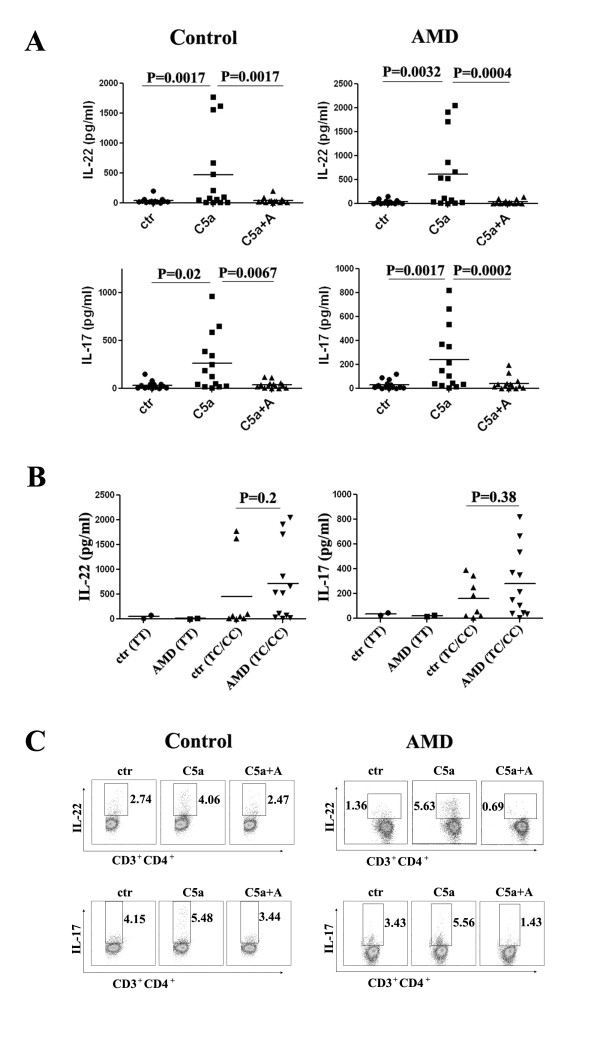
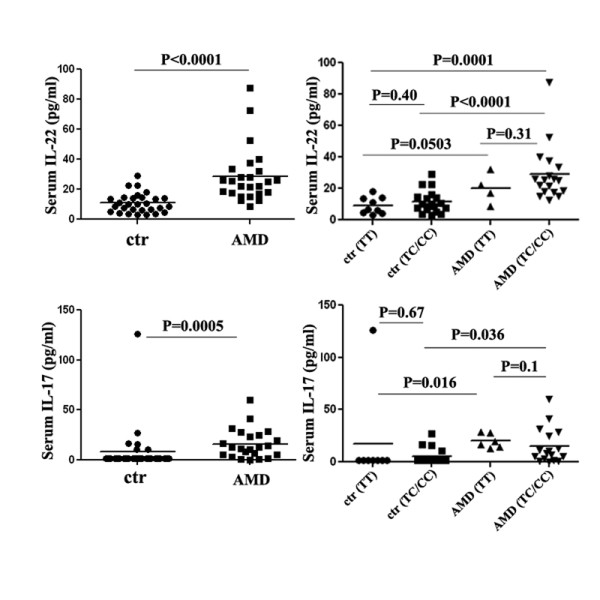
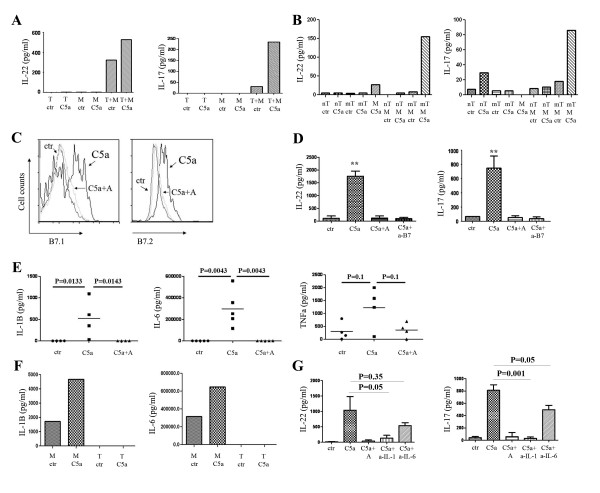
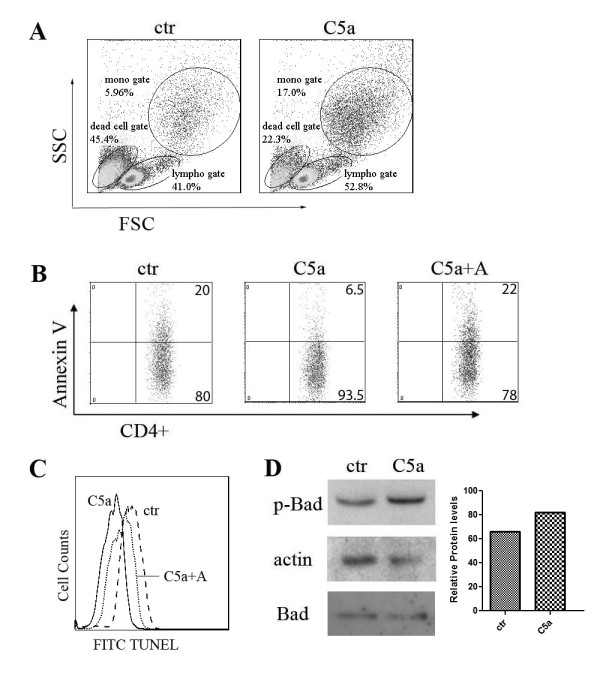
We show that C5a promotes interleukin (IL)-22 and IL-17 expression by human CD4+ T cells. This effect is dependent on B7, IL-1β and IL-6 expression from monocytes. We have also found that C5a could protect human CD4+ cells from undergoing apoptosis. Importantly, consistent with a role of C5a in promoting IL-22 and IL-17 expression, significant elevation in IL-22 and IL-17 levels was found in AMD patients as compared to non-AMD controls.
Our results support the notion that C5a may be one of the factors contributing to the elevated serum IL-22 and IL-17 levels in AMD patients. The possible involvement of IL-22 and IL-17 in the inflammation that contributes to AMD may herald a new approach to treat AMD.
年龄相关性黄斑变性(AMD)是全球老年人群中导致不可逆性失明的主要原因。在许多因素中,炎症被认为在 AMD 的发病机制中起着重要作用。最近的研究表明,AMD 与补体因子 H(CFH)之间存在很强的遗传关联,CFH 是补体激活的负调控因子。AMD 患者的血清中发现了补体激活分子(包括补体成分 5a(C5a))水平升高。我们的目的是研究 C5a 是否会影响人类 T 细胞及其在 AMD 中的作用。
采用 Ficoll 梯度离心法从渗出性 AMD 患者的血液中分离外周血单个核细胞(PBMCs)。采用细胞内染色和酶联免疫吸附试验(ELISA)测定蛋白表达。通过 Annexin-V 和 TUNEL 技术对凋亡细胞进行染色,并用 FACS Caliber 流式细胞仪进行分析。SNP 基因分型采用 TaqMan 基因分型检测试剂盒,通过实时 PCR 系统 7500 进行分析。
我们发现 C5a 可促进人 CD4+T 细胞表达白细胞介素(IL)-22 和 IL-17。这种作用依赖于单核细胞表达的 B7、IL-1β和 IL-6。我们还发现 C5a 可保护人 CD4+细胞免于凋亡。重要的是,与 C5a 促进 IL-22 和 IL-17 表达的作用一致,与非 AMD 对照组相比,AMD 患者的 IL-22 和 IL-17 水平显著升高。
我们的研究结果支持 C5a 可能是导致 AMD 患者血清中 IL-22 和 IL-17 水平升高的因素之一。IL-22 和 IL-17 可能参与了导致 AMD 的炎症反应,这可能预示着治疗 AMD 的新方法。