Neuroscience and Behavior Program, University of Massachusetts, Amherst, MA 01003, USA.
Neuropharmacology. 2011 Dec;61(8):1183-92. doi: 10.1016/j.neuropharm.2011.07.002. Epub 2011 Jul 13.
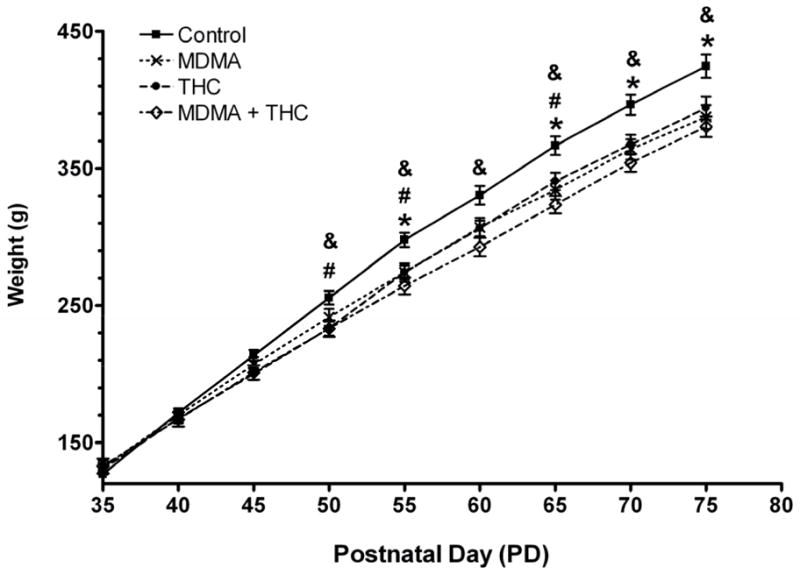
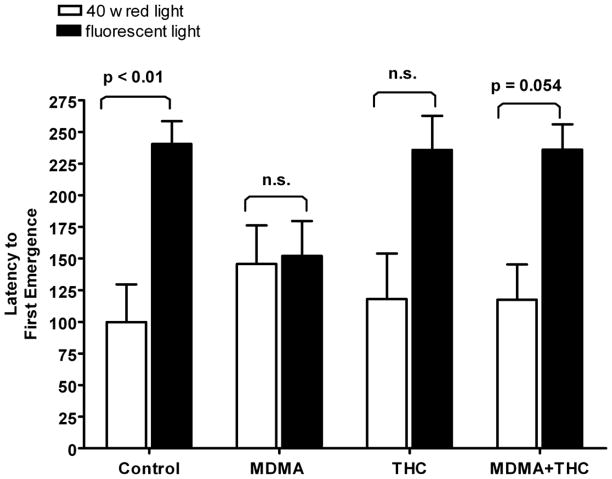
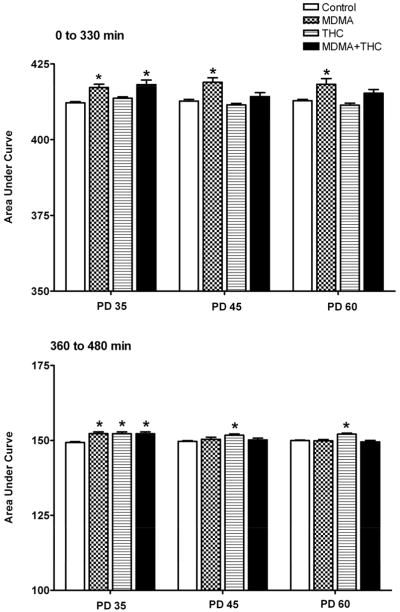
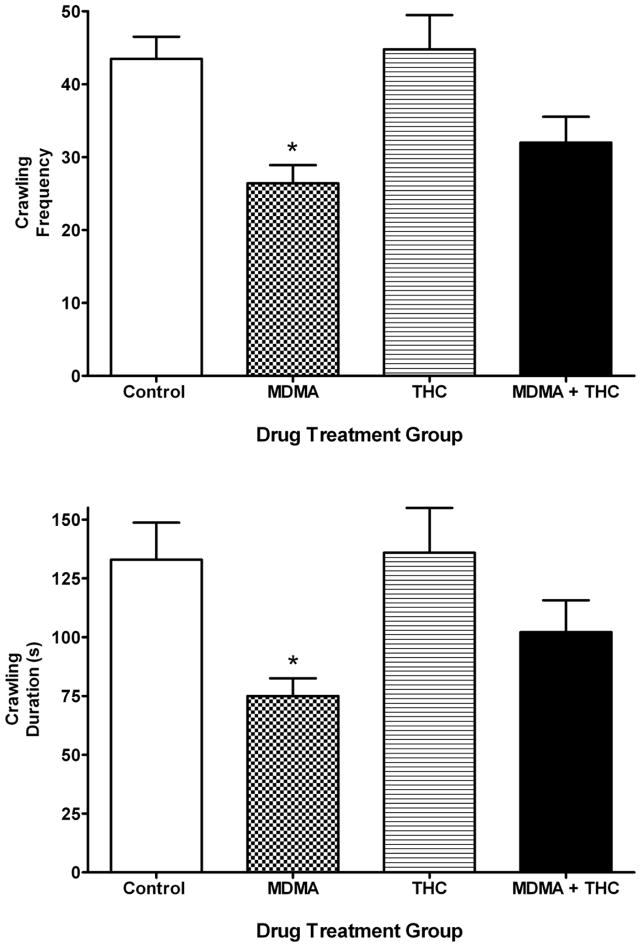
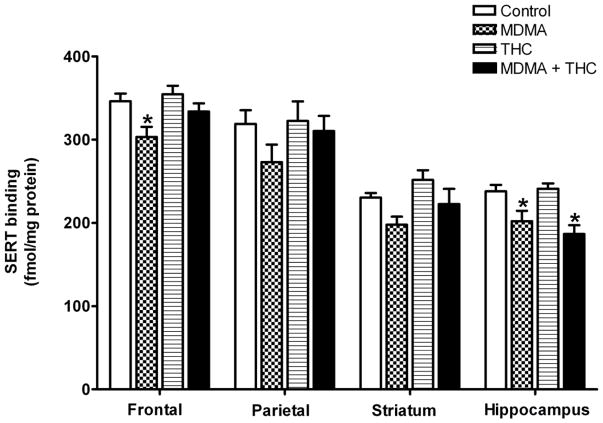
Most recreational users of 3, 4-methylenedioxymethamphetamine (MDMA or "ecstasy") also take cannabis, in part because cannabis can reduce the dysphoric symptoms of the ecstasy come-down such as agitation and insomnia. Although previous animal studies have examined the acute effects of co-administering MDMA and Δ(9)-tetrahydrocannabinol (THC), which is the major psychoactive ingredient in cannabis, research on chronic exposure to this drug combination is lacking. Therefore, the present study was conducted to investigate the effects of chronic adolescent administration of both THC and MDMA on behavior and on regional serotonin transporter (SERT) binding and serotonin (5-HT) concentrations as indices of serotonergic system integrity. Male Sprague-Dawley rats were divided into four drug administration groups: (1) MDMA alone, (2) THC alone, (3) MDMA plus THC, and (4) vehicle controls. MDMA (2 × 10 mg/kg × 4 h) was administered every fifth day from postnatal day (PD) 35 to 60 to simulate intermittent recreational ecstasy use, whereas THC (5mg/kg) was given once daily over the same time period to simulate heavy cannabis use. THC unexpectedly produced a modest hyperthermic effect when administered alone, but in animals co-treated with both THC and MDMA, there was an attenuation of MDMA-induced hyperthermia on dosing days. Subsequent testing conducted after a drug washout period revealed that THC reduced MDMA-related behavioral changes in the emergence and social interaction tests of anxiety-like behavior and also blunted the MDMA-induced decrease in exploratory behavior in the hole-board test. THC additionally attenuated MDMA -induced decreases in 5-HT levels and in SERT binding in the frontal cortex, parietal cortex, and striatum, but not in the hippocampus. These results suggest that chronic co-administration of THC during adolescence can provide some protection against various adverse physiological, behavioral, and neurochemical effects produced by MDMA.
大多数吸食 3,4-亚甲二氧基甲基苯丙胺(MDMA 或“摇头丸”)的娱乐性使用者也会吸食大麻,部分原因是大麻可以减轻摇头丸带来的不适症状,如烦躁不安和失眠。尽管之前的动物研究已经研究了同时给予 MDMA 和大麻中主要的精神活性成分 Δ(9)-四氢大麻酚(THC)的急性影响,但对这种药物组合的慢性暴露的研究还很缺乏。因此,本研究旨在探讨慢性青春期给予 THC 和 MDMA 对行为以及 5-羟色胺转运体(SERT)结合和 5-羟色胺(5-HT)浓度的影响,作为 5-羟色胺能系统完整性的指标。雄性 Sprague-Dawley 大鼠分为四组药物给药组:(1)MDMA 单独给药组,(2)THC 单独给药组,(3)MDMA 和 THC 联合给药组,(4)载体对照组。从出生后第 35 天到 60 天,每隔 5 天给予 MDMA(2×10mg/kg×4h),模拟间歇性娱乐性摇头丸使用,而在同一时期内每天给予一次 THC(5mg/kg),模拟大麻的大量使用。THC 单独给药时意外产生了适度的体温升高作用,但在同时给予 THC 和 MDMA 的动物中,在给药日时,MDMA 诱导的体温升高作用减弱。在药物洗脱期后进行的后续测试表明,THC 减少了 MDMA 相关的行为变化,在焦虑样行为的出现和社会互动测试中,也减弱了 MDMA 引起的探索行为减少,此外,THC 还减弱了 MDMA 引起的前额叶皮层、顶叶皮层和纹状体 5-HT 水平和 SERT 结合的降低,但对海马没有影响。这些结果表明,青春期同时给予 THC 可以为 MDMA 引起的各种生理、行为和神经化学作用提供一些保护。