Institute of Cellular Medicine, International Centre for Life, Newcastle University, Newcastle upon Tyne, United Kingdom.
Blood. 2011 Sep 8;118(10):2656-8. doi: 10.1182/blood-2011-06-360313. Epub 2011 Jul 15.
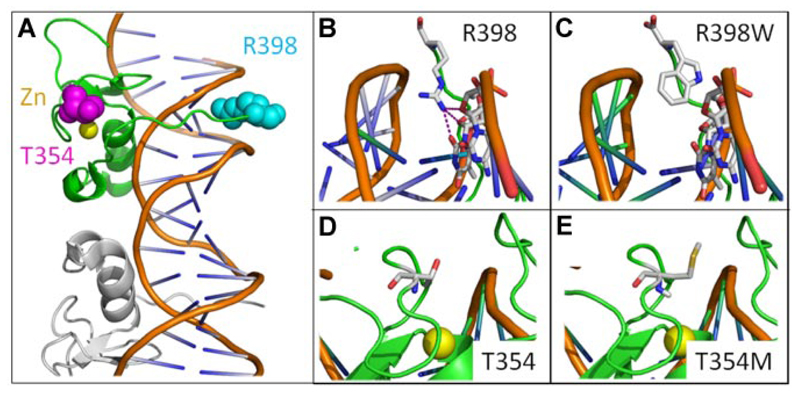
The human syndrome of dendritic cell, monocyte, B and natural killer lymphoid deficiency presents as a sporadic or autosomal dominant trait causing susceptibility to mycobacterial and other infections, predisposition to myelodysplasia and leukemia, and, in some cases, pulmonary alveolar proteinosis. Seeking a genetic cause, we sequenced the exomes of 4 unrelated persons, 3 with sporadic disease, looking for novel, heterozygous, and probably deleterious variants. A number of genes harbored novel variants in person, but only one gene, GATA2, was mutated in all 4 persons. Each person harbored a different mutation, but all were predicted to be highly deleterious and to cause loss or mutation of the C-terminal zinc finger domain. Because GATA2 is the only common mutated gene in 4 unrelated persons, it is highly probable to be the cause of dendritic cell, monocyte, B, and natural killer lymphoid deficiency. This disorder therefore constitutes a new genetic form of heritable immunodeficiency and leukemic transformation.
人类树突状细胞、单核细胞、B 细胞和自然杀伤淋巴样细胞缺陷综合征表现为散发性或常染色体显性遗传特征,导致对分枝杆菌和其他感染的易感性、骨髓增生异常和白血病的易感性,并且在某些情况下,还会导致肺泡蛋白沉积症。为了寻找遗传原因,我们对 4 名无血缘关系的个体的外显子组进行了测序,其中 3 名患有散发性疾病,以寻找新的、杂合的、可能有害的变异。一些基因在个体中携带新的变异,但只有一个基因 GATA2 在所有 4 名个体中都发生了突变。每个人都携带不同的突变,但所有突变都被预测为高度有害,并导致 C 末端锌指结构域的缺失或突变。由于 GATA2 是 4 名无血缘关系的个体中唯一共同突变的基因,因此它极有可能是树突状细胞、单核细胞、B 细胞和自然杀伤淋巴样细胞缺陷的原因。因此,这种疾病构成了一种新的遗传性免疫缺陷和白血病转化的遗传形式。