Institute of Neuroscience and 2 Institute of Biochemistry and Molecular Biology, School of Life Sciences, National Yang Ming University, Taipei 112, Taiwan.
J Cell Biol. 2011 Jul 25;194(2):209-27. doi: 10.1083/jcb.201105010. Epub 2011 Jul 18.
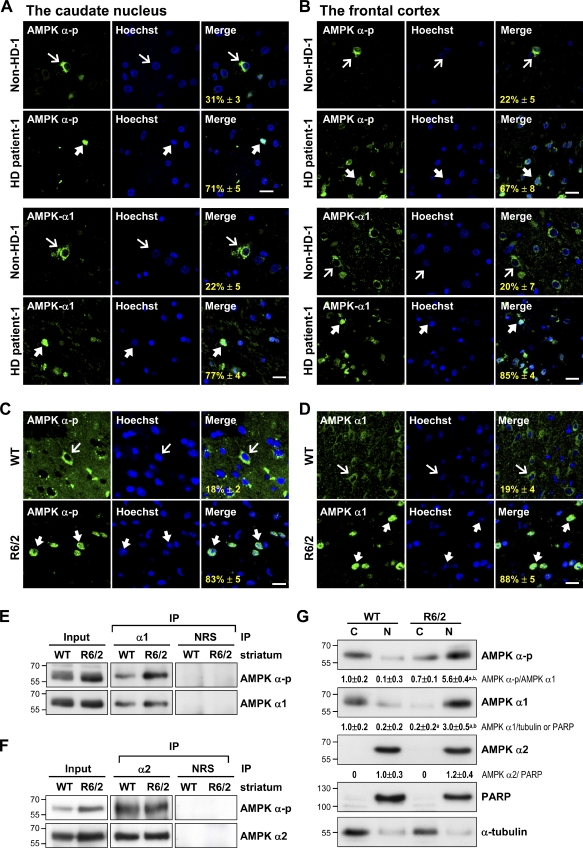
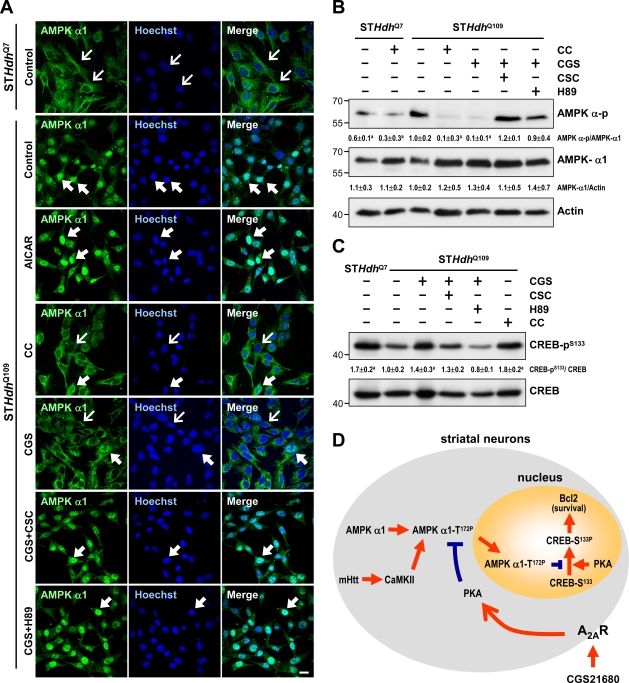
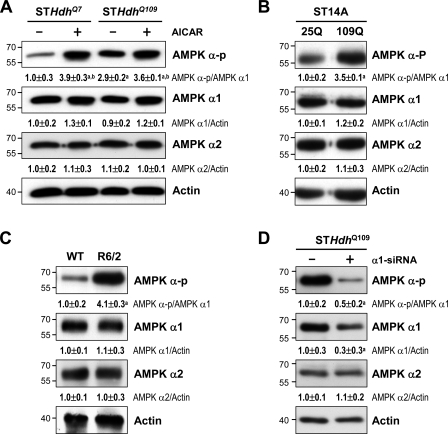
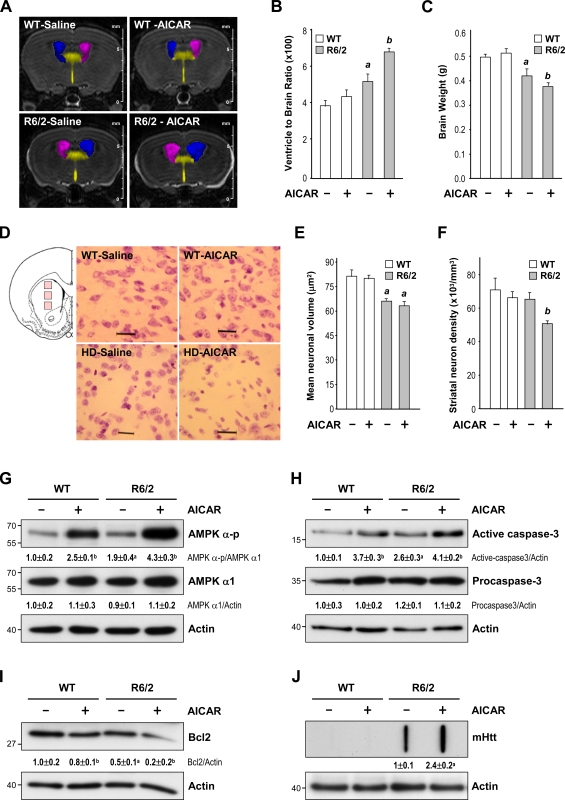
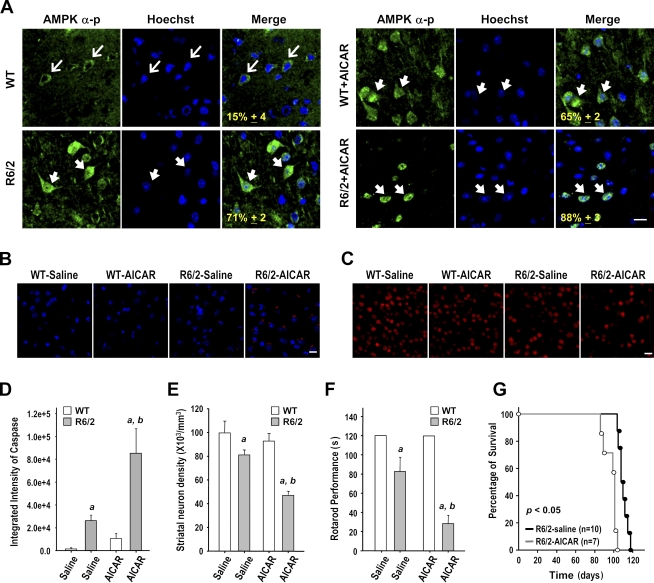
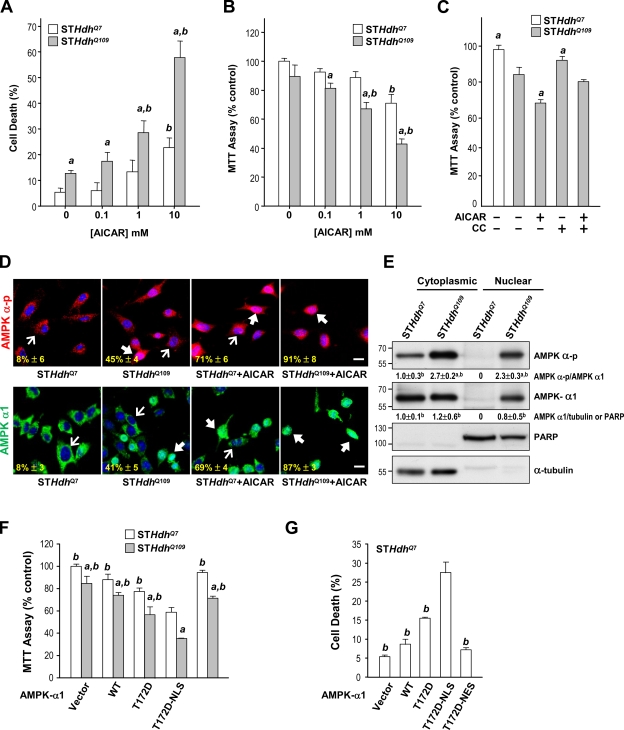
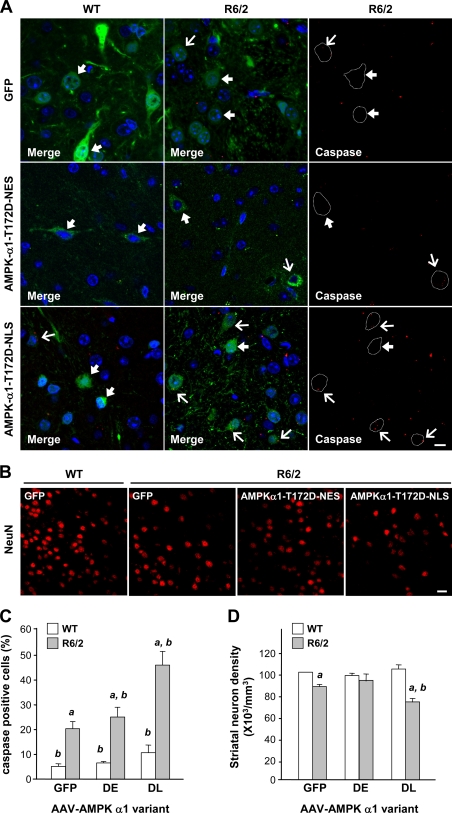
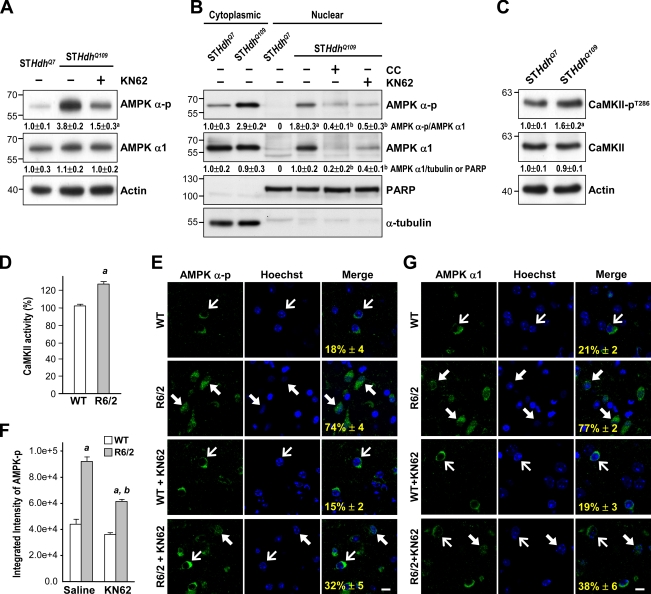
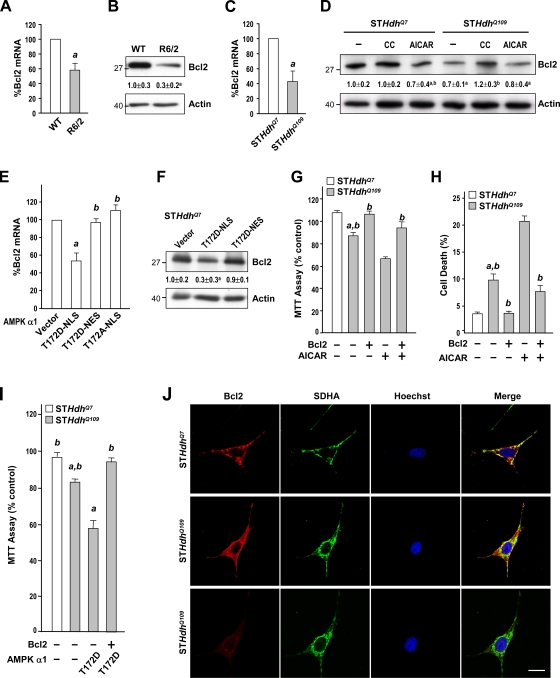
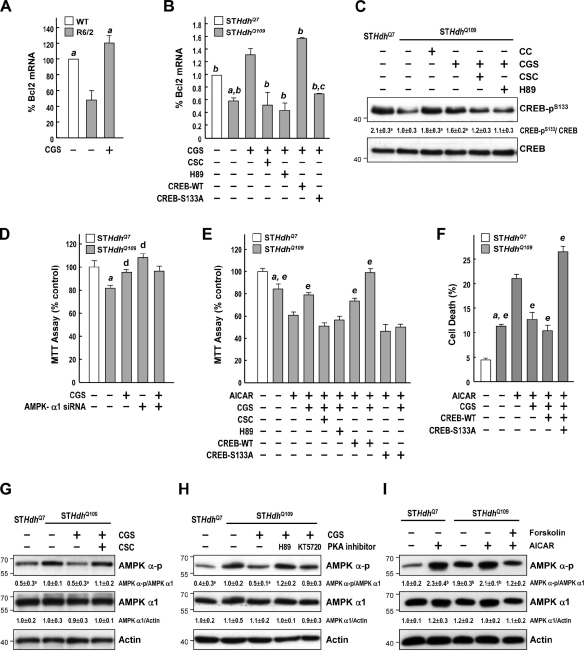
Adenosine monophosphate-activated protein kinase (AMPK) is a major energy sensor that maintains cellular energy homeostasis. Huntington's disease (HD) is a neurodegenerative disorder caused by the expansion of CAG repeats in the huntingtin (Htt) gene. In this paper, we report that activation of the α1 isoform of AMPK (AMPK-α1) occurred in striatal neurons of humans and mice with HD. Overactivation of AMPK in the striatum caused brain atrophy, facilitated neuronal loss, and increased formation of Htt aggregates in a transgenic mouse model (R6/2) of HD. Such nuclear accumulation of AMPK-α1 was activity dependent. Prevention of nuclear translocation or inactivation of AMPK-α1 ameliorated cell death and down-regulation of Bcl2 caused by mutant Htt (mHtt). Conversely, enhanced expression of Bcl2 protected striatal cells from the toxicity evoked by mHtt and AMPK overactivation. These data demonstrate that aberrant activation of AMPK-α1 in the nuclei of striatal cells represents a new toxic pathway induced by mHtt.
腺苷酸活化蛋白激酶(AMPK)是一种主要的能量感受器,可维持细胞能量稳态。亨廷顿病(HD)是一种由亨廷顿(Htt)基因中 CAG 重复扩增引起的神经退行性疾病。在本文中,我们报道了 HD 患者和小鼠纹状体神经元中 AMPK 的α1 同工型(AMPK-α1)的激活。纹状体中 AMPK 的过度激活导致脑萎缩,促进神经元丧失,并增加 HD 转基因小鼠模型(R6/2)中 Htt 聚集体的形成。这种 AMPK-α1 的核内积累是活性依赖性的。核内 AMPK-α1 易位的预防或失活可改善由突变型 Htt(mHtt)引起的细胞死亡和 Bcl2 的下调。相反,Bcl2 的增强表达可防止纹状体细胞受到 mHtt 和 AMPK 过度激活引起的毒性。这些数据表明,纹状体细胞核中异常激活的 AMPK-α1 代表了由 mHtt 诱导的新的毒性途径。