Department of Genomics and Genetics, School of Biological Sciences, Nanyang Technological University, 60 Nanyang Drive, Singapore.
Aging Cell. 2011 Dec;10(6):931-48. doi: 10.1111/j.1474-9726.2011.00734.x. Epub 2011 Aug 16.
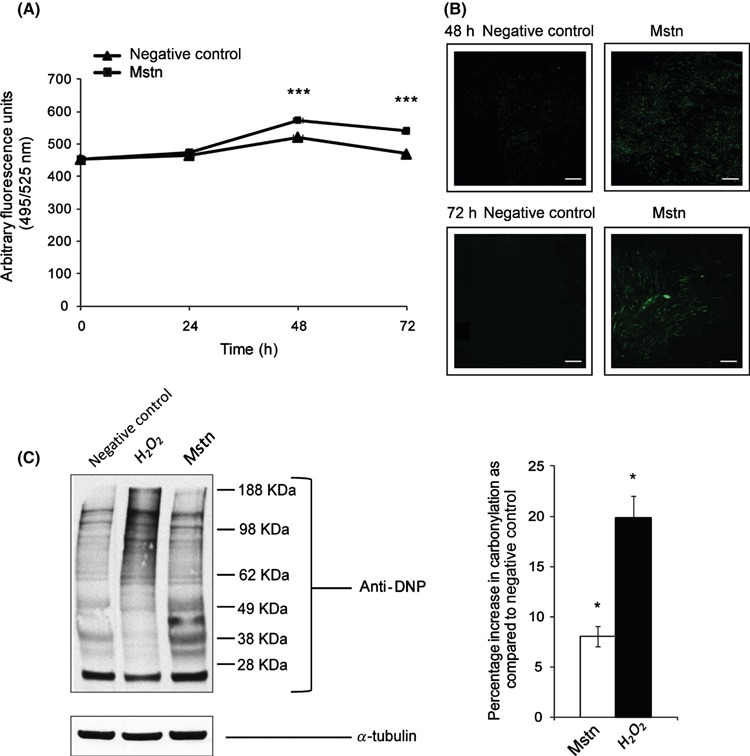
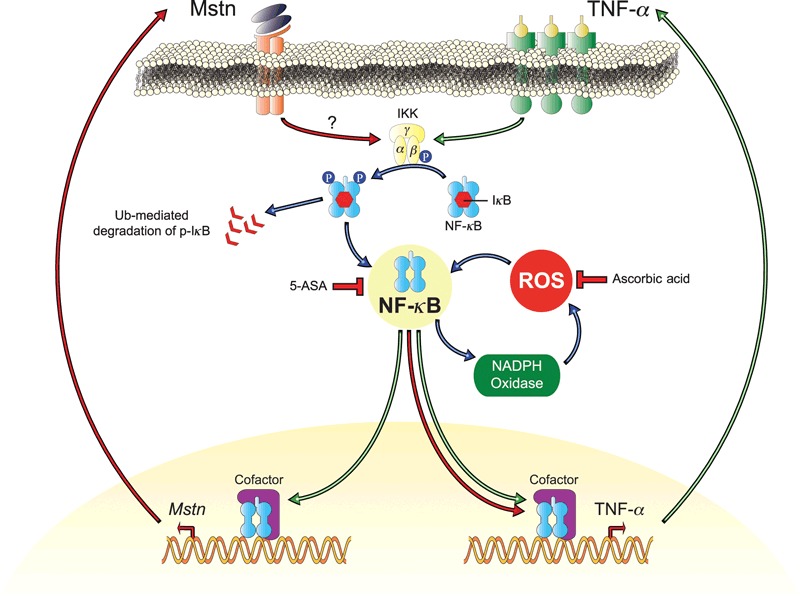
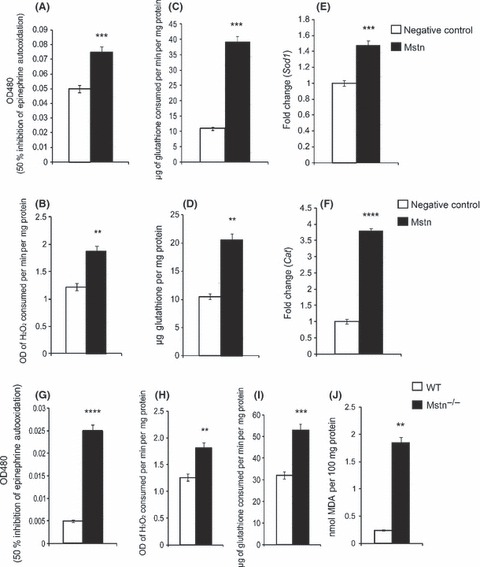
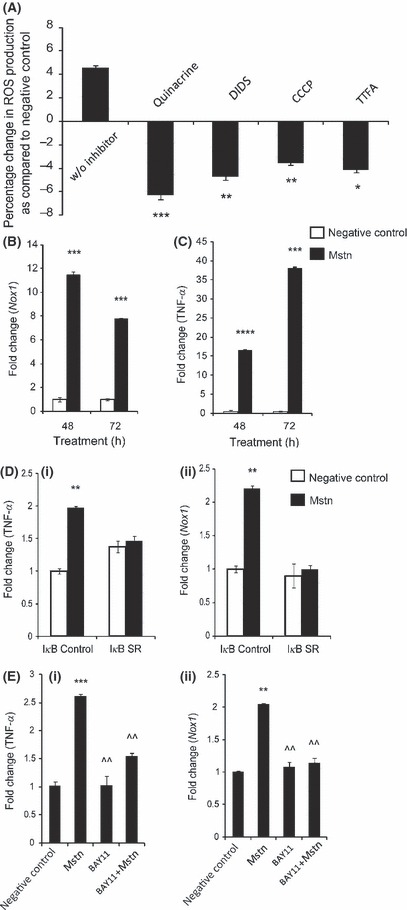
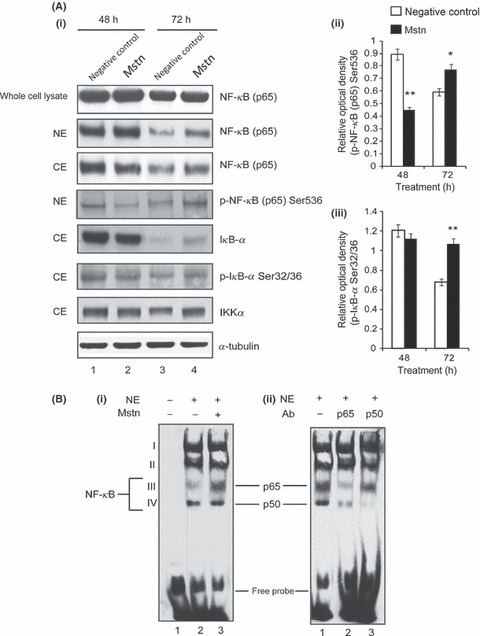
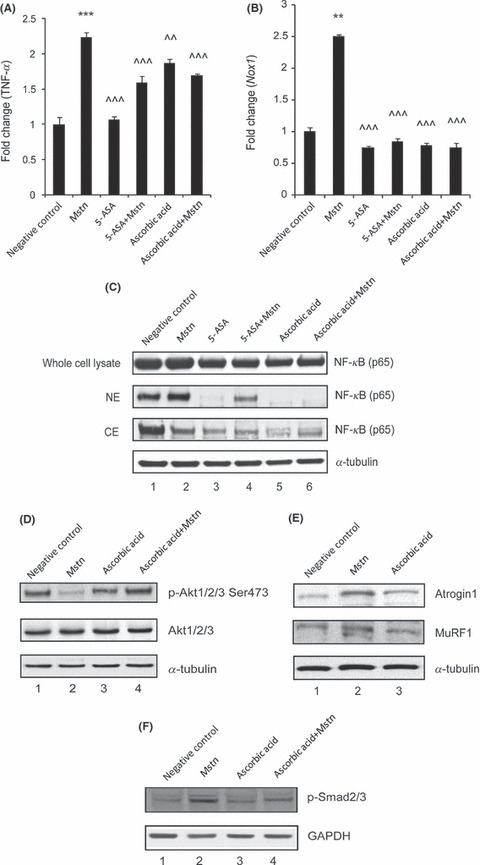
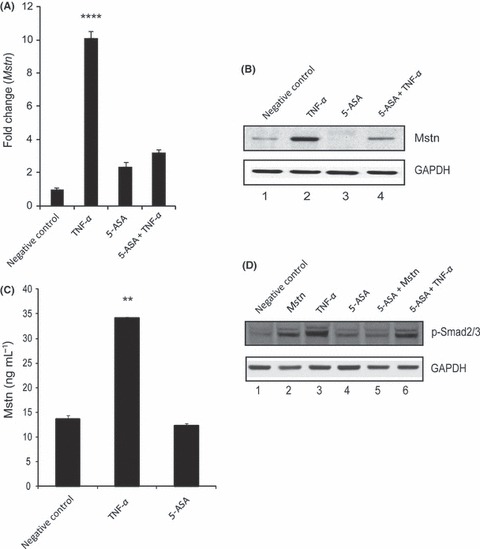
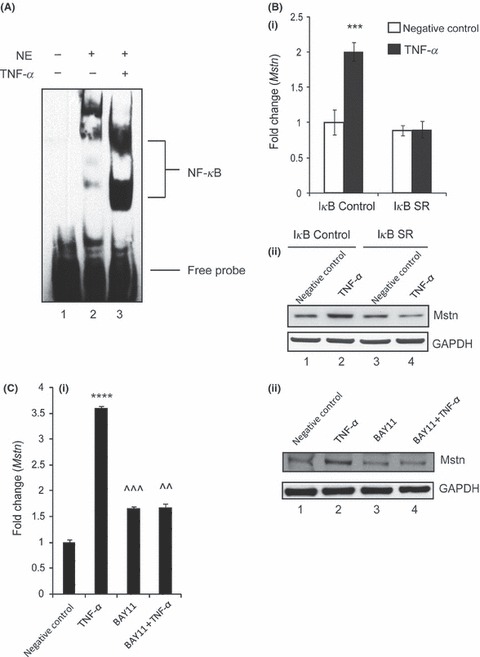
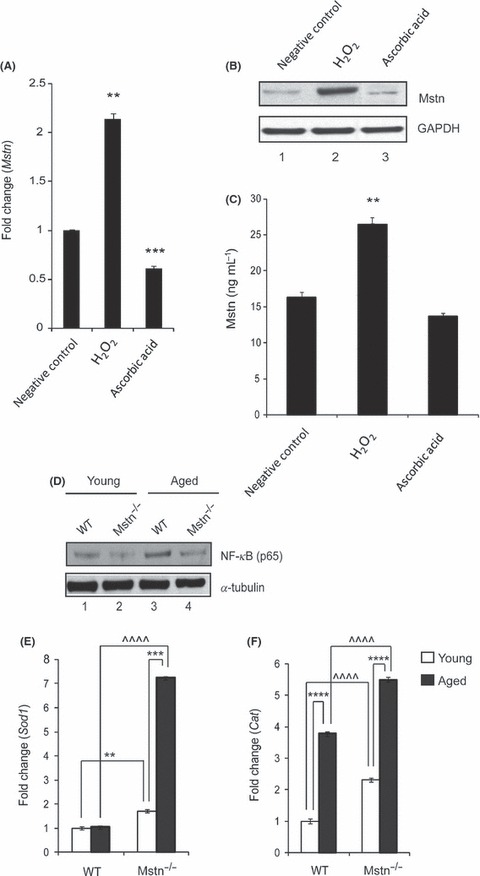
Abnormal levels of reactive oxygen species (ROS) and inflammatory cytokines have been observed in the skeletal muscle during muscle wasting including sarcopenia. However, the mechanisms that signal ROS production and prolonged maintenance of ROS levels during muscle wasting are not fully understood. Here, we show that myostatin (Mstn) is a pro-oxidant and signals the generation of ROS in muscle cells. Myostatin, a transforming growth factor-β (TGF-β) family member, has been shown to play an important role in skeletal muscle wasting by increasing protein degradation. Our results here show that Mstn induces oxidative stress by producing ROS in skeletal muscle cells through tumor necrosis factor-α (TNF-α) signaling via NF-κB and NADPH oxidase. Aged Mstn null (Mstn(-/-) ) muscles, which display reduced sarcopenia, also show an increased basal antioxidant enzyme (AOE) levels and lower NF-κB levels indicating efficient scavenging of excess ROS. Additionally, our results indicate that both TNF-α and hydrogen peroxide (H(2) O(2) ) are potent inducers of Mstn and require NF-κB signaling for Mstn induction. These results demonstrate that Mstn and TNF-α are components of a feed forward loop in which Mstn triggers the generation of second messenger ROS, mediated by TNF-α and NADPH oxidase, and the elevated TNF-α in turn stimulates Mstn expression. Higher levels of Mstn in turn induce muscle wasting by activating proteasomal-mediated catabolism of intracellular proteins. Thus, we propose that inhibition of ROS induced by Mstn could lead to reduced muscle wasting during sarcopenia.
在包括肌肉减少症在内的肌肉消耗过程中,骨骼肌中观察到活性氧(ROS)和炎症细胞因子水平异常。然而,ROS 产生的信号机制以及在肌肉消耗过程中 ROS 水平的持续维持机制尚未完全阐明。在这里,我们表明肌肉生长抑制素(Mstn)是一种促氧化剂,并在肌肉细胞中信号产生 ROS。肌肉生长抑制素是转化生长因子-β(TGF-β)家族的成员,通过增加蛋白质降解,已被证明在骨骼肌消耗中起重要作用。我们的研究结果表明,Mstn 通过肿瘤坏死因子-α(TNF-α)信号通过 NF-κB 和 NADPH 氧化酶在骨骼肌细胞中产生 ROS,从而诱导氧化应激。表现出减少的肌肉减少症的老年 Mstn 缺失(Mstn(-/-))肌肉也显示出增加的基础抗氧化酶(AOE)水平和降低的 NF-κB 水平,表明过量 ROS 的有效清除。此外,我们的结果表明,TNF-α 和过氧化氢(H2O2)都是 Mstn 的有效诱导剂,并且需要 NF-κB 信号转导来诱导 Mstn。这些结果表明,Mstn 和 TNF-α 是正反馈回路的组成部分,其中 Mstn 通过 TNF-α 和 NADPH 氧化酶触发第二信使 ROS 的产生,而升高的 TNF-α 反过来又刺激 Mstn 的表达。更高水平的 Mstn 又通过激活蛋白酶体介导的细胞内蛋白质分解代谢来诱导肌肉消耗。因此,我们提出抑制 Mstn 诱导的 ROS 可能导致肌肉减少症期间肌肉消耗减少。