Department of Biochemistry, Howard Hughes Medical Institute, University of Washington, Seattle, Washington 98195, USA.
J Biol Chem. 2011 Sep 16;286(37):32617-27. doi: 10.1074/jbc.M111.259572. Epub 2011 Jul 21.
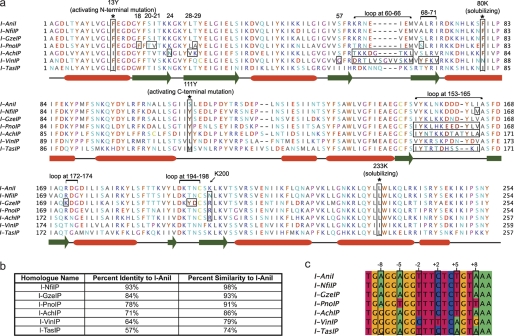
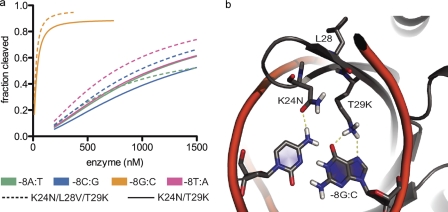
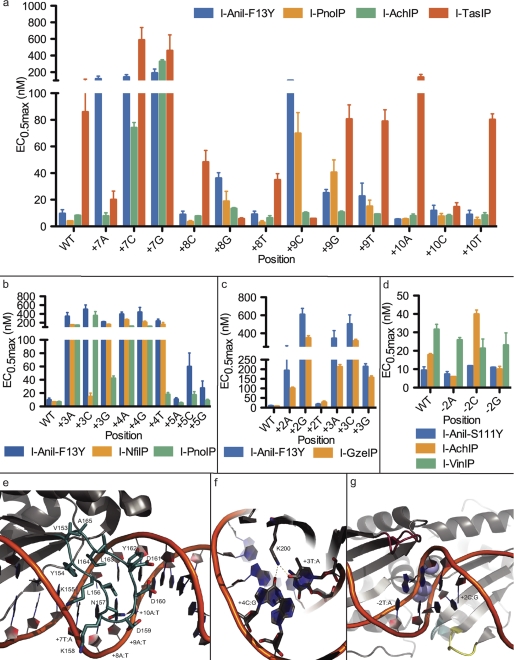
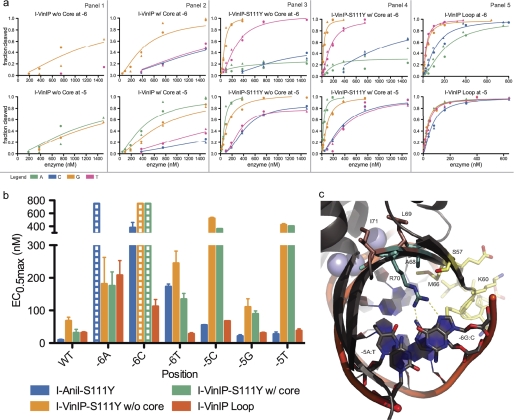
Homing endonucleases have great potential as tools for targeted gene therapy and gene correction, but identifying variants of these enzymes capable of cleaving specific DNA targets of interest is necessary before the widespread use of such technologies is possible. We identified homologues of the LAGLIDADG homing endonuclease I-AniI and their putative target insertion sites by BLAST searches followed by examination of the sequences of the flanking genomic regions. Amino acid substitutions in these homologues that were located close to the target site DNA, and thus potentially conferring differences in target specificity, were grafted onto the I-AniI scaffold. Many of these grafts exhibited novel and unexpected specificities. These findings show that the information present in genomic data can be exploited for endonuclease specificity redesign.
归巢内切核酸酶作为靶向基因治疗和基因矫正的工具具有巨大的潜力,但在广泛应用这些技术之前,有必要鉴定出能够切割特定感兴趣的 DNA 靶标的这些酶的变体。我们通过 BLAST 搜索鉴定了 LAGLIDADG 归巢内切核酸酶 I-AniI 的同源物及其潜在的靶插入位点,并随后检查侧翼基因组区域的序列。这些同源物中位于靶位点 DNA 附近的氨基酸取代,因此可能赋予靶特异性的差异,被嫁接到 I-AniI 支架上。其中许多嫁接物表现出新颖和意外的特异性。这些发现表明,可以利用基因组数据中提供的信息来重新设计内切核酸酶的特异性。