Faculty of Environment and Information Sciences, Yokohama National University, Yokohama, Japan.
PLoS One. 2011;6(7):e21903. doi: 10.1371/journal.pone.0021903. Epub 2011 Jul 11.
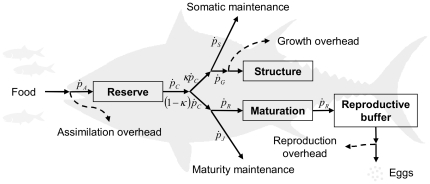
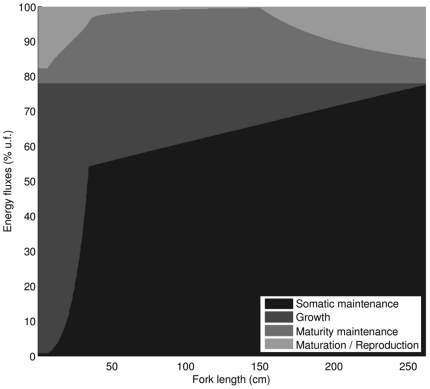
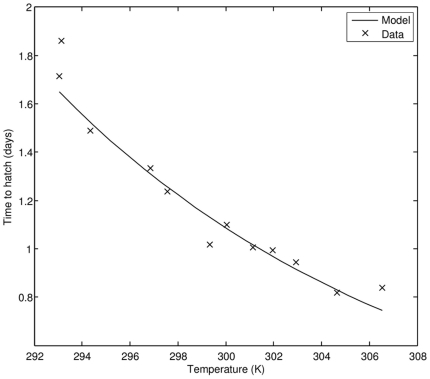
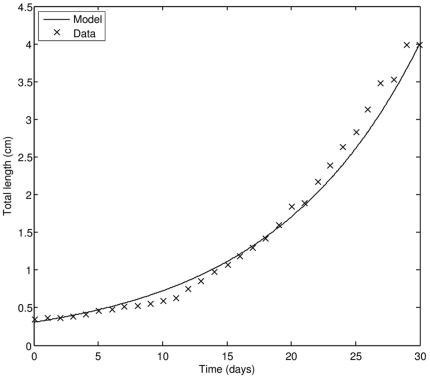
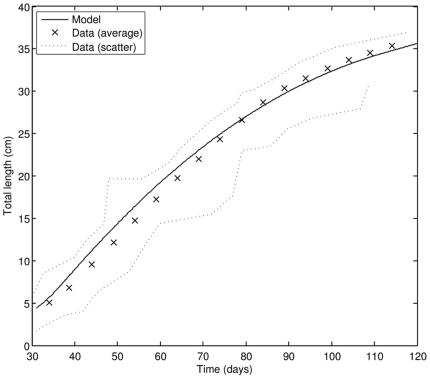
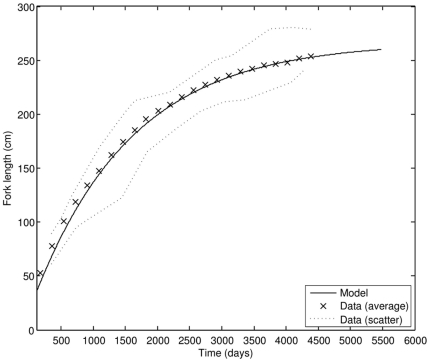
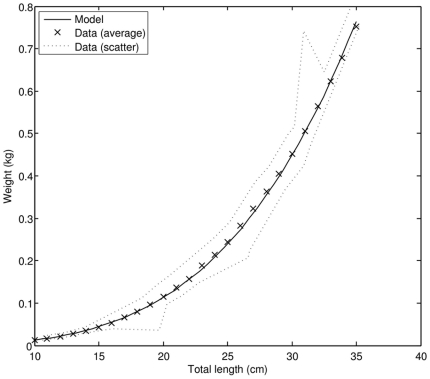
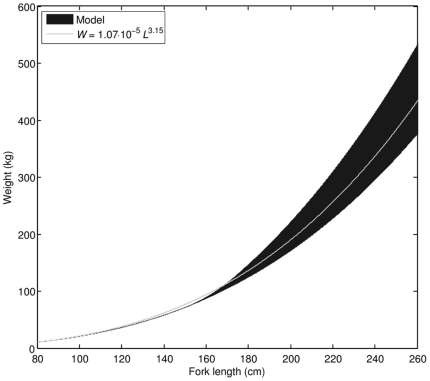
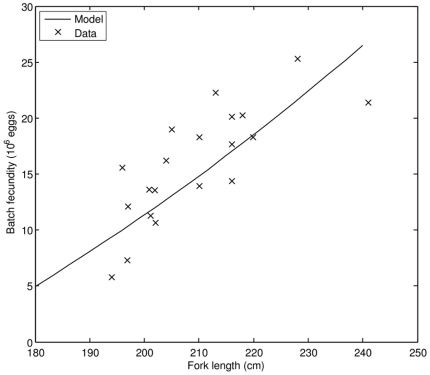
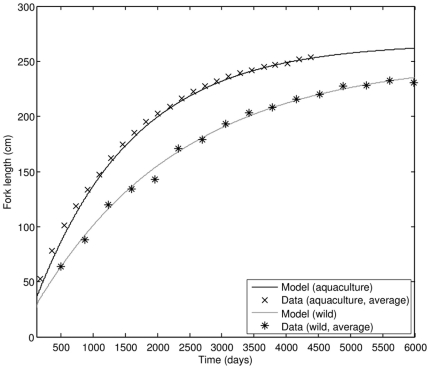
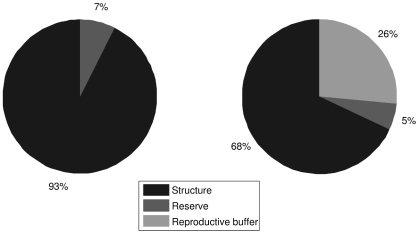
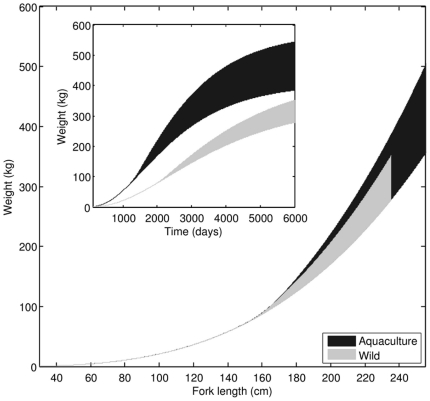
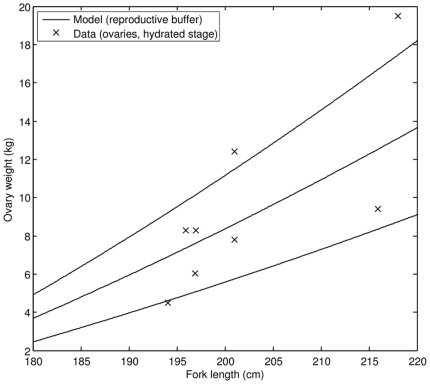
We formulated a full lifecycle bioenergetic model for bluefin tuna relying on the principles of Dynamic Energy Budget theory. Traditional bioenergetic models in fish research deduce energy input and utilization from observed growth and reproduction. In contrast, our model predicts growth and reproduction from food availability and temperature in the environment. We calibrated the model to emulate physiological characteristics of Pacific bluefin tuna (Thunnus orientalis, hereafter PBT), a species which has received considerable scientific attention due to its high economic value. Computer simulations suggest that (i) the main cause of different growth rates between cultivated and wild PBT is the difference in average body temperature of approximately 6.5°C, (ii) a well-fed PBT individual can spawn an average number of 9 batches per spawning season, (iii) food abundance experienced by wild PBT is rather constant and sufficiently high to provide energy for yearly reproductive cycle, (iv) energy in reserve is exceptionally small, causing the weight-length relationship of cultivated and wild PBT to be practically indistinguishable and suggesting that these fish are poorly equipped to deal with starvation, (v) accelerated growth rate of PBT larvae is connected to morphological changes prior to metamorphosis, while (vi) deceleration of growth rate in the early juvenile stage is related to efficiency of internal heat production. Based on these results, we discuss a number of physiological and ecological traits of PBT, including the reasons for high Feed Conversion Ratio recorded in bluefin tuna aquaculture.
我们基于动态能量预算理论,为蓝鳍金枪鱼制定了一个完整的生命周期生物能量模型。鱼类研究中的传统生物能量模型从观察到的生长和繁殖中推断能量的输入和利用。相比之下,我们的模型根据食物的可利用性和环境温度来预测生长和繁殖。我们对模型进行了校准,以模拟太平洋蓝鳍金枪鱼(Thunnus orientalis,以下简称 PBT)的生理特征,由于其高经济价值,该物种受到了相当多的科学关注。计算机模拟表明:(i)养殖和野生 PBT 生长率不同的主要原因是平均体温差异约为 6.5°C;(ii)饲养良好的 PBT 个体在每个繁殖季节平均可以产卵 9 次;(iii)野生 PBT 经历的食物丰度相当稳定且足够高,可为每年的繁殖周期提供能量;(iv)储备能量异常小,导致养殖和野生 PBT 的体重-体长关系几乎无法区分,并表明这些鱼在应对饥饿方面能力很差;(v)PBT 幼虫生长速度的加快与变态前的形态变化有关,而(vi)早期幼体生长速度的减慢与内部产热效率有关。基于这些结果,我们讨论了 PBT 的一些生理和生态特征,包括在蓝鳍金枪鱼养殖中记录到的高饲料转化率的原因。