Centre National de la Recherche Scientifique, UMR8195, Université Paris XI, Orsay, France.
PLoS One. 2011;6(7):e22080. doi: 10.1371/journal.pone.0022080. Epub 2011 Jul 13.
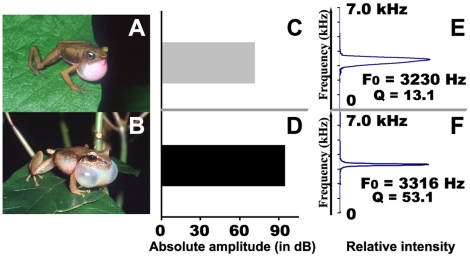
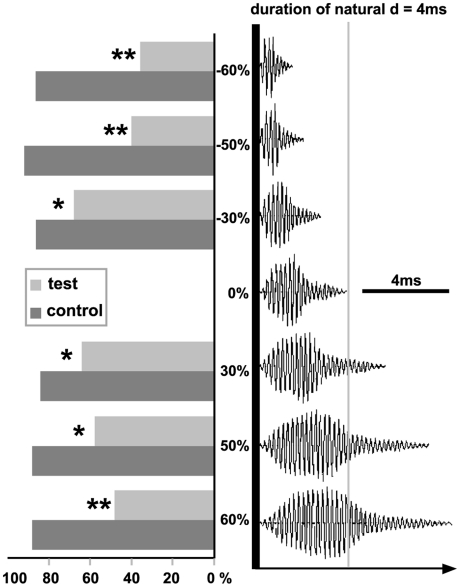
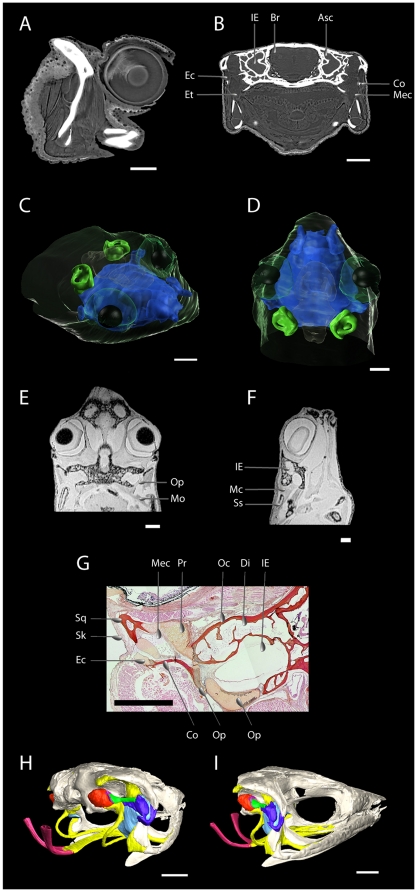
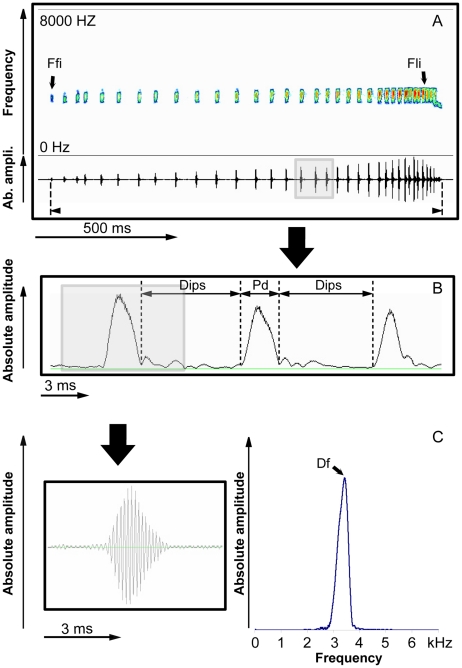
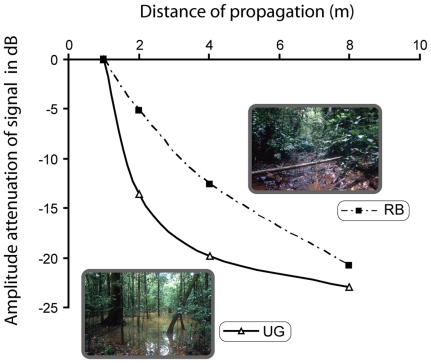
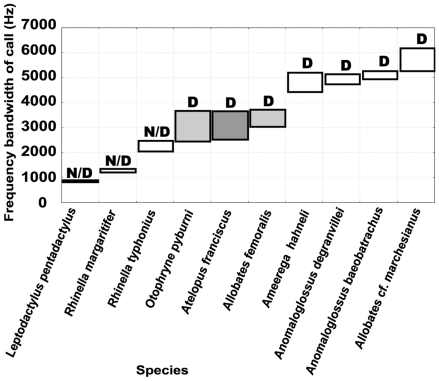
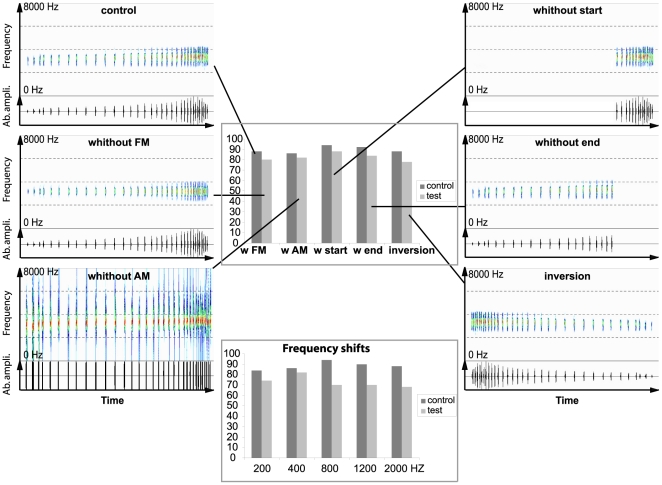
Atelopus franciscus is a diurnal bufonid frog that lives in South-American tropical rain forests. As in many other frogs, males produce calls to defend their territories and attract females. However, this species is a so-called "earless" frog lacking an external tympanum and is thus anatomically deaf. Moreover, A. franciscus has no external vocal sac and lives in a sound constraining environment along river banks where it competes with other calling frogs. Despite these constraints, male A. franciscus reply acoustically to the calls of conspecifics in the field. To resolve this apparent paradox, we studied the vocal apparatus and middle-ear, analysed signal content of the calls, examined sound and signal content propagation in its natural habitat, and performed playback experiments. We show that A. franciscus males can produce only low intensity calls that propagate a short distance (<8 m) as a result of the lack of an external vocal sac. The species-specific coding of the signal is based on the pulse duration, providing a simple coding that is efficient as it allows discrimination from calls of sympatric frogs. Moreover, the signal is redundant and consequently adapted to noisy environments. As such a coding system can be efficient only at short-range, territory holders established themselves at short distances from each other. Finally, we show that the middle-ear of A. franciscus does not present any particular adaptations to compensate for the lack of an external tympanum, suggesting the existence of extra-tympanic pathways for sound propagation.
安第斯蟾蜍是一种昼行的蟾蜍,生活在南美洲的热带雨林中。与许多其他青蛙一样,雄性青蛙会发出叫声来保卫自己的领地并吸引雌性。然而,这种物种是一种所谓的“无耳”青蛙,缺乏外部鼓膜,因此在解剖上是聋的。此外,A. franciscus 没有外部声囊,生活在河岸等声音受限的环境中,与其他鸣叫的青蛙竞争。尽管存在这些限制,雄性 A. franciscus 在野外还是会对同种个体的叫声做出声学回应。为了解决这个明显的悖论,我们研究了发声器官和中耳,分析了叫声的信号内容,研究了在其自然栖息地中声音和信号内容的传播,并进行了回放实验。我们表明,A. franciscus 雄性只能发出低强度的叫声,由于缺乏外部声囊,这些叫声传播的距离很短(<8 米)。信号的种特异性编码基于脉冲持续时间,提供了一种简单的编码,因为它可以与同域青蛙的叫声区分开来,因此效率很高。此外,信号是冗余的,因此适应嘈杂的环境。由于这种编码系统只能在短距离内有效,因此领地拥有者彼此之间的距离很近。最后,我们表明 A. franciscus 的中耳没有任何特殊的适应性来补偿缺乏外部鼓膜,这表明存在额外的鼓膜外声传播途径。