Institute for Biological Sciences, National Research Council Canada, Ottawa, Ontario, Canada.
PLoS One. 2011;6(7):e22004. doi: 10.1371/journal.pone.0022004. Epub 2011 Jul 18.
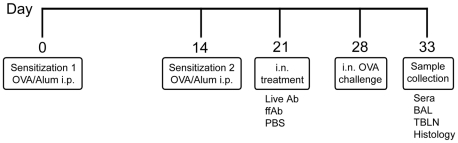
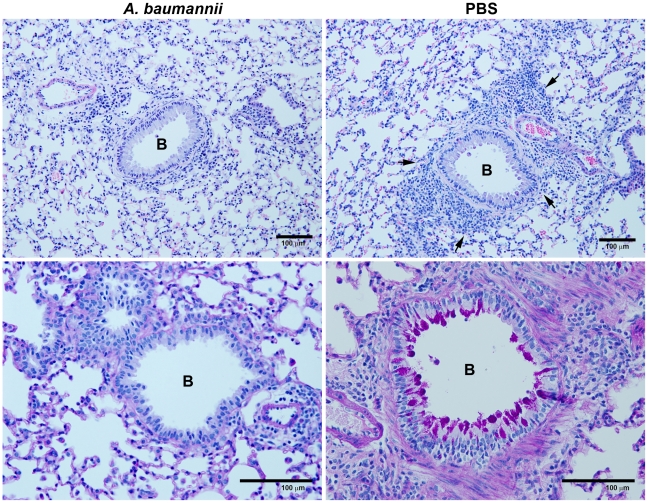
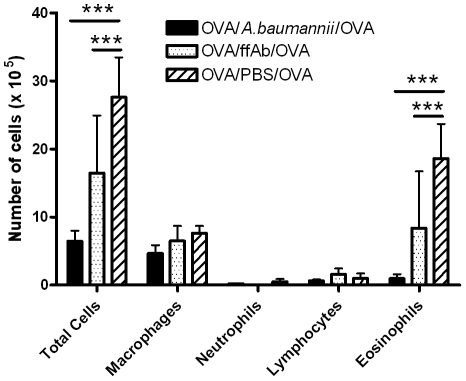
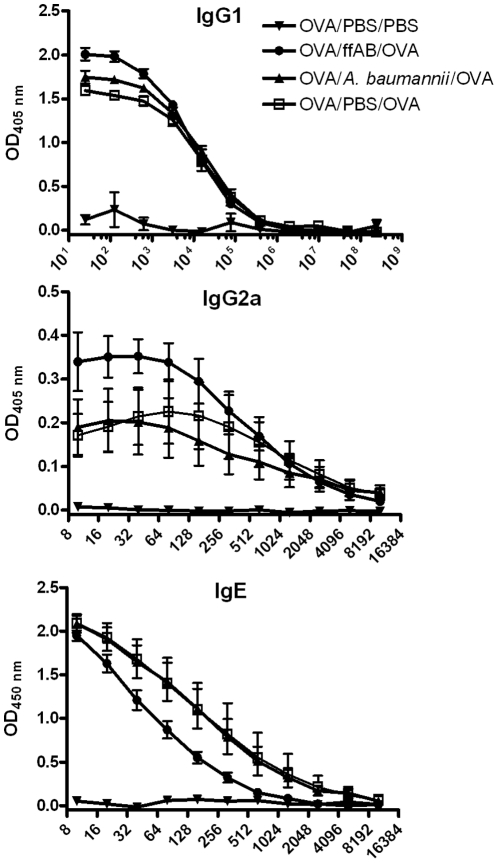
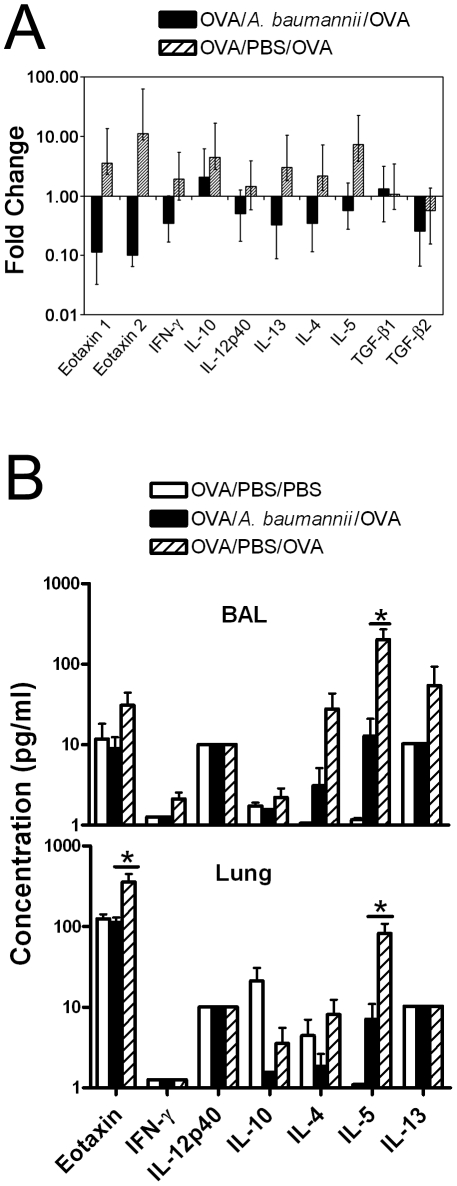
Allergic asthma is a dysregulation of the immune system which leads to the development of Th2 responses to innocuous antigens (allergens). Some infections and microbial components can re-direct the immune response toward the Th1 response, or induce regulatory T cells to suppress the Th2 response, thereby inhibiting the development of allergic asthma. Since Acinetobacter baumannii infection can modulate lung cellular and cytokine responses, we studied the effect of A. baumannii in modulating airway eosinophilia in a mouse model of allergic asthma. Ovalbumin (OVA)-sensitized mice were treated with live A. baumannii or phosphate buffered saline (PBS), then intranasally challenged with OVA. Compared to PBS, A. baumannii treatment significantly reduced pulmonary Th2 cytokine and chemokine responses to OVA challenge. More importantly, the airway inflammation in A. baumannii-treated mice was strongly suppressed, as seen by the significant reduction of the proportion and the total number of eosinophils in the bronchoalveolar lavage fluid. In addition, A. baumannii-treated mice diminished lung mucus overproduction and pathology. However, A. baumannii treatment did not significantly alter systemic immune responses to OVA. Serum OVA-specific IgE, IgG1 and IgG2a levels were comparable between A. baumannii- and PBS-treated mice, and tracheobronchial lymph node cells from both treatment groups produced similar levels of Th1 and Th2 cytokines in response to in vitro OVA stimulation. Moreover, it appears that TLR-4 and IFN-γ were not directly involved in the A. baumannii-induced suppression of airway eosinophilia. Our results suggest that A. baumannii inhibits allergic airway inflammation by direct suppression of local pulmonary Th2 cytokine responses to the allergen.
变应性哮喘是免疫系统失调导致对无害抗原(过敏原)产生 Th2 反应的疾病。某些感染和微生物成分可以将免疫反应重新引导为 Th1 反应,或诱导调节性 T 细胞抑制 Th2 反应,从而抑制变应性哮喘的发展。由于鲍曼不动杆菌感染可以调节肺部细胞和细胞因子反应,我们研究了鲍曼不动杆菌在调节变应性哮喘小鼠模型中气道嗜酸性粒细胞浸润的作用。卵清蛋白(OVA)致敏的小鼠用活鲍曼不动杆菌或磷酸盐缓冲盐水(PBS)处理,然后用 OVA 经鼻内攻击。与 PBS 相比,鲍曼不动杆菌处理显著降低了 OVA 攻击后肺部 Th2 细胞因子和趋化因子的反应。更重要的是,鲍曼不动杆菌处理的小鼠气道炎症明显受到抑制,这表现为支气管肺泡灌洗液中嗜酸性粒细胞的比例和总数显著减少。此外,鲍曼不动杆菌处理的小鼠减少了肺黏液过度产生和病理变化。然而,鲍曼不动杆菌处理并没有显著改变对 OVA 的全身免疫反应。鲍曼不动杆菌和 PBS 处理的小鼠血清 OVA 特异性 IgE、IgG1 和 IgG2a 水平相当,并且来自两个治疗组的气管支气管淋巴结细胞在体外 OVA 刺激下产生相似水平的 Th1 和 Th2 细胞因子。此外,似乎 TLR-4 和 IFN-γ 并未直接参与鲍曼不动杆菌诱导的气道嗜酸性粒细胞浸润抑制。我们的结果表明,鲍曼不动杆菌通过直接抑制过敏原引起的肺部 Th2 细胞因子反应来抑制变应性气道炎症。