INSERM UMR641, IFR Jean-Roche, Marseille, France.
PLoS One. 2011;6(7):e22322. doi: 10.1371/journal.pone.0022322. Epub 2011 Jul 15.
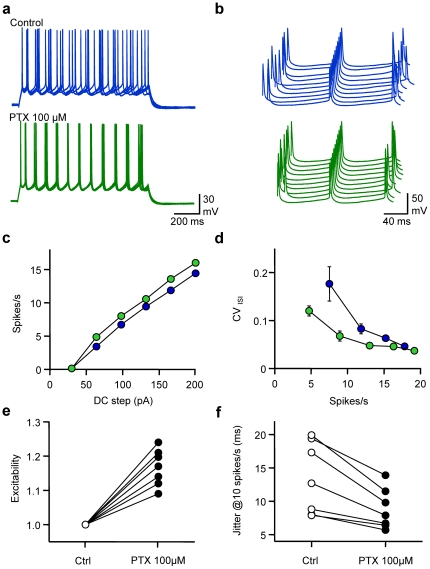
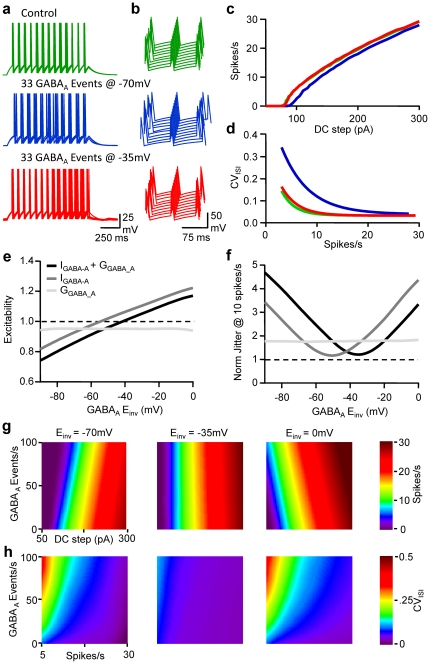
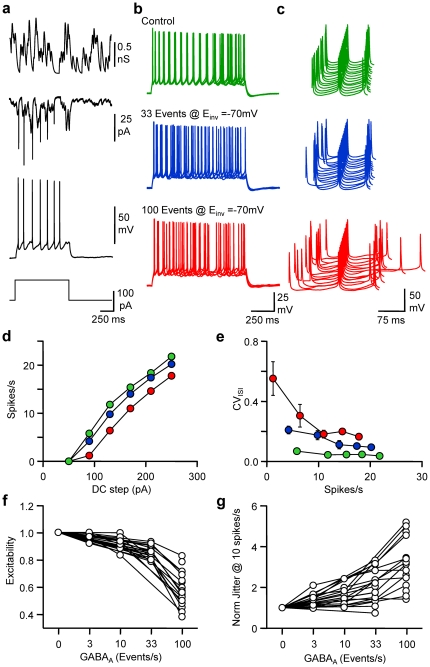
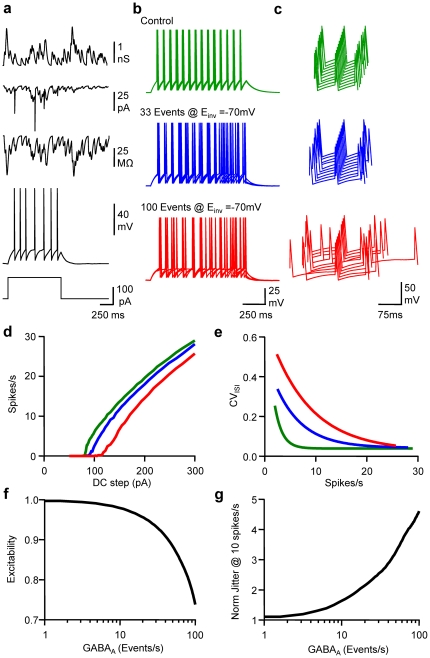
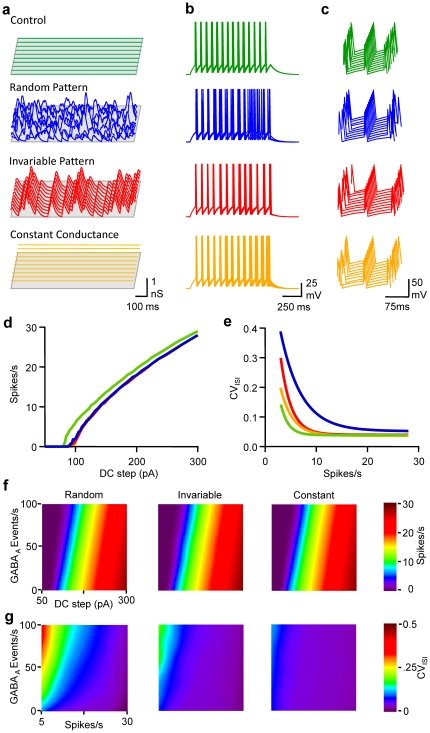
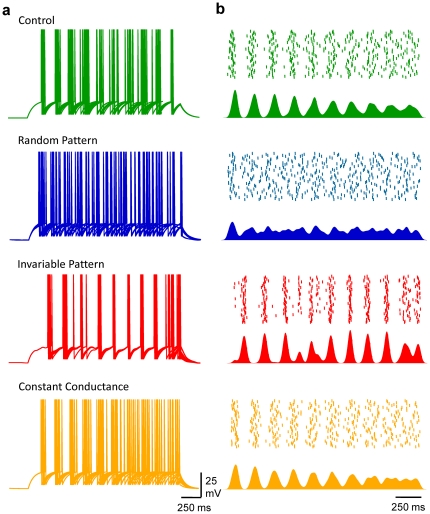
Frequency and timing of action potential discharge are key elements for coding and transfer of information between neurons. The nature and location of the synaptic contacts, the biophysical parameters of the receptor-operated channels and their kinetics of activation are major determinants of the firing behaviour of each individual neuron. Ultimately the intrinsic excitability of each neuron determines the input-output function. Here we evaluate the influence of spontaneous GABAergic synaptic activity on the timing of action potentials in Layer 2/3 pyramidal neurones in acute brain slices from the somatosensory cortex of young rats. Somatic dynamic current injection to mimic synaptic input events was employed, together with a simple computational model that reproduce subthreshold membrane properties. Besides the well-documented control of neuronal excitability, spontaneous background GABAergic activity has a major detrimental effect on spike timing. In fact, GABA(A) receptors tune the relationship between the excitability and fidelity of pyramidal neurons via a postsynaptic (the reversal potential for GABA(A) activity) and a presynaptic (the frequency of spontaneous activity) mechanism. GABAergic activity can decrease or increase the excitability of pyramidal neurones, depending on the difference between the reversal potential for GABA(A) receptors and the threshold for action potential. In contrast, spike time jitter can only be increased proportionally to the difference between these two membrane potentials. Changes in excitability by background GABAergic activity can therefore only be associated with deterioration of the reliability of spike timing.
动作电位放电的频率和时间是神经元之间编码和信息传递的关键要素。突触接触的性质和位置、受体操纵通道的生物物理参数及其激活的动力学是每个神经元放电行为的主要决定因素。最终,每个神经元的固有兴奋性决定了其输入-输出函数。在这里,我们评估了自发性 GABA 能突触活动对年轻大鼠体感皮层急性脑切片中第 2/3 层锥体神经元动作电位时间的影响。采用模拟突触输入事件的体细胞动态电流注入,以及复制亚阈值膜特性的简单计算模型。除了众所周知的神经元兴奋性控制外,自发性背景 GABA 能活动对尖峰时间有重大不利影响。事实上,GABA(A) 受体通过突触后(GABA(A) 活性的反转电位)和突触前(自发性活动的频率)机制来调节锥体神经元的兴奋性和保真度之间的关系。GABA 能活动可以降低或增加锥体神经元的兴奋性,具体取决于 GABA(A) 受体的反转电位与动作电位阈值之间的差异。相比之下,尖峰时间抖动只能与这两个膜电位之间的差异成比例增加。因此,背景 GABA 能活动引起的兴奋性变化只能与尖峰时间可靠性的恶化相关。