Marconi Thiago G, Costa Estela A, Miranda Hercília Rcan, Mancini Melina C, Cardoso-Silva Cláudio B, Oliveira Karine M, Pinto Luciana R, Mollinari Marcelo, Garcia Antônio Af, Souza Anete P
Centro de Biologia Molecular e Engenharia Genética (CBMEG) - Universidade Estadual de Campinas (UNICAMP), Cidade Universitária Zeferino Vaz, CP 6010, CEP 13083-970, Campinas, SP, Brazil.
BMC Res Notes. 2011 Jul 28;4:264. doi: 10.1186/1756-0500-4-264.
The database of sugarcane expressed sequence tags (EST) offers a great opportunity for developing molecular markers that are directly associated with important agronomic traits. The development of new EST-SSR markers represents an important tool for genetic analysis. In sugarcane breeding programs, functional markers can be used to accelerate the process and select important agronomic traits, especially in the mapping of quantitative traits loci (QTL) and plant resistant pathogens or qualitative resistance loci (QRL). The aim of this work was to develop new simple sequence repeat (SSR) markers in sugarcane using the sugarcane expressed sequence tag (SUCEST database).
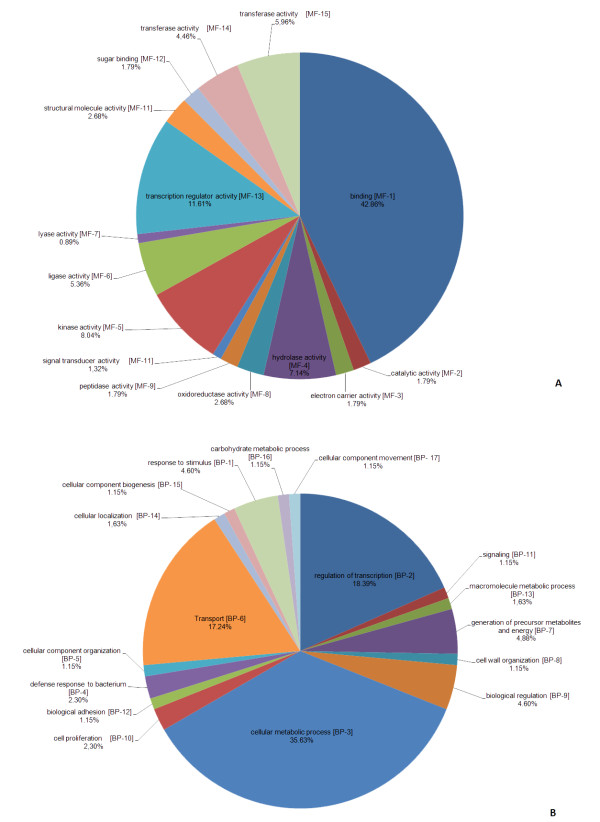
A total of 365 EST-SSR molecular markers with trinucleotide motifs were developed and evaluated in a collection of 18 genotypes of sugarcane (15 varieties and 3 species). In total, 287 of the EST-SSRs markers amplified fragments of the expected size and were polymorphic in the analyzed sugarcane varieties. The number of alleles ranged from 2-18, with an average of 6 alleles per locus, while polymorphism information content values ranged from 0.21-0.92, with an average of 0.69. The discrimination power was high for the majority of the EST-SSRs, with an average value of 0.80. Among the markers characterized in this study some have particular interest, those that are related to bacterial defense responses, generation of precursor metabolites and energy and those involved in carbohydrate metabolic process.
These EST-SSR markers presented in this work can be efficiently used for genetic mapping studies of segregating sugarcane populations. The high Polymorphism Information Content (PIC) and Discriminant Power (DP) presented facilitate the QTL identification and marker-assisted selection due the association with functional regions of the genome became an important tool for the sugarcane breeding program.
甘蔗表达序列标签(EST)数据库为开发与重要农艺性状直接相关的分子标记提供了绝佳机会。新型EST-SSR标记的开发是遗传分析的重要工具。在甘蔗育种计划中,功能标记可用于加速育种进程并选择重要农艺性状,特别是在数量性状位点(QTL)定位以及植物对病原体的抗性或质量抗性位点(QRL)研究中。本研究的目的是利用甘蔗表达序列标签(SUCEST数据库)开发甘蔗新的简单序列重复(SSR)标记。
共开发了365个具有三核苷酸基序的EST-SSR分子标记,并在18个甘蔗基因型(15个品种和3个物种)中进行了评估。总共,287个EST-SSR标记扩增出预期大小的片段,并且在分析的甘蔗品种中具有多态性。等位基因数量范围为2至18个,每个位点平均有6个等位基因,而多态性信息含量值范围为0.21至0.92,平均为0.69。大多数EST-SSR的鉴别力较高,平均值为0.80。在本研究中鉴定的标记中,有些特别值得关注,那些与细菌防御反应、前体代谢物和能量的产生以及参与碳水化合物代谢过程的标记。
本研究中呈现的这些EST-SSR标记可有效地用于甘蔗分离群体的遗传图谱研究。由于与基因组功能区域相关联,所呈现的高多态性信息含量(PIC)和鉴别力(DP)有助于QTL鉴定和标记辅助选择,成为甘蔗育种计划的重要工具。