Johns Hopkins University School of Medicine, Department of Molecular Biology and Genetics, 725 N, Wolfe St,, PCTB 803, Baltimore, Maryland 21205, USA.
Skelet Muscle. 2011 Jan 24;1(1):2. doi: 10.1186/2044-5040-1-2.
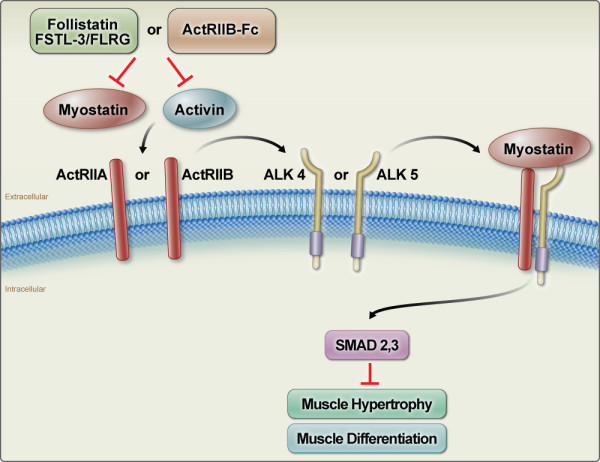
Skeletal muscle wasting is a major component of cachectic states found in a variety of disease settings, including cancer. As increasing caloric intake often provides little benefit in combating muscle loss in cachectic patients, a major research focus has been to develop strategies stimulating muscle anabolic pathways - in an attempt to fight the catabolic pathways induced during cachexia. Two recent papers have reported the beneficial effects of blocking the myostatin/activin signalling pathway in mouse models of cancer cachexia. We discuss the implications of their findings both with respect to the role that this signalling pathway may play in the aetiology of cachexia and with respect to the prospects for targeting this pathway as a therapeutic strategy in patients with cachexia.
骨骼肌减少是在多种疾病环境中(包括癌症)发现的恶病质状态的主要组成部分。由于增加热量摄入通常对对抗恶病质患者的肌肉减少没有什么益处,因此一个主要的研究重点是开发刺激肌肉合成代谢途径的策略 - 试图对抗恶病质期间诱导的分解代谢途径。最近有两篇论文报道了在癌症恶病质的小鼠模型中阻断肌肉生长抑制素/激活素信号通路的有益效果。我们讨论了这些发现对该信号通路在恶病质发病机制中可能发挥的作用以及将该途径作为恶病质患者治疗策略的前景的影响。