Department of Biochemistry and Molecular Biology, Southern Alberta Cancer Research Institute, University of Calgary, 3330 Hospital Drive NW, Calgary, Alberta T2N 4N1, Canada.
Nucleic Acids Res. 2011 Nov;39(21):9224-37. doi: 10.1093/nar/gkr647. Epub 2011 Aug 8.
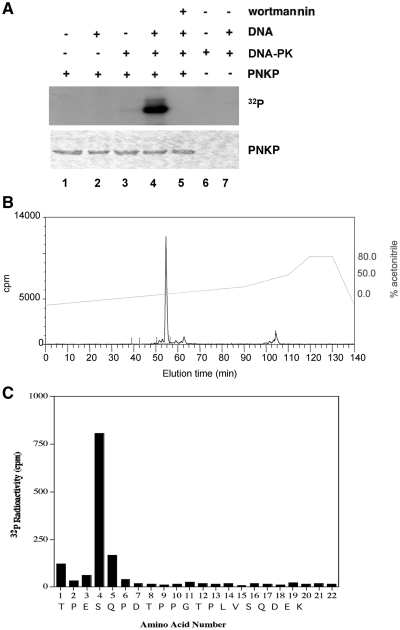
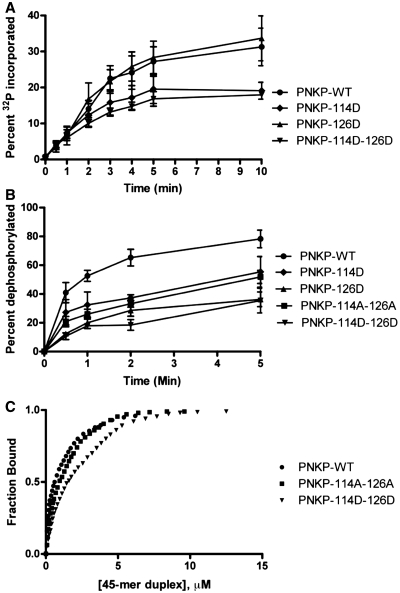
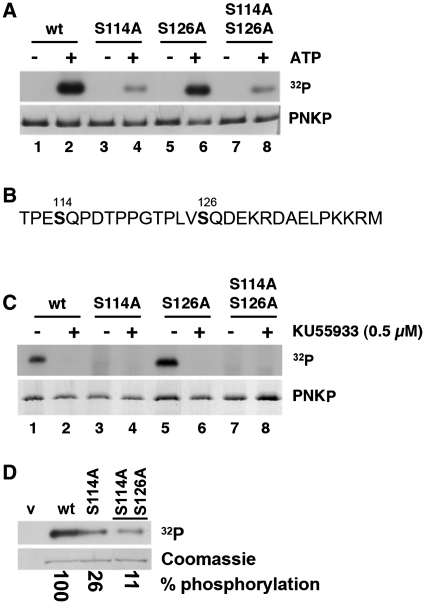
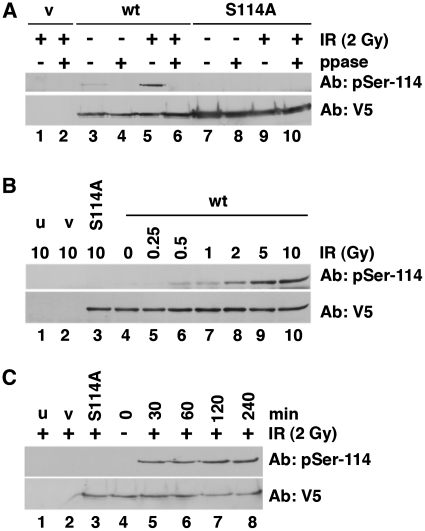
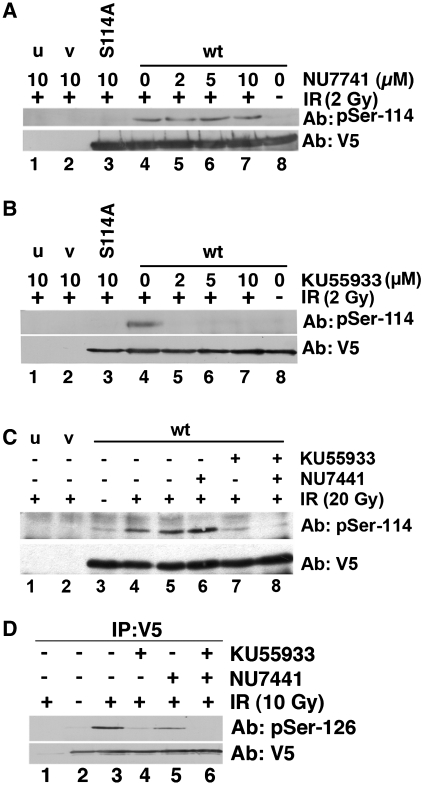
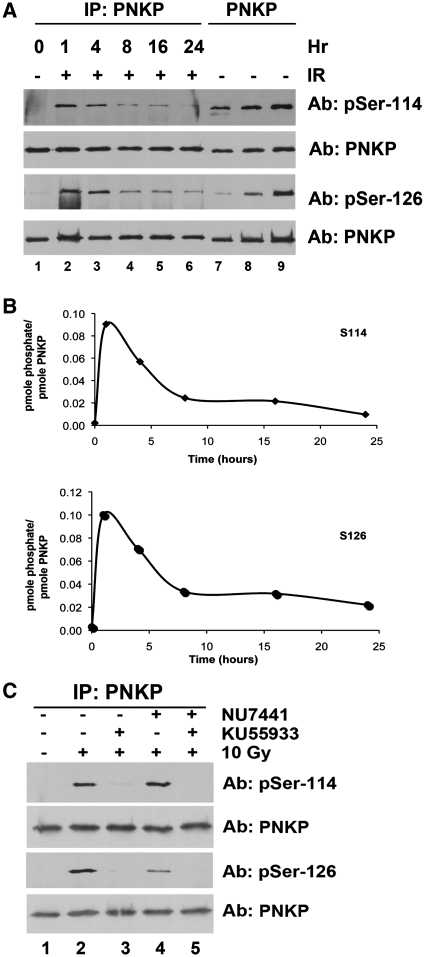
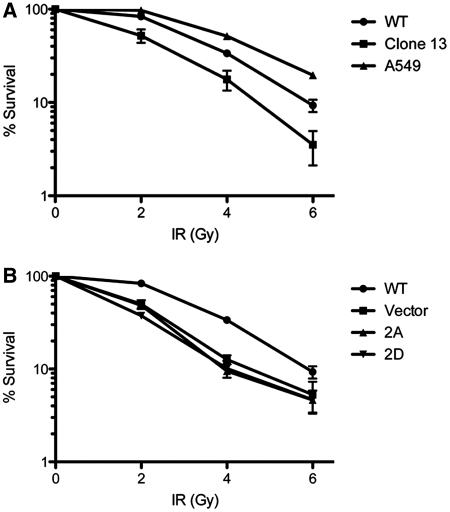
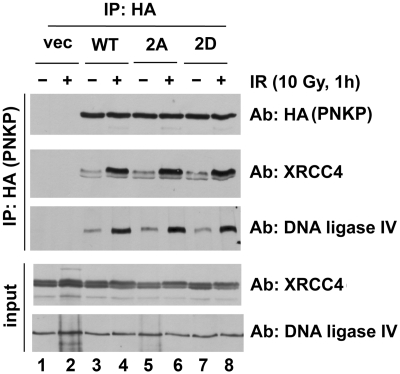
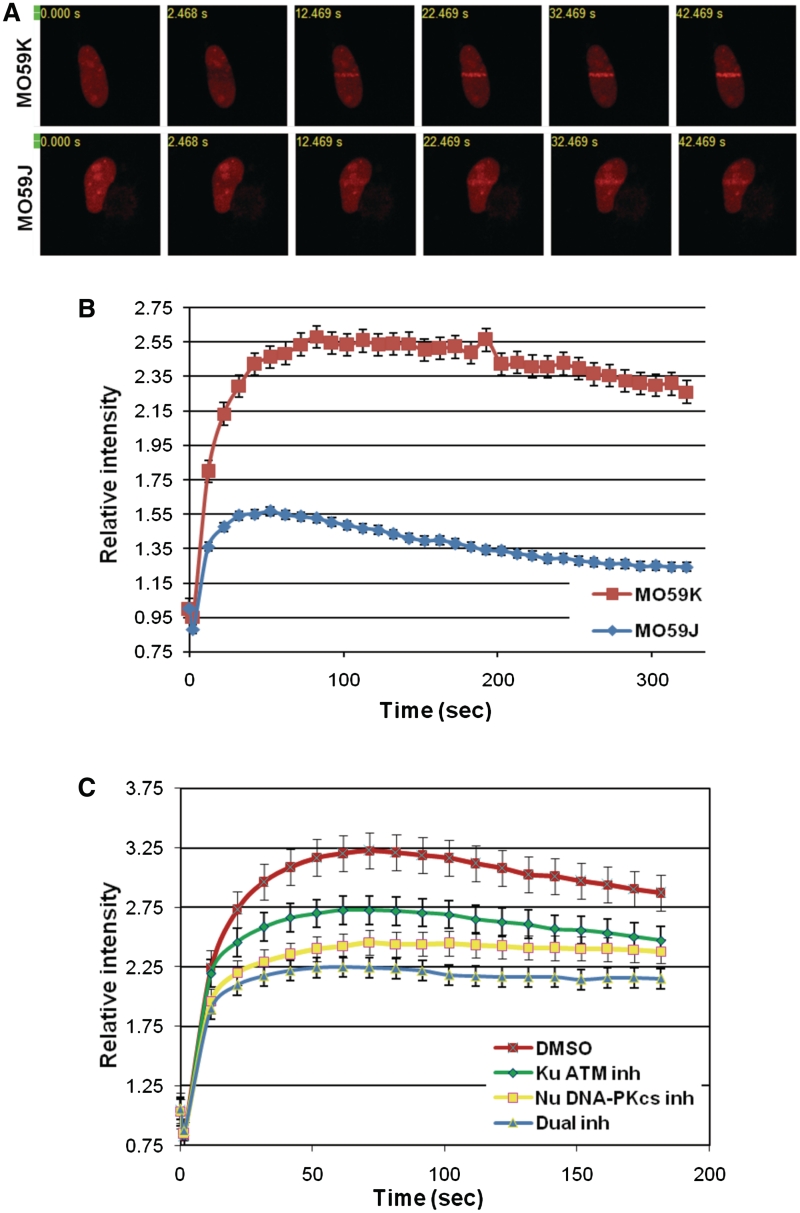
Human polynucleotide kinase/phosphatase (PNKP) is a dual specificity 5'-DNA kinase/3'-DNA phosphatase, with roles in base excision repair, DNA single-strand break repair and non-homologous end joining (NHEJ); yet precisely how PNKP functions in the repair of DNA double strand breaks (DSBs) remains unclear. We demonstrate that PNKP is phosphorylated by the DNA-dependent protein kinase (DNA-PK) and ataxia-telangiectasia mutated (ATM) in vitro. The major phosphorylation site for both kinases was serine 114, with serine 126 being a minor site. Ionizing radiation (IR)-induced phosphorylation of cellular PNKP on S114 was ATM dependent, whereas phosphorylation of PNKP on S126 required both ATM and DNA-PK. Inactivation of DNA-PK and/or ATM led to reduced PNKP at DNA damage sites in vivo. Cells expressing PNKP with alanine or aspartic acid at serines 114 and 126 were modestly radiosensitive and IR enhanced the association of PNKP with XRCC4 and DNA ligase IV; however, this interaction was not affected by mutation of PNKP phosphorylation sites. Purified PNKP protein with mutation of serines 114 and 126 had decreased DNA kinase and DNA phosphatase activities and reduced affinity for DNA in vitro. Together, our results reveal that IR-induced phosphorylation of PNKP by ATM and DNA-PK regulates PNKP function at DSBs.
人多核苷酸激酶/磷酸酶(PNKP)是一种具有 5'-DNA 激酶/3'-DNA 磷酸酶双重特异性的酶,在碱基切除修复、DNA 单链断裂修复和非同源末端连接(NHEJ)中发挥作用;然而,PNKP 在 DNA 双链断裂(DSB)修复中的作用机制仍不清楚。我们证明 PNKP 可在体外被 DNA 依赖性蛋白激酶(DNA-PK)和共济失调毛细血管扩张突变(ATM)磷酸化。两种激酶的主要磷酸化位点均为丝氨酸 114,丝氨酸 126 为次要磷酸化位点。电离辐射(IR)诱导的细胞 PNKP 在 S114 上的磷酸化依赖于 ATM,而 PNKP 在 S126 上的磷酸化需要 ATM 和 DNA-PK。DNA-PK 和/或 ATM 的失活导致体内 DNA 损伤部位 PNKP 减少。表达丝氨酸 114 和 126 处为丙氨酸或天冬氨酸的 PNKP 的细胞具有中等程度的放射敏感性,IR 增强了 PNKP 与 XRCC4 和 DNA 连接酶 IV 的结合;然而,这种相互作用不受 PNKP 磷酸化位点突变的影响。突变丝氨酸 114 和 126 的纯化 PNKP 蛋白具有降低的 DNA 激酶和 DNA 磷酸酶活性,并且在体外对 DNA 的亲和力降低。总之,我们的研究结果表明,ATM 和 DNA-PK 诱导的 PNKP 磷酸化调节了 PNKP 在 DSB 处的功能。