Institute of Pharmacology, University of Bern, Bern, Switzerland.
PLoS One. 2011;6(8):e22436. doi: 10.1371/journal.pone.0022436. Epub 2011 Aug 1.
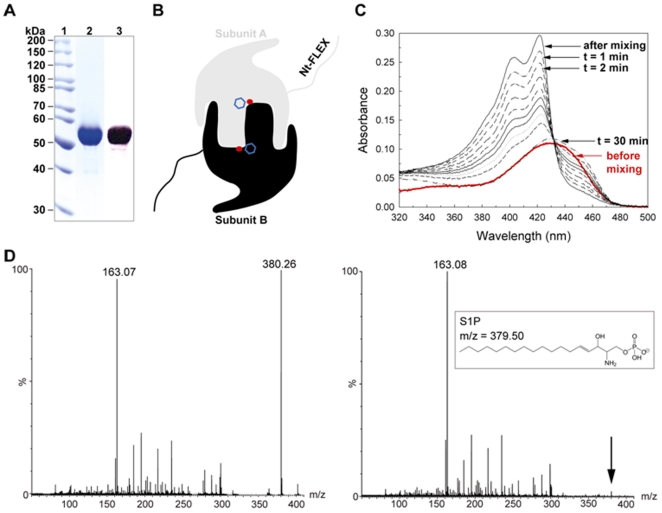
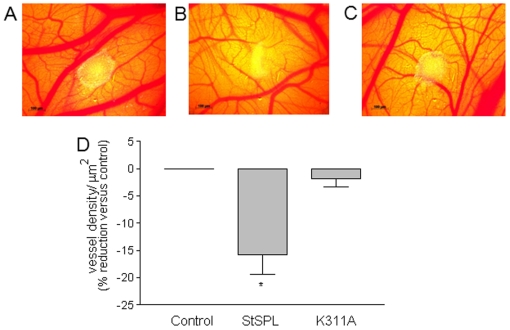
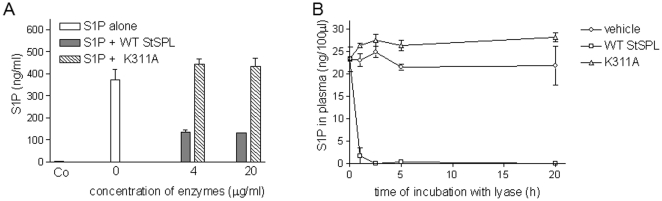
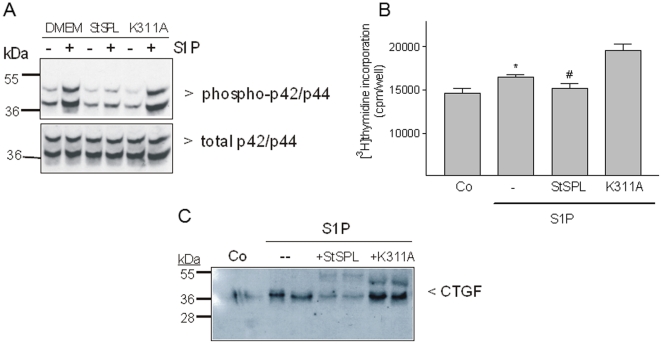
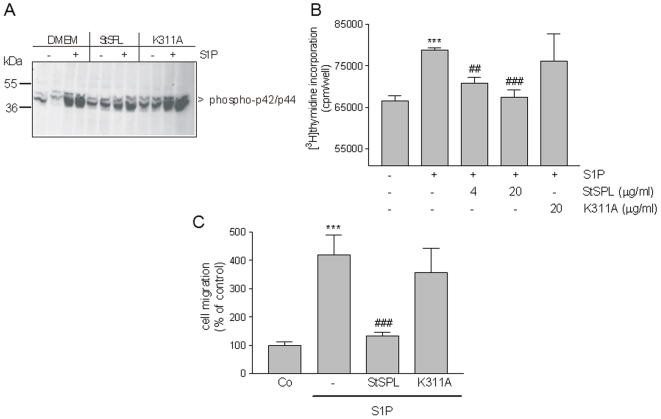
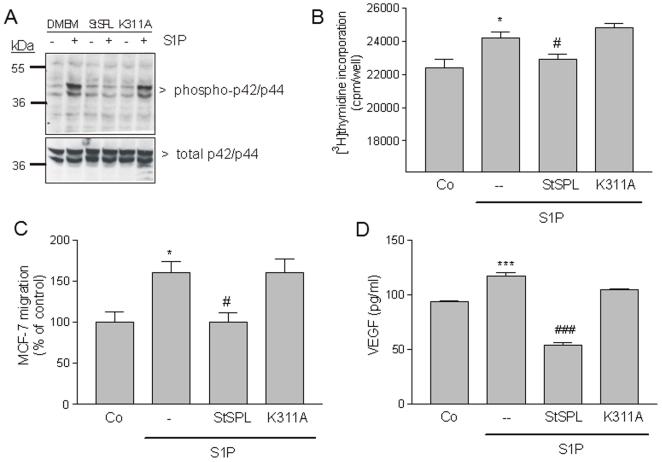
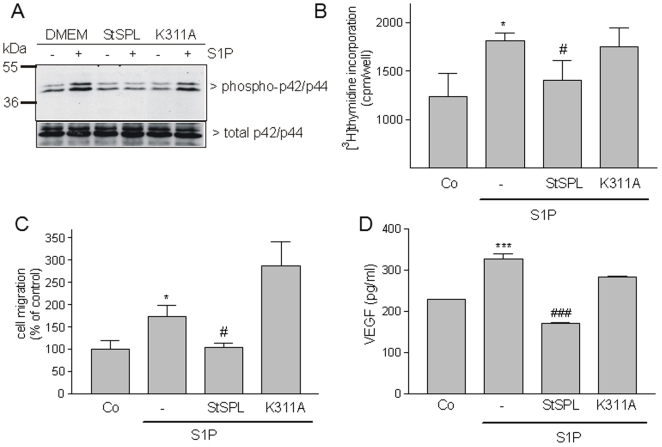
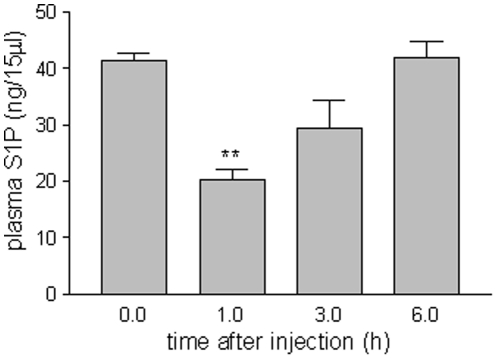
Sphingosine-1-phosphate (S1P) regulates a broad spectrum of fundamental cellular processes like proliferation, death, migration and cytokine production. Therefore, elevated levels of S1P may be causal to various pathologic conditions including cancer, fibrosis, inflammation, autoimmune diseases and aberrant angiogenesis. Here we report that S1P lyase from the prokaryote Symbiobacterium thermophilum (StSPL) degrades extracellular S1P in vitro and in blood. Moreover, we investigated its effect on cellular responses typical of fibrosis, cancer and aberrant angiogenesis using renal mesangial cells, endothelial cells, breast (MCF-7) and colon (HCT 116) carcinoma cells as disease models. In all cell types, wild-type StSPL, but not an inactive mutant, disrupted MAPK phosphorylation stimulated by exogenous S1P. Functionally, disruption of S1P receptor signaling by S1P depletion inhibited proliferation and expression of connective tissue growth factor in mesangial cells, proliferation, migration and VEGF expression in carcinoma cells, and proliferation and migration of endothelial cells. Upon intravenous injection of StSPL in mice, plasma S1P levels rapidly declined by 70% within 1 h and then recovered to normal 6 h after injection. Using the chicken chorioallantoic membrane model we further demonstrate that also under in vivo conditions StSPL, but not the inactive mutant, inhibited tumor cell-induced angiogenesis as an S1P-dependent process. Our data demonstrate that recombinant StSPL is active under extracellular conditions and holds promise as a new enzyme therapeutic for diseases associated with increased levels of S1P and S1P receptor signaling.
鞘氨醇-1-磷酸(S1P)调节广泛的基本细胞过程,如增殖、死亡、迁移和细胞因子产生。因此,S1P 水平升高可能与多种病理状况有关,包括癌症、纤维化、炎症、自身免疫性疾病和异常血管生成。在这里,我们报告来自原核生物嗜热共生菌(Symbiobacterium thermophilum)的 S1P 裂解酶(StSPL)在体外和血液中降解细胞外 S1P。此外,我们使用肾系膜细胞、内皮细胞、乳腺(MCF-7)和结肠(HCT 116)癌细胞作为疾病模型,研究了其对纤维化、癌症和异常血管生成的典型细胞反应的影响。在所有细胞类型中,野生型 StSPL,但不是无活性突变体,破坏了外源性 S1P 刺激的 MAPK 磷酸化。功能上,通过 S1P 耗竭破坏 S1P 受体信号转导抑制系膜细胞中 S1P 受体信号转导,抑制增殖和结缔组织生长因子的表达,抑制癌细胞的增殖、迁移和 VEGF 表达,以及内皮细胞的增殖和迁移。在小鼠体内静脉注射 StSPL 后,血浆 S1P 水平在 1 小时内迅速下降 70%,然后在注射后 6 小时恢复正常。使用鸡胚绒毛尿囊膜模型,我们进一步证明,在体内条件下,StSPL 但不是无活性突变体,抑制肿瘤细胞诱导的血管生成,作为一种 S1P 依赖性过程。我们的数据表明,重组 StSPL 在细胞外条件下具有活性,并有望成为一种新的酶治疗方法,用于治疗与 S1P 和 S1P 受体信号转导水平升高相关的疾病。