Department of Respiratory Therapy, Chang Gung Memorial Hospital, Taoyuan, Taiwan.
PLoS One. 2011;6(8):e22689. doi: 10.1371/journal.pone.0022689. Epub 2011 Aug 1.
Post-operative pulmonary complications significantly affect patient survival rates, but there is still no conclusive evidence regarding the effect of post-operative respiratory failure after liver transplantation on patient prognosis. This study aimed to predict the risk factors for post-operative respiratory failure (PRF) after liver transplantation and the impact on short-term survival rates.
The retrospective observational cohort study was conducted in a twelve-bed adult surgical intensive care unit in northern Taiwan. The medical records of 147 liver transplant patients were reviewed from September 2002 to July 2007. Sixty-two experienced post-operative respiratory failure while the remaining 85 patients did not.
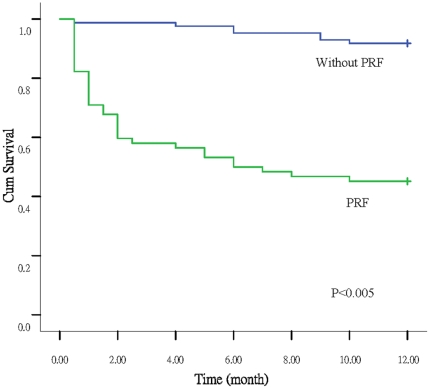
Gender, age, etiology, disease history, pre-operative ventilator use, molecular adsorbent re-circulating system (MARS) use, source of organ transplantation, model for end-stage liver disease score (MELD) and Child-Turcotte-Pugh score calculated immediately before surgery were assessed for the two groups. The length of the intensive care unit stay, admission duration, and mortality within 30 days, 3 months, and 1 year were also evaluated. Using a logistic regression model, post-operative respiratory failure correlated with diabetes mellitus prior to liver transplantation, pre-operative impaired renal function, pre-operative ventilator use, pre-operative MARS use and deceased donor source of organ transplantation (p<0.05). Once liver transplant patients developed PRF, their length of ICU stay and admission duration were prolonged, significantly increasing their mortality and morbidity (p<0.001).
The predictive pre-operative risk factors significantly influenced the occurrence of post-operative respiratory failure after liver transplantation.
术后肺部并发症显著影响患者的生存率,但术后肝移植后呼吸衰竭对患者预后的影响仍没有确凿的证据。本研究旨在预测肝移植后术后呼吸衰竭(PRF)的危险因素及其对短期生存率的影响。
这是一项在台湾北部一家有 12 张床位的成人外科重症监护病房进行的回顾性观察性队列研究。回顾了 2002 年 9 月至 2007 年 7 月期间 147 例肝移植患者的病历。62 例患者术后发生呼吸衰竭,其余 85 例患者未发生呼吸衰竭。
评估了两组患者的性别、年龄、病因、病史、术前使用呼吸机、分子吸附再循环系统(MARS)、器官移植来源、终末期肝病模型评分(MELD)和Child-Turcotte-Pugh 评分。还评估了两组患者在重症监护病房的停留时间、住院时间以及术后 30 天、3 个月和 1 年内的死亡率。使用逻辑回归模型,肝移植前糖尿病、术前肾功能不全、术前使用呼吸机、术前使用 MARS 以及已故供体器官移植与术后呼吸衰竭相关(p<0.05)。一旦肝移植患者发生 PRF,他们的 ICU 停留时间和住院时间延长,显著增加了他们的死亡率和发病率(p<0.001)。
术前预测性危险因素显著影响肝移植后术后呼吸衰竭的发生。