Division of Pharmacotherapy, Kinki University School of Pharmacy, Kowakae, Higashi-Osaka, Japan.
J Exp Clin Cancer Res. 2011 Aug 10;30(1):74. doi: 10.1186/1756-9966-30-74.
Statins are inhibitors of 3-hydroxy-3-methylglutaryl-coenzyme A reductase, the rate-limiting enzyme in cholesterol synthesis. The inhibition of this key enzyme in the mevalonate pathway leads to suppression of cell proliferation and induction of apoptosis. However, the molecular mechanism of apoptosis induction by statins is not well understood in glioblastoma. In the present study, we attempted to elucidate the mechanism by which statins induce apoptosis in C6 glioma cells.
The cytotoxicity of statins toward the C6 glioma cells were evaluated using a cell viability assay. The enzyme activity of caspase-3 was determined using activity assay kits. The effects of statins on signal transduction molecules were determined by western blot analyses.
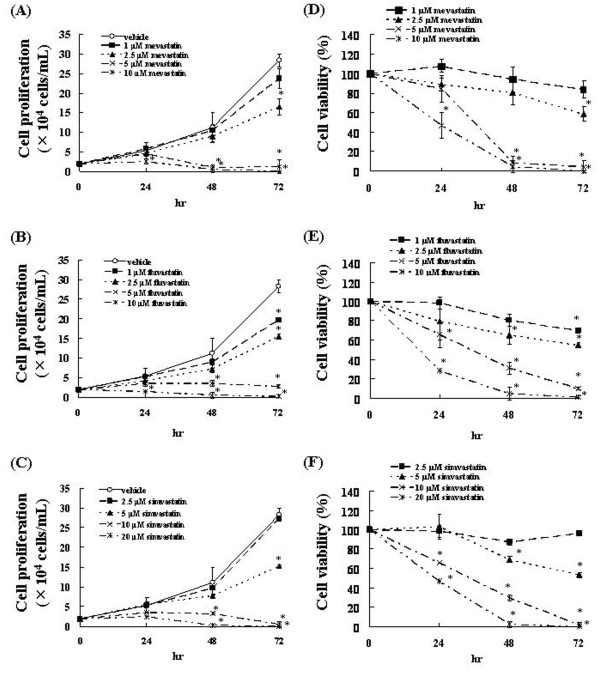
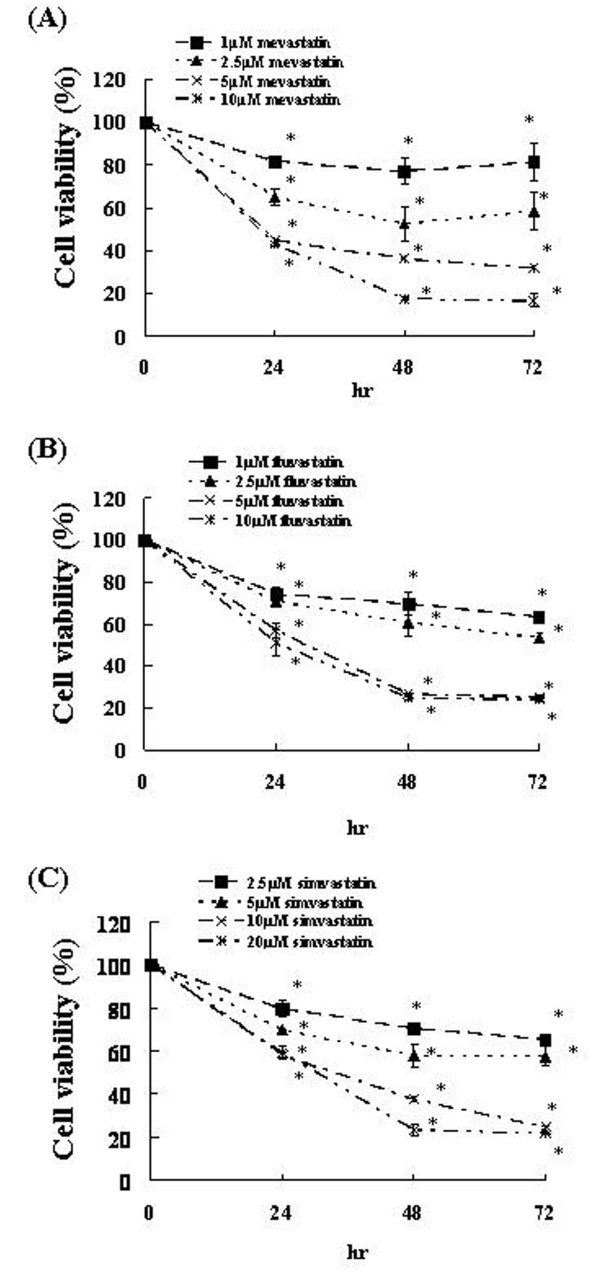
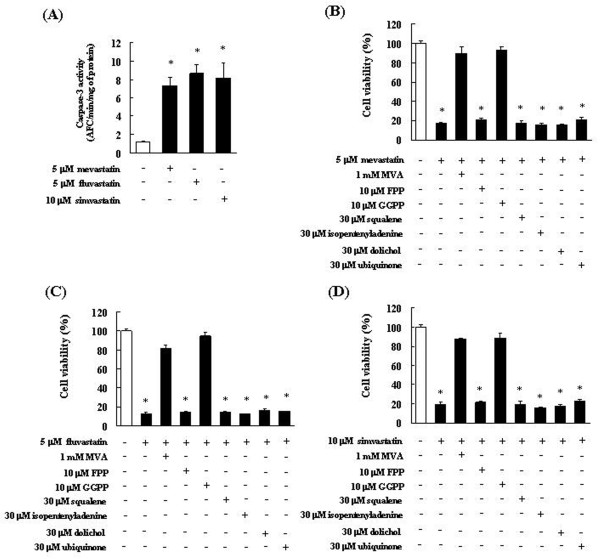
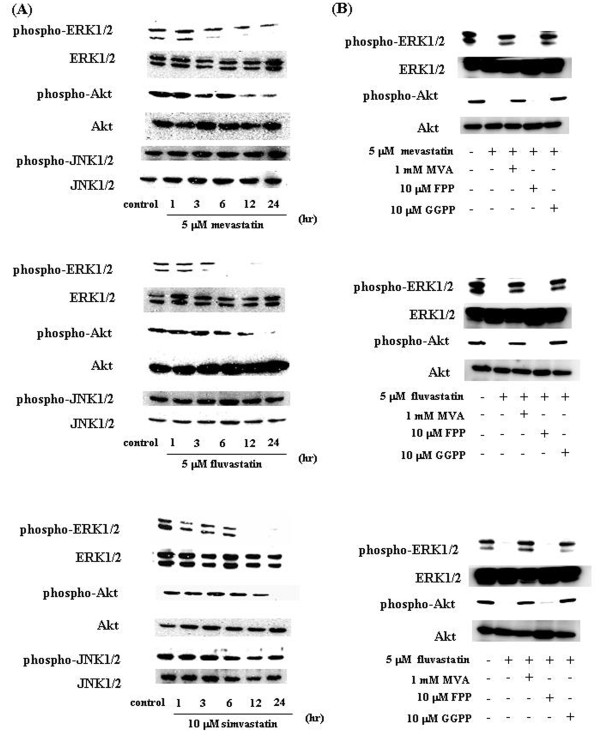
We found that statins inhibited cell proliferation and induced apoptosis in these cells. We also observed an increase in caspase-3 activity. The apoptosis induced by statins was not inhibited by the addition of farnesyl pyrophosphate, squalene, ubiquinone, and isopentenyladenine, but by geranylgeranyl-pyrophosphate (GGPP). Furthermore, statins decreased the levels of phosphorylated extracellular signal-regulated kinase 1/2 (ERK1/2) and Akt.
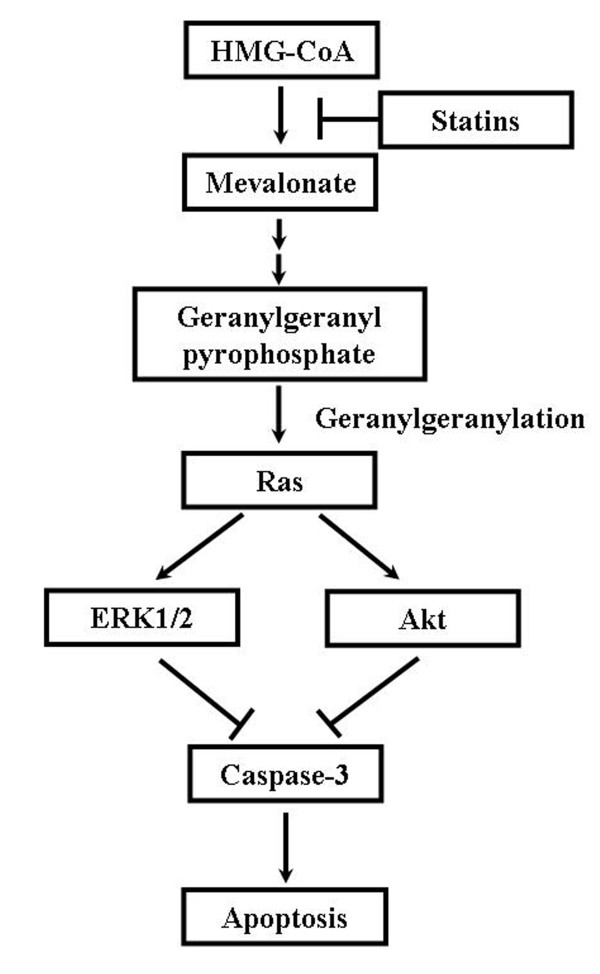
These results suggest that statins induce apoptosis when GGPP biosynthesis is inhibited and consequently decreases the level of phosphorylated ERK1/2 and Akt. The results of this study also indicate that statins could be used as anticancer agents in glioblastoma.
他汀类药物是 3-羟基-3-甲基戊二酰辅酶 A 还原酶(胆固醇合成的限速酶)的抑制剂。该酶在甲羟戊酸途径中的抑制作用导致细胞增殖受到抑制和凋亡诱导。然而,他汀类药物诱导脑胶质瘤细胞凋亡的分子机制尚不清楚。在本研究中,我们试图阐明他汀类药物诱导 C6 神经胶质瘤细胞凋亡的机制。
用细胞活力测定法评估他汀类药物对 C6 神经胶质瘤细胞的细胞毒性。用活性测定试剂盒测定半胱天冬酶-3 的酶活性。用 Western blot 分析测定他汀类药物对信号转导分子的影响。
我们发现他汀类药物抑制这些细胞的增殖并诱导其凋亡。我们还观察到半胱天冬酶-3 活性增加。他汀类药物诱导的凋亡不受法呢基焦磷酸、角鲨烯、泛醌和异戊烯基腺嘌呤的抑制,但受香叶基香叶基焦磷酸(GGPP)的抑制。此外,他汀类药物降低了磷酸化细胞外信号调节激酶 1/2(ERK1/2)和 Akt 的水平。
这些结果表明,当 GGPP 生物合成受到抑制时,他汀类药物诱导细胞凋亡,并降低磷酸化 ERK1/2 和 Akt 的水平。本研究的结果还表明,他汀类药物可作为脑胶质瘤的抗癌药物。