Department of Pathology, Microbiology, and Immunology, Vanderbilt University School of Medicine, Nashville, TN 37232, USA.
Cell Host Microbe. 2011 Aug 18;10(2):158-64. doi: 10.1016/j.chom.2011.07.004.
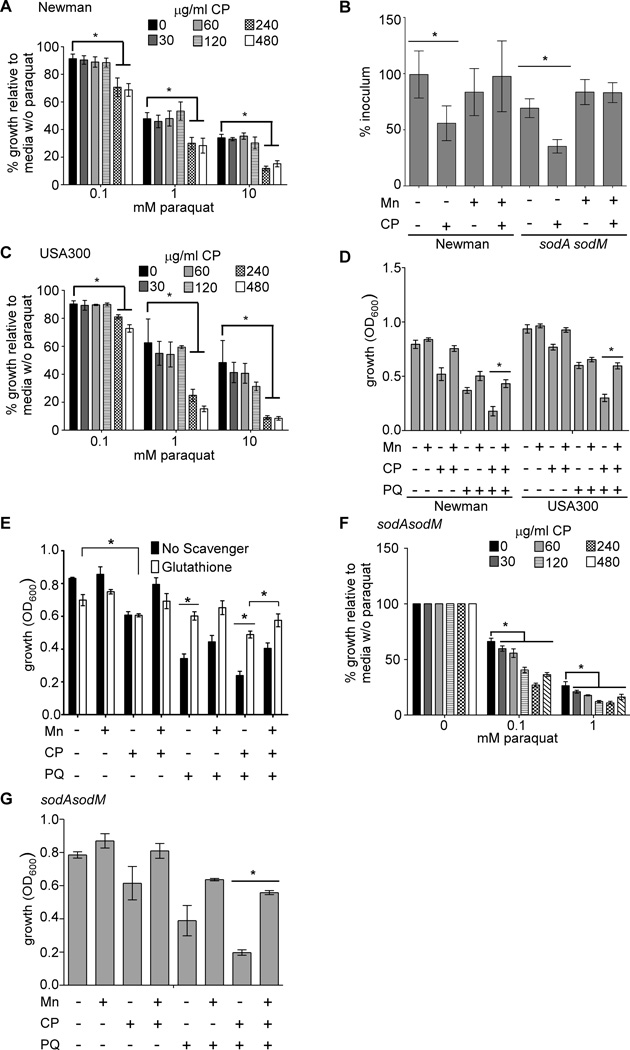
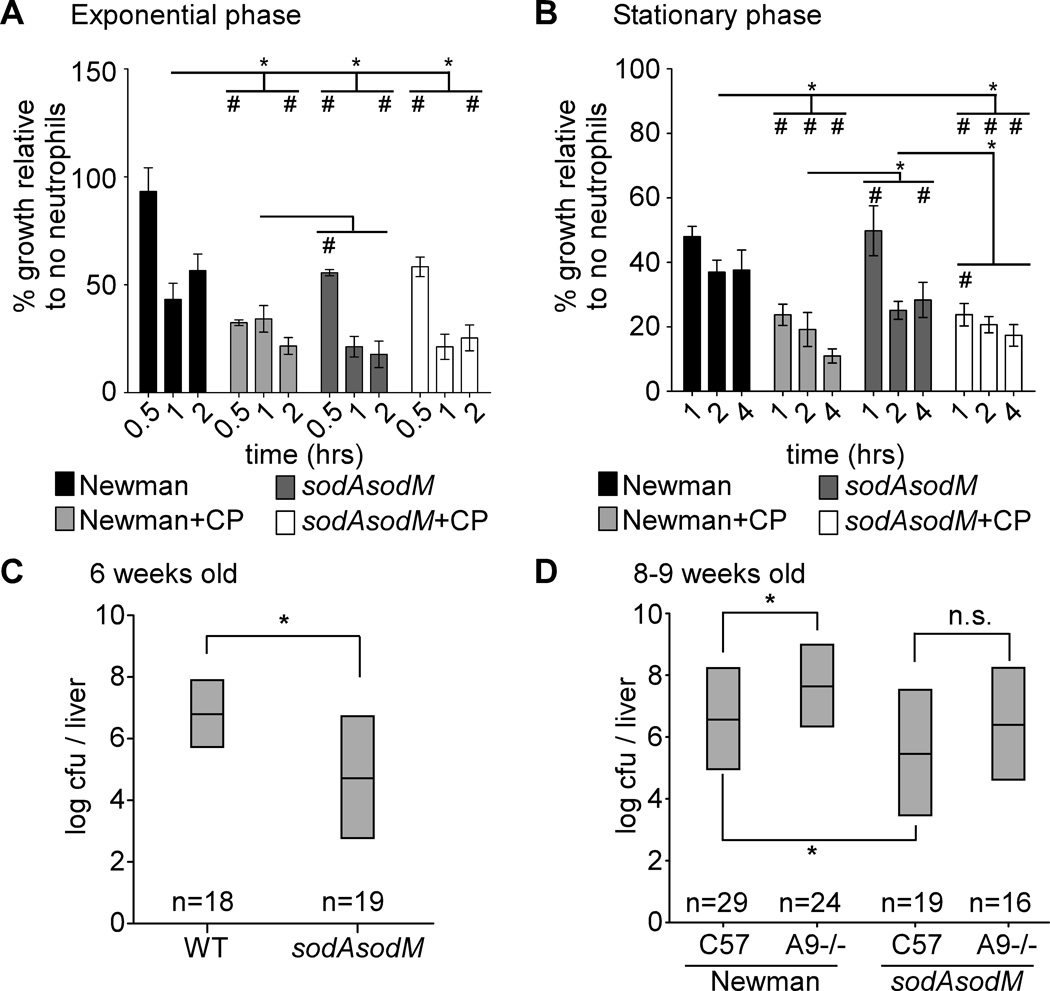
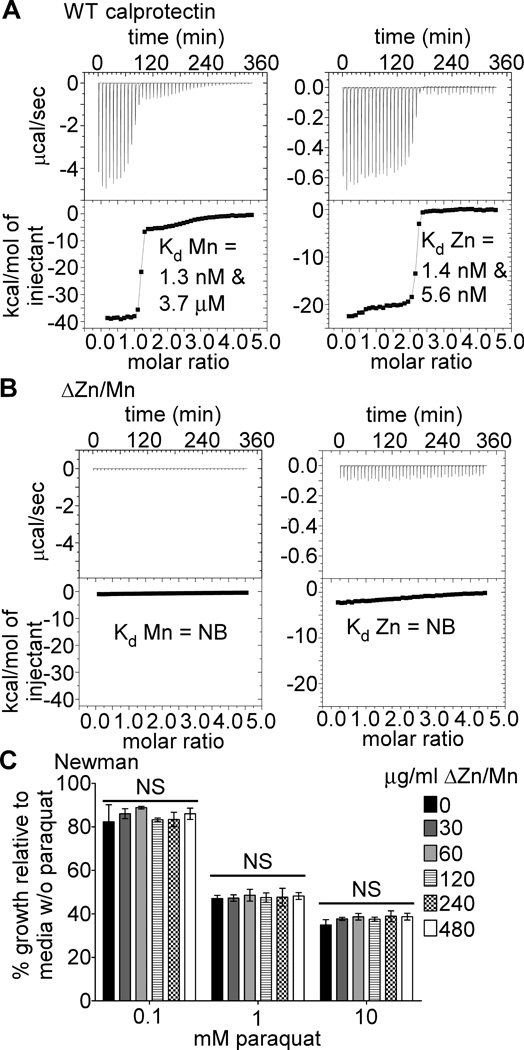
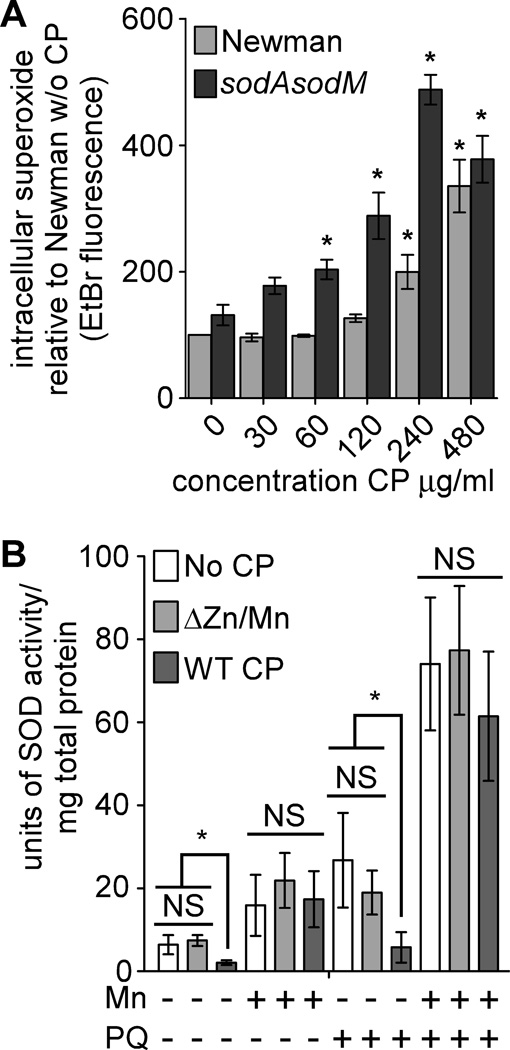
By sequestering manganese and zinc, the neutrophil protein calprotectin plays a crucial role in host defense against bacterial and fungal pathogens. However, the essential processes disrupted by calprotectin remain unknown. We report that calprotectin enhances the sensitivity of Staphylococcus aureus to superoxide through inhibition of manganese-dependent bacterial superoxide defenses, thereby increasing superoxide levels within the bacterial cell. Superoxide dismutase activity is required for full virulence in a systemic model of S. aureus infection, and disruption of staphylococcal superoxide defenses by calprotectin augments the antimicrobial activity of neutrophils promoting in vivo clearance. Calprotectin mutated in two transition metal binding sites and therefore defective in binding manganese and zinc does not inhibit microbial growth, unequivocally linking the antimicrobial properties of calprotectin to metal chelation. These results suggest that calprotectin contributes to host defense by rendering bacterial pathogens more sensitive to host immune effectors and reducing bacterial growth.
中性粒细胞蛋白钙卫蛋白通过螯合锰和锌,在宿主防御细菌和真菌病原体中发挥关键作用。然而,钙卫蛋白破坏的基本过程仍不清楚。我们报告钙卫蛋白通过抑制锰依赖性细菌超氧化物防御来增强金黄色葡萄球菌对超氧化物的敏感性,从而增加细菌细胞内的超氧化物水平。超氧化物歧化酶活性是金黄色葡萄球菌全身性感染模型中完全毒力所必需的,而钙卫蛋白破坏金黄色葡萄球菌的超氧化物防御会增强中性粒细胞的抗菌活性,促进体内清除。在两个过渡金属结合位点发生突变且因此无法结合锰和锌的钙卫蛋白不能抑制微生物的生长,这明确地将钙卫蛋白的抗菌特性与金属螯合联系起来。这些结果表明,钙卫蛋白通过使细菌病原体对宿主免疫效应物更敏感并减少细菌生长,从而有助于宿主防御。