Veranitisagul Chatchai, Kaewvilai Attaphon, Sangngern Sarawut, Wattanathana Worawat, Suramitr Songwut, Koonsaeng Nattamon, Laobuthee Apirat
Department of Materials and Metallurgical Engineering, Faculty of Engineering, Rajamangala University of Technology Thanyaburi, Pathumthani 12110, Thailand; E-Mail:
Int J Mol Sci. 2011;12(7):4365-77. doi: 10.3390/ijms12074365. Epub 2011 Jul 5.
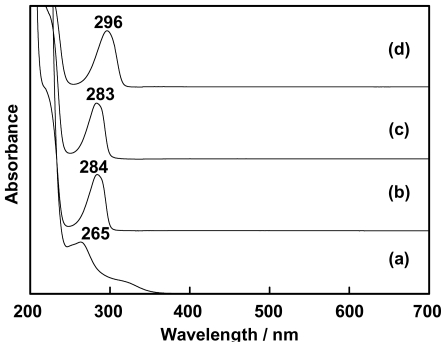
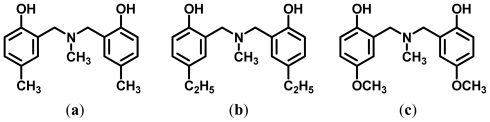
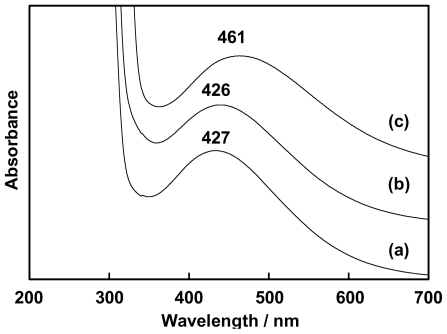
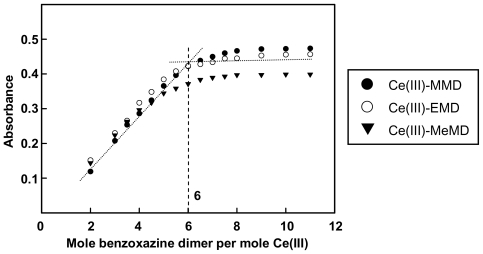
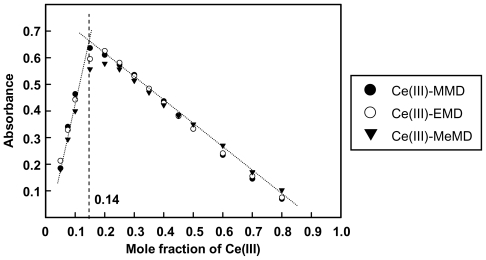
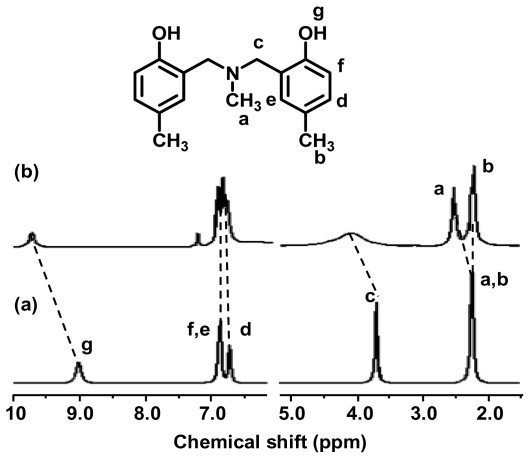
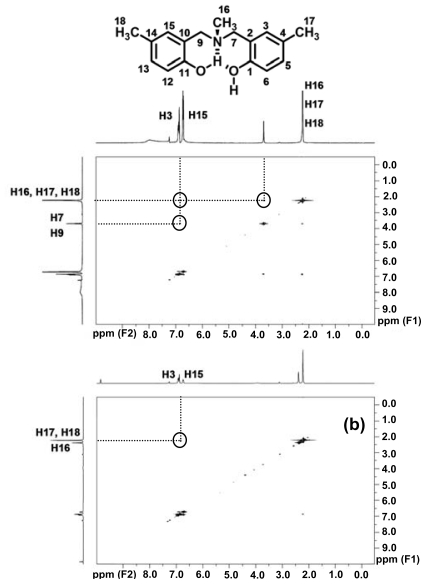
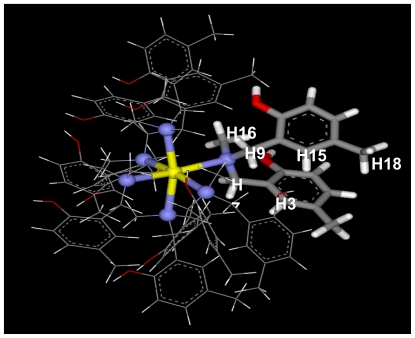
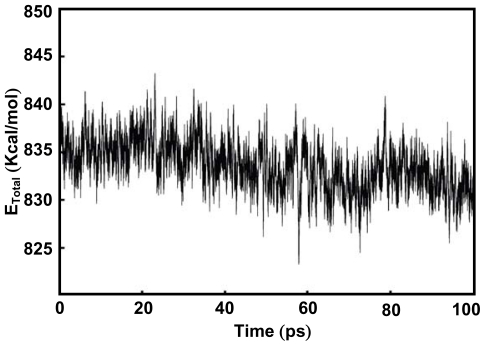
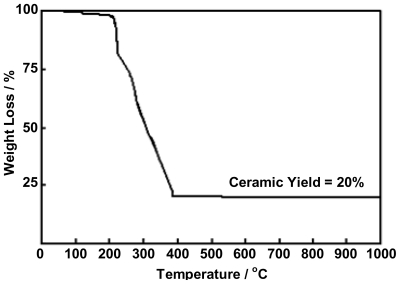
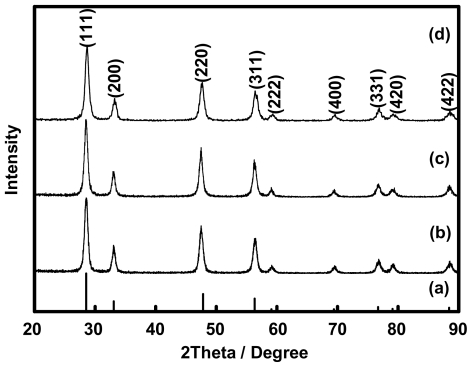
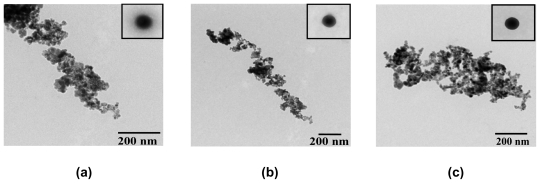
N,N-bis(2-hydroxybenzyl)alkylamines, benzoxazine dimers, are the major product produced from benzoxazine monomers on mono-functional phenol by the one step ring opening reaction. Due to the metal responsive property of benzoxazine dimers, in this present work, N,N-bis(5-methyl-2-hydroxybenzyl)methylamine (MMD), N,N-bis (5-ethyl-2-hydroxybenzyl)methylamine (EMD), and N,N-bis(5-methoxy-2-hydroxybenzyl) methyl amine (MeMD), are considered as novel ligands for rare earth metal ion, such as cerium(III) ion. The complex formed when the clear and colorless solutions of cerium nitrate and benzoxazine dimers were mixed, results in a brown colored solution. The metal-ligand ratios determined by the molar ratio and the Job's methods were found to be in a ratio of 1:6. To clarify the evidence of the complex formation mechanism, the interactions among protons in benzoxazine dimers both prior to and after the formation of complexes were determined by means of (1)H-NMR, 2D-NMR and a computational simulation. The single phase ceria (CeO(2)) was successfully prepared by thermal decomposition of the Ce(III)-benzoxazine dimer complexes at 600 °C for 2 h, was then characterized using XRD. In addition, the ceria powder investigated by TEM is spherical with an average diameter of 20 nm.
N,N-双(2-羟基苄基)烷基胺,即苯并恶嗪二聚体,是苯并恶嗪单体与单官能酚通过一步开环反应生成的主要产物。由于苯并恶嗪二聚体具有金属响应特性,在本研究中,N,N-双(5-甲基-2-羟基苄基)甲胺(MMD)、N,N-双(5-乙基-2-羟基苄基)甲胺(EMD)和N,N-双(5-甲氧基-2-羟基苄基)甲胺(MeMD)被视为稀土金属离子(如铈(III)离子)的新型配体。当硝酸铈和苯并恶嗪二聚体的澄清无色溶液混合时形成的络合物,会产生棕色溶液。通过摩尔比法和乔布氏法测定的金属-配体比为1:6。为了阐明络合物形成机制的证据,通过(1)H-NMR、二维核磁共振和计算模拟确定了络合物形成前后苯并恶嗪二聚体中质子之间的相互作用。通过在600℃下热分解Ce(III)-苯并恶嗪二聚体络合物2小时成功制备了单相二氧化铈(CeO₂),然后用X射线衍射对其进行了表征。此外,通过透射电子显微镜研究的二氧化铈粉末呈球形,平均直径为20纳米。