Department of Life Science, Research Center for Biomolecules and Biosystems, College of Natural Science, Chung-Ang University, Seoul, Korea.
PLoS Pathog. 2011 Aug;7(8):e1002177. doi: 10.1371/journal.ppat.1002177. Epub 2011 Aug 11.
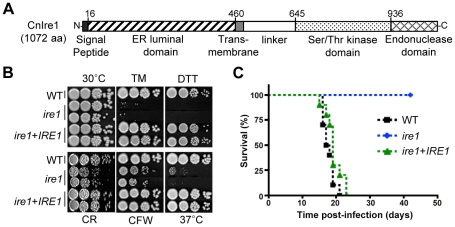
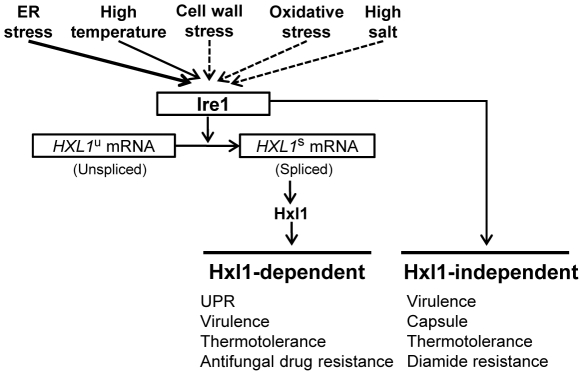
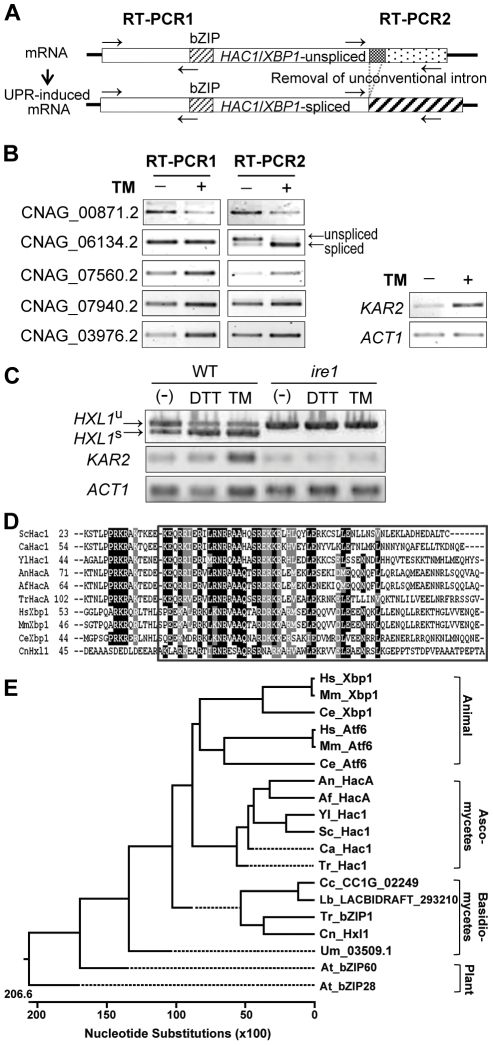
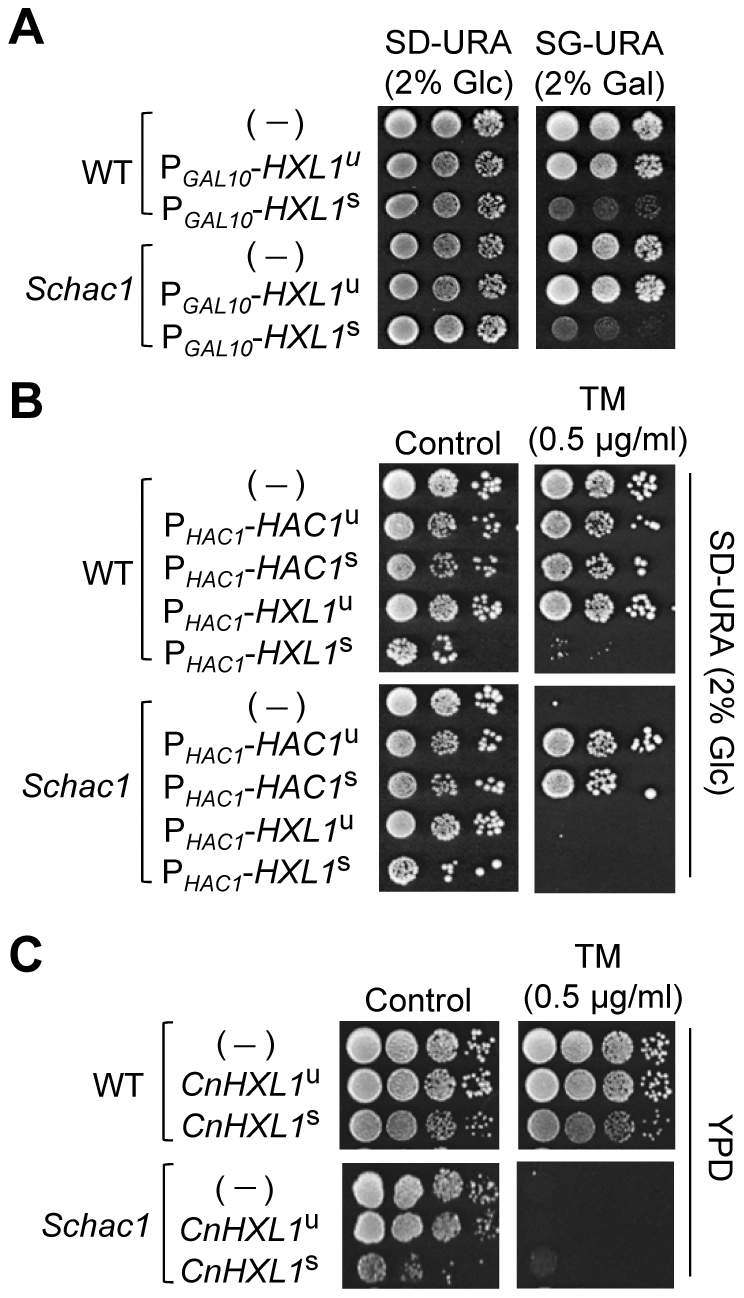
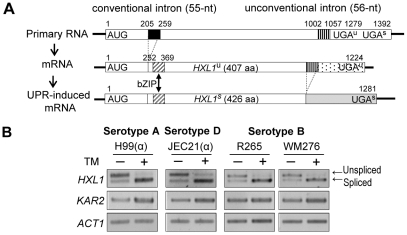
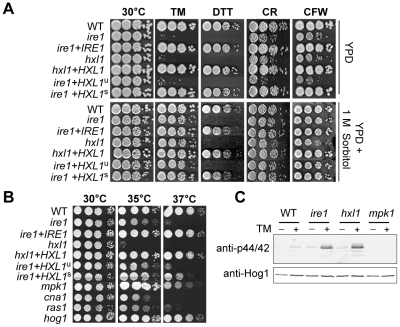
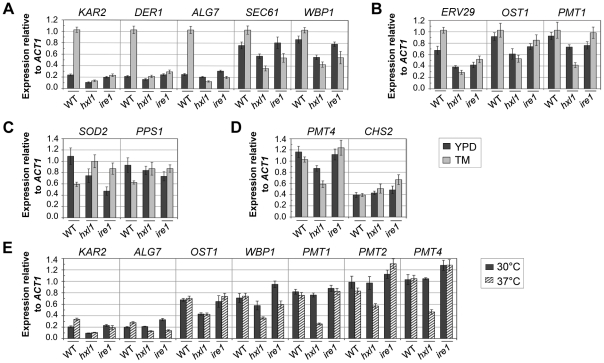
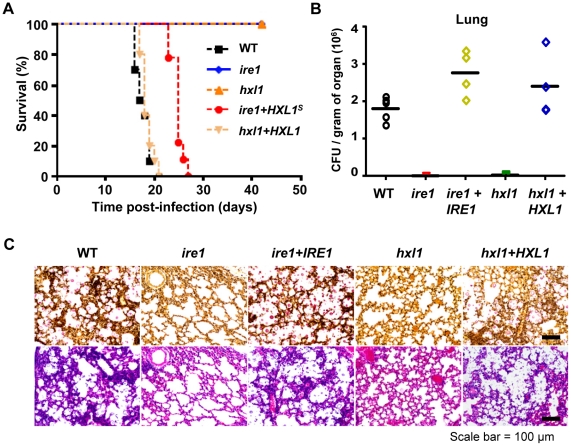
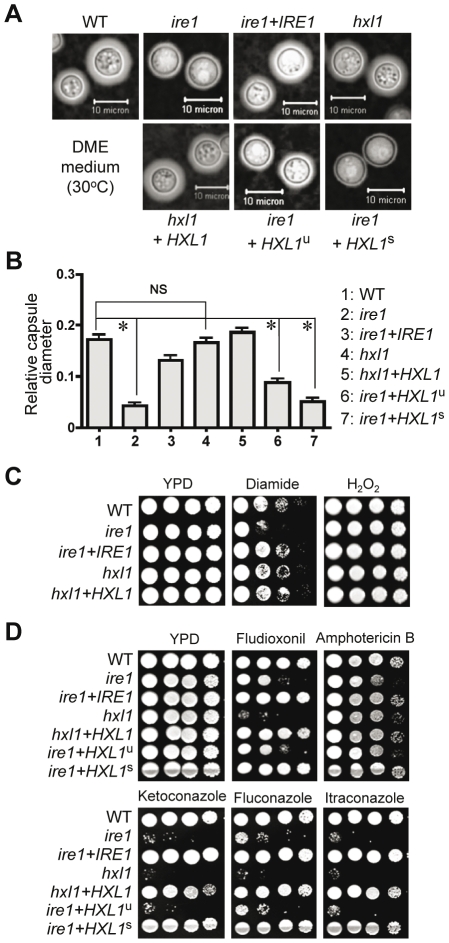
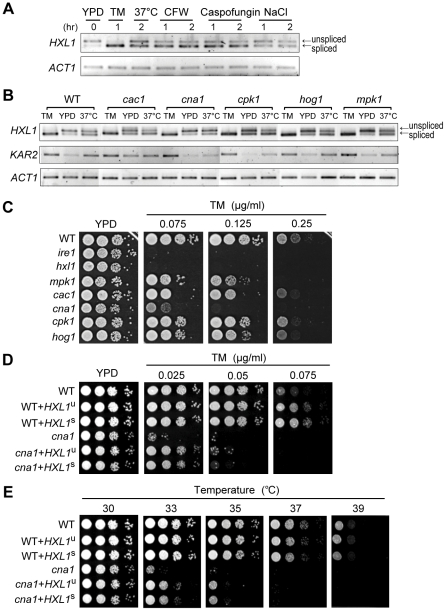
In eukaryotic cells, the unfolded protein response (UPR) pathway plays a crucial role in cellular homeostasis of the endoplasmic reticulum (ER) during exposure to diverse environmental conditions that cause ER stress. Here we report that the human fungal pathogen Cryptococcus neoformans has evolved a unique UPR pathway composed of an evolutionarily conserved Ire1 protein kinase and a novel bZIP transcription factor encoded by HXL1 (HAC1 and XBP1-Like gene 1). C. neoformans HXL1 encodes a protein lacking sequence homology to any known fungal or mammalian Hac1/Xbp1 protein yet undergoes the UPR-induced unconventional splicing in an Ire1-dependent manner upon exposure to various stresses. The structural organization of HXL1 and its unconventional splicing is widely conserved in C. neoformans strains of divergent serotypes. Notably, both C. neoformans ire1 and hxl1 mutants exhibited extreme growth defects at 37°C and hypersensitivity to ER stress and cell wall destabilization. All of the growth defects of the ire1 mutant were suppressed by the spliced active form of Hxl1, supporting that HXL1 mRNA is a downstream target of Ire1. Interestingly, however, the ire1 and hxl1 mutants showed differences in thermosensitivity, expression patterns for a subset of genes, and capsule synthesis, indicating that Ire1 has both Hxl1-dependent and -independent functions in C. neoformans. Finally, Ire1 and Hxl1 were shown to be critical for virulence of C. neoformans, suggesting UPR signaling as a novel antifungal therapeutic target.
在真核细胞中,未折叠蛋白反应(UPR)途径在暴露于各种环境条件下,内质网(ER)细胞内环境的平衡中起着至关重要的作用,这些条件会导致 ER 应激。在这里,我们报告人类真菌病原体新生隐球菌已经进化出一种独特的 UPR 途径,该途径由一个进化上保守的 Ire1 蛋白激酶和一个由 HXL1(HAC1 和 XBP1-Like gene 1)编码的新型 bZIP 转录因子组成。新生隐球菌 HXL1 编码的蛋白与任何已知的真菌或哺乳动物 Hac1/Xbp1 蛋白均无序列同源性,但在暴露于各种应激时,以 Ire1 依赖的方式经历 UPR 诱导的非常规剪接。HXL1 的结构组织及其非常规剪接在不同血清型的新生隐球菌菌株中广泛保守。值得注意的是,ire1 和 hxl1 突变体在 37°C 时表现出极端的生长缺陷,对 ER 应激和细胞壁不稳定敏感。ire1 突变体的所有生长缺陷均被 Hxl1 的剪接活性形式抑制,支持 HXL1 mRNA 是 Ire1 的下游靶标。然而,有趣的是,ire1 和 hxl1 突变体在热敏性、一组基因的表达模式和荚膜合成方面表现出差异,表明 Ire1 在新生隐球菌中具有 Hxl1 依赖和非依赖的功能。最后,证明 Ire1 和 Hxl1 对新生隐球菌的毒力至关重要,表明 UPR 信号作为一种新的抗真菌治疗靶标。