• 文献检索
  • 文档翻译
  • 深度研究
  • 学术资讯
  • Suppr Zotero 插件Zotero 插件
  • 邀请有礼
  • 套餐&价格
  • 历史记录
应用&插件
Suppr Zotero 插件Zotero 插件浏览器插件Mac 客户端Windows 客户端微信小程序
定价
高级版会员购买积分包购买API积分包
服务
文献检索文档翻译深度研究API 文档MCP 服务
关于我们
关于 Suppr公司介绍联系我们用户协议隐私条款
关注我们

Suppr 超能文献

核心技术专利:CN118964589B侵权必究
粤ICP备2023148730 号-1Suppr @ 2026

文献检索

告别复杂PubMed语法,用中文像聊天一样搜索,搜遍4000万医学文献。AI智能推荐,让科研检索更轻松。

立即免费搜索

文件翻译

保留排版,准确专业,支持PDF/Word/PPT等文件格式,支持 12+语言互译。

免费翻译文档

深度研究

AI帮你快速写综述,25分钟生成高质量综述,智能提取关键信息,辅助科研写作。

立即免费体验

在夜间蛛形纲(节肢动物门)的争斗行为中存在空气运动信号的证据。

Evidence for air movement signals in the agonistic behaviour of a nocturnal arachnid (order Amblypygi).

机构信息

School of Biological Sciences, University of Nebraska Lincoln, Lincoln, Nebraska, United States of America.

出版信息

PLoS One. 2011;6(8):e22473. doi: 10.1371/journal.pone.0022473. Epub 2011 Aug 10.

DOI:10.1371/journal.pone.0022473
PMID:21853035
原文链接:https://pmc.ncbi.nlm.nih.gov/articles/PMC3154198/
Abstract

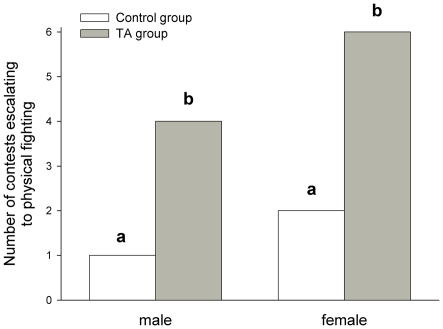
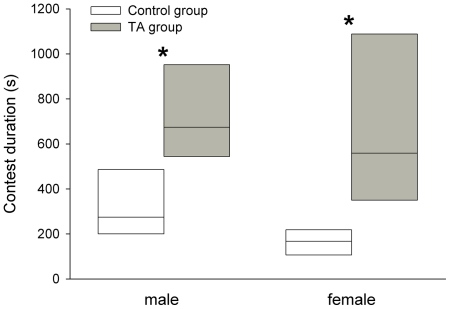
Many arthropods possess filiform hair sensilla (termed trichobothria in arachnids), which are extremely sensitive detectors of medium particle displacement. Electrophysiological evidence in some taxa suggests that these sensilla can detect air particle displacements resulting from intraspecific communication signals. However, it has not yet been shown for any species that the air particle displacements detected by the filiform hairs are themselves perceived as a 'signal' (i.e. that individuals make behavioural decisions based upon the responses of these organs to the displays of conspecifics). We investigate the agonistic behaviour of the whip spider Phrynus marginemaculatus and the role of its trichobothria in receiving agonistic signals. Whip spiders have extremely elongated 'antenniform' first legs, which they vibrate close to their opponents during agonistic interactions, inducing air movements that excite their opponents' trichobothria. We find that ablation of the trichobothria causes significant increases in: (I) contest duration, and (II) the probability of contest escalation past aggressive displays to physical fighting. Therefore, in the absence of air movement-sensitive sensilla, contest assessment is impaired. This suggests that whip spiders exploit true air movement signals during agonistic interactions, and that these are received by the trichobothria. Furthermore, these results indicate that, in whip spiders, such signals help mitigate the cost of agonistic interaction.

摘要

许多节肢动物都拥有丝状毛发感觉器(在蛛形纲动物中称为触毛),这些感觉器对中等大小的粒子位移非常敏感。一些分类群的电生理证据表明,这些感觉器可以检测到由于种内通讯信号而产生的空气粒子位移。然而,目前还没有任何一种物种表明,丝状毛发所检测到的空气粒子位移本身被视为一种“信号”(即个体根据这些器官对同种个体展示的反应做出行为决策)。我们研究了鞭蛛 Phrynus marginemaculatus 的争斗行为以及其触毛在接收争斗信号中的作用。鞭蛛具有极其细长的“触角状”第一对腿,它们在争斗互动中靠近对手振动,引起空气流动,从而激发对手的触毛。我们发现,触毛的消融会显著增加:(I)争斗持续时间,以及(II)争斗从攻击性展示升级为身体搏斗的可能性。因此,在缺乏对空气运动敏感的感觉器的情况下,争斗评估会受损。这表明,鞭蛛在争斗互动中利用真正的空气运动信号,而这些信号是由触毛接收的。此外,这些结果表明,在鞭蛛中,这些信号有助于减轻争斗互动的成本。
https://cdn.ncbi.nlm.nih.gov/pmc/blobs/a3af/3154198/eda38c46288d/pone.0022473.g002.jpg
https://cdn.ncbi.nlm.nih.gov/pmc/blobs/a3af/3154198/5bffbdb844e6/pone.0022473.g001.jpg
https://cdn.ncbi.nlm.nih.gov/pmc/blobs/a3af/3154198/eda38c46288d/pone.0022473.g002.jpg
https://cdn.ncbi.nlm.nih.gov/pmc/blobs/a3af/3154198/5bffbdb844e6/pone.0022473.g001.jpg
https://cdn.ncbi.nlm.nih.gov/pmc/blobs/a3af/3154198/eda38c46288d/pone.0022473.g002.jpg

相似文献

1
Evidence for air movement signals in the agonistic behaviour of a nocturnal arachnid (order Amblypygi).在夜间蛛形纲(节肢动物门)的争斗行为中存在空气运动信号的证据。
PLoS One. 2011;6(8):e22473. doi: 10.1371/journal.pone.0022473. Epub 2011 Aug 10.
2
Agonistic signals received by an arthropod filiform hair allude to the prevalence of near-field sound communication.节肢动物丝状毛所接收到的激动信号暗示了近场声音通讯的普遍性。
Proc Biol Sci. 2008 Feb 22;275(1633):363-8. doi: 10.1098/rspb.2007.1466.
3
Tactile learning by a whip spider, Phrynus marginemaculatus C.L. Koch (Arachnida, Amblypygi).鞭蛛(边缘斑足鞭蛛,C.L. 科赫,蛛形纲,无鞭目)的触觉学习
J Comp Physiol A Neuroethol Sens Neural Behav Physiol. 2009 Apr;195(4):393-9. doi: 10.1007/s00359-009-0417-8. Epub 2009 Feb 7.
4
Genomic resources and toolkits for developmental study of whip spiders (Amblypygi) provide insights into arachnid genome evolution and antenniform leg patterning.用于鞭蛛(无鞭目)发育研究的基因组资源和工具包为蛛形纲动物基因组进化和触角状腿的模式形成提供了见解。
Evodevo. 2020 Aug 28;11:18. doi: 10.1186/s13227-020-00163-w. eCollection 2020.
5
Viscosity-mediated motion coupling between pairs of trichobothria on the leg of the spider Cupiennius salei.蜘蛛Cupiennius salei腿部成对毛簇之间的粘性介导运动耦合。
J Comp Physiol A Neuroethol Sens Neural Behav Physiol. 2005 Aug;191(8):733-46. doi: 10.1007/s00359-005-0629-5. Epub 2005 Jul 22.
6
How to catch the wind: spider hairs specialized for sensing the movement of air.如何捕捉风:蜘蛛用于感知空气流动的特殊毛发。
Naturwissenschaften. 2000 Feb;87(2):51-8. doi: 10.1007/s001140050010.
7
Visual control of refuge recognition in the whip spider Phrynus marginemaculatus.视觉控制在有斑纹的食蛛螳 Phrynus marginemaculatus 中的避难所识别。
J Comp Physiol A Neuroethol Sens Neural Behav Physiol. 2021 Nov;207(6):729-737. doi: 10.1007/s00359-021-01509-y. Epub 2021 Sep 30.
8
Peripheral synapses and giant neurons in whip spiders.鞭蛛的外周突触和巨型神经元。
Microsc Res Tech. 2002 Aug 15;58(4):272-82. doi: 10.1002/jemt.10136.
9
Response of cricket and spider motion-sensing hairs to airflow pulsations.蟋蟀和蜘蛛触须对气流脉动的反应。
J R Soc Interface. 2009 Nov 6;6(40):1047-64. doi: 10.1098/rsif.2008.0523. Epub 2009 Feb 19.
10
Arthropod touch reception: spider hair sensilla as rapid touch detectors.节肢动物的触觉感受:蜘蛛刚毛感受器作为快速触觉探测器
J Comp Physiol A. 2001 May;187(4):303-12. doi: 10.1007/s003590100202.

引用本文的文献

1
Electrophysiological and behavioral responses of elongated solifuge sensilla to mechanical stimuli.长足蛛形纲动物感觉器对机械刺激的电生理和行为反应。
J Comp Physiol A Neuroethol Sens Neural Behav Physiol. 2025 May;211(3):277-292. doi: 10.1007/s00359-025-01731-y. Epub 2025 Feb 5.
2
Comparative biology of spatial navigation in three arachnid orders (Amblypygi, Araneae, and Scorpiones).三种蛛形纲动物目(盲蛛目、蜘蛛目和蝎子目)的空间导航比较生物学。
J Comp Physiol A Neuroethol Sens Neural Behav Physiol. 2023 Jul;209(4):747-779. doi: 10.1007/s00359-023-01612-2. Epub 2023 Feb 13.
3
Exploring Higher-Order Conceptual Learning in an Arthropod with a Large Multisensory Processing Center.

本文引用的文献

1
Morphology, sense organs, and regeneration of the forelegs (whips) of the whip spider Heterophrynus elaphus (Arachnida, Amblypygi).鞭蛛(蛛形纲,无鞭目)前肢(鞭)的形态、感觉器官及再生
J Morphol. 1987 Jul;193(1):75-89. doi: 10.1002/jmor.1051930108.
2
Comparison of the Mantel test and alternative approaches for detecting complex multivariate relationships in the spatial analysis of genetic data.比较 Mantel 检验和替代方法在遗传数据空间分析中检测复杂多元关系。
Mol Ecol Resour. 2010 Sep;10(5):831-44. doi: 10.1111/j.1755-0998.2010.02866.x. Epub 2010 May 17.
3
Does signalling mitigate the cost of agonistic interactions? A test in a cricket that has lost its song.
在具有大型多感官处理中心的节肢动物中探索高阶概念学习。
Insects. 2022 Jan 12;13(1):81. doi: 10.3390/insects13010081.
4
Genomic resources and toolkits for developmental study of whip spiders (Amblypygi) provide insights into arachnid genome evolution and antenniform leg patterning.用于鞭蛛(无鞭目)发育研究的基因组资源和工具包为蛛形纲动物基因组进化和触角状腿的模式形成提供了见解。
Evodevo. 2020 Aug 28;11:18. doi: 10.1186/s13227-020-00163-w. eCollection 2020.
5
Olfactory signaling of aggressive intent in male-male contests of cave crickets (Troglophilus neglectus; Orthoptera: Rhaphidophoridae).穴蟋(Troglophilus neglectus;直翅目:裂蟋科)雄蟋间争斗中攻击意图的嗅觉信号传导
PLoS One. 2017 Nov 7;12(11):e0187512. doi: 10.1371/journal.pone.0187512. eCollection 2017.
6
Escalation of aggressive vocal signals: a sequential playback study.激进发声信号的升级:顺序播放研究。
Proc Biol Sci. 2013 Aug 7;280(1768):20131553. doi: 10.1098/rspb.2013.1553. Print 2013 Oct 7.
信号是否能减轻竞争行为的代价?在失去歌声的蟋蟀身上进行的测试。
Proc Biol Sci. 2010 Aug 22;277(1693):2571-5. doi: 10.1098/rspb.2010.0421. Epub 2010 Apr 14.
4
Agonistic signals received by an arthropod filiform hair allude to the prevalence of near-field sound communication.节肢动物丝状毛所接收到的激动信号暗示了近场声音通讯的普遍性。
Proc Biol Sci. 2008 Feb 22;275(1633):363-8. doi: 10.1098/rspb.2007.1466.
5
G*Power 3: a flexible statistical power analysis program for the social, behavioral, and biomedical sciences.G*Power 3:一款适用于社会科学、行为科学和生物医学科学的灵活的统计功效分析程序。
Behav Res Methods. 2007 May;39(2):175-91. doi: 10.3758/bf03193146.
6
How to catch the wind: spider hairs specialized for sensing the movement of air.如何捕捉风:蜘蛛用于感知空气流动的特殊毛发。
Naturwissenschaften. 2000 Feb;87(2):51-8. doi: 10.1007/s001140050010.
7
[Daily rhythm, territorial and predatory behavior of the hairy spider Admetus pumilo C.L. Koch in freedom].[自由状态下多毛蜘蛛阿德梅图斯侏儒蛛(Admetus pumilo C.L. Koch)的日常节律、领地行为和捕食行为]
Z Tierpsychol. 1974 Sep;35(2):173-86.