Center for Molecular Medicine and Infectious Diseases, Virginia-Maryland Regional College of Veterinary Medicine, Virginia Tech, Blacksburg, Virginia, USA.
BMC Microbiol. 2011 Aug 19;11:186. doi: 10.1186/1471-2180-11-186.
Histophilus somni, a gram-negative coccobacillus, is an obligate inhabitant of bovine and ovine mucosal surfaces, and an opportunistic pathogen responsible for respiratory disease and other systemic infections in cattle and sheep. Capsules are important virulence factors for many pathogenic bacteria, but a capsule has not been identified on H. somni. However, H. somni does form a biofilm in vitro and in vivo, and the biofilm matrix of most bacteria consists of a polysaccharide.
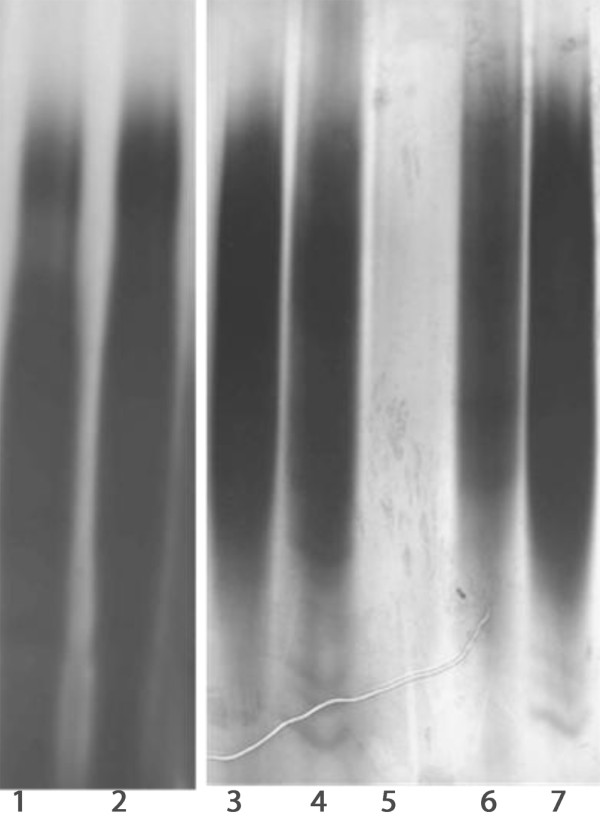
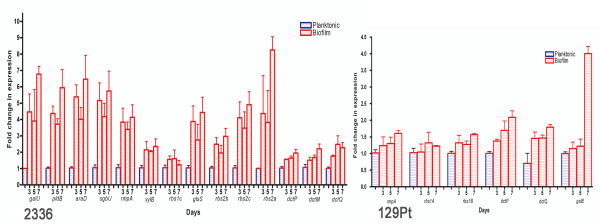
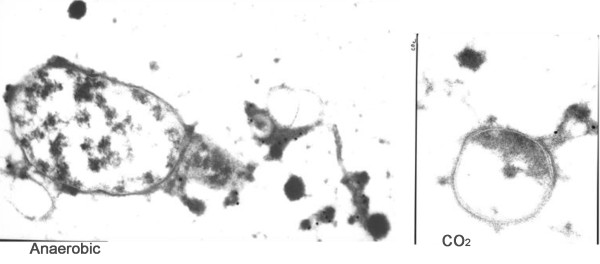
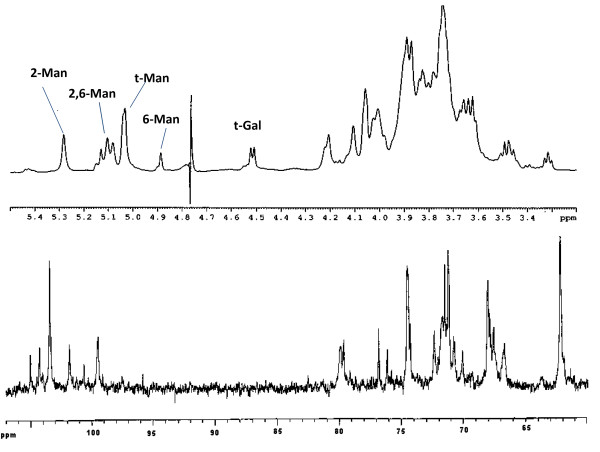
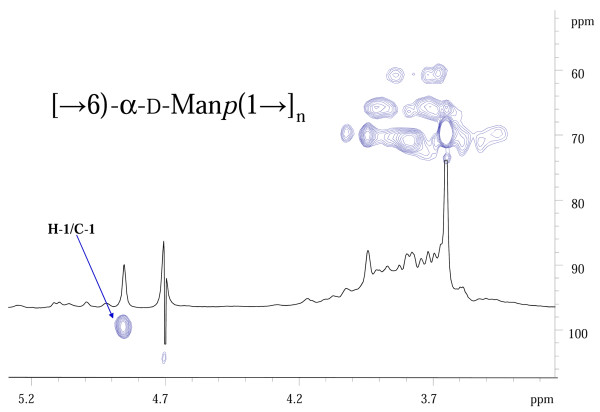
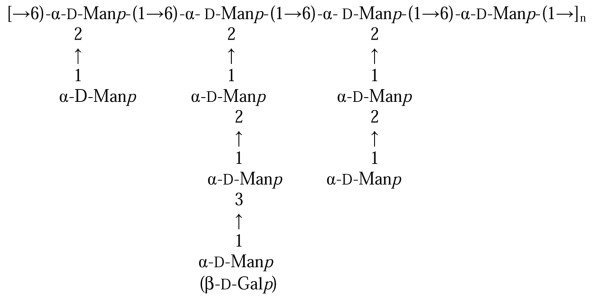
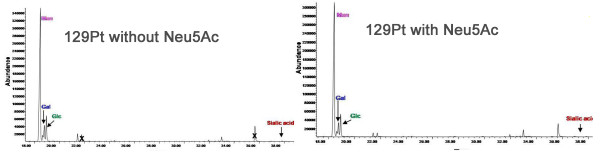
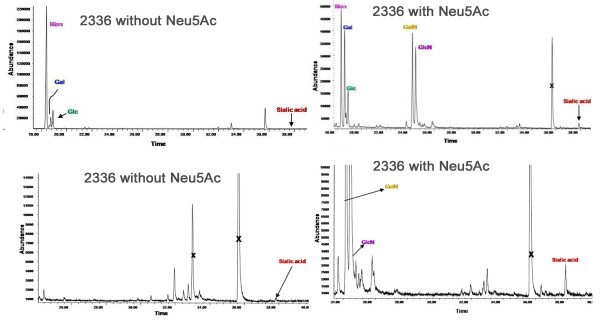
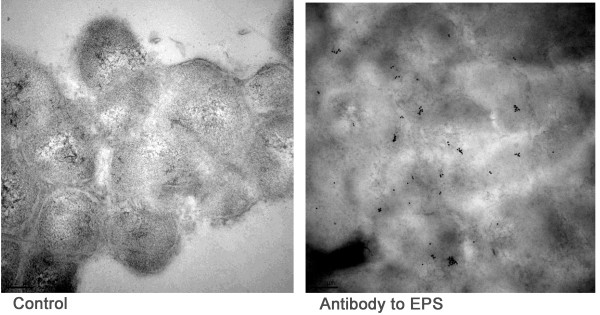
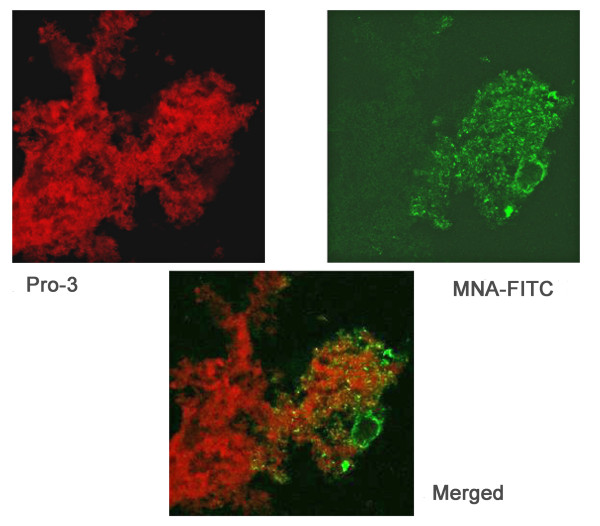
Following incubation of H. somni under growth-restricting stress conditions, such as during anaerobiosis, stationary phase, or in hypertonic salt, a polysaccharide could be isolated from washed cells or culture supernatant. The polysaccharide was present in large amounts in broth culture sediment after H. somni was grown under low oxygen tension for 4-5 days (conditions favorable to biofilm formation), but not from planktonic cells during log phase growth. Immuno-transmission electron microscopy showed that the polysaccharide was not closely associated with the cell surface, and was of heterogeneous high molecular size by gel electrophoresis, indicating it was an exopolysaccharide (EPS). The EPS was a branched mannose polymer containing some galactose, as determined by structural analysis. The mannose-specific Moringa M lectin and antibodies to the EPS bound to the biofilm matrix, demonstrating that the EPS was a component of the biofilm. The addition of N-acetylneuraminic acid to the growth medium resulted in sialylation of the EPS, and increased biofilm formation. Real-time quantitative reverse transcription-polymerase chain reaction analyses indicated that genes previously identified in a putative polysaccharide locus were upregulated when the bacteria were grown under conditions favorable to a biofilm, compared to planktonic cells.
H. somni is capable of producing a branching, mannose-galactose EPS polymer under growth conditions favorable to the biofilm phase of growth, and the EPS is a component of the biofilm matrix. The EPS can be sialylated in strains with sialyltransferase activity, resulting in enhanced density of the biofilm, and suggesting that EPS and biofilm formation may be important to persistence in the bovine host. The EPS may be critical to virulence if the biofilm state is required for H. somni to persist in systemic sites.
豪氏霍氏菌是一种革兰氏阴性球杆菌,是牛和羊黏膜表面的专性栖息者,也是一种机会性病原体,可导致牛和羊的呼吸道疾病和其他全身感染。荚膜是许多致病性细菌的重要毒力因子,但尚未在豪氏霍氏菌上发现荚膜。然而,豪氏霍氏菌确实在体外和体内形成生物膜,并且大多数细菌的生物膜基质由多糖组成。
在限制生长的应激条件下孵育豪氏霍氏菌,例如在厌氧条件下、静止期或高盐条件下,可以从洗涤细胞或培养上清液中分离出多糖。当豪氏霍氏菌在低氧张力下生长 4-5 天时(有利于生物膜形成的条件),从大量存在于肉汤培养物沉积物中,但在对数生长期的浮游细胞中不存在。免疫传输电子显微镜显示,多糖与细胞表面没有紧密结合,并且通过凝胶电泳显示为异质高分子大小,表明它是一种胞外多糖(EPS)。结构分析表明,EPS 是一种含有部分半乳糖的分支甘露聚糖聚合物。曼陀罗 M 凝集素特异性识别甘露糖和针对 EPS 的抗体与生物膜基质结合,表明 EPS 是生物膜的组成部分。向生长培养基中添加 N-乙酰神经氨酸可导致 EPS 唾液酸化,并增加生物膜形成。实时定量逆转录聚合酶链反应分析表明,与浮游细胞相比,当细菌在有利于生物膜生长的条件下生长时,先前在假定的多糖基因座中鉴定的基因被上调。
豪氏霍氏菌在有利于生物膜生长阶段的生长条件下能够产生分支的、甘露糖-半乳糖 EPS 聚合物,并且 EPS 是生物膜基质的组成部分。具有唾液酸转移酶活性的菌株中,EPS 可唾液酸化,导致生物膜密度增加,表明 EPS 和生物膜形成可能对在牛宿主中的持久性很重要。如果生物膜状态是豪氏霍氏菌在全身部位持续存在所必需的,那么 EPS 可能对毒力至关重要。