Department of Cell and Developmental Biology, University of Michigan Medical School, Ann Arbor, MI 48109-2200, USA.
Mol Cell Neurosci. 2011 Nov;48(3):205-16. doi: 10.1016/j.mcn.2011.07.010. Epub 2011 Aug 11.
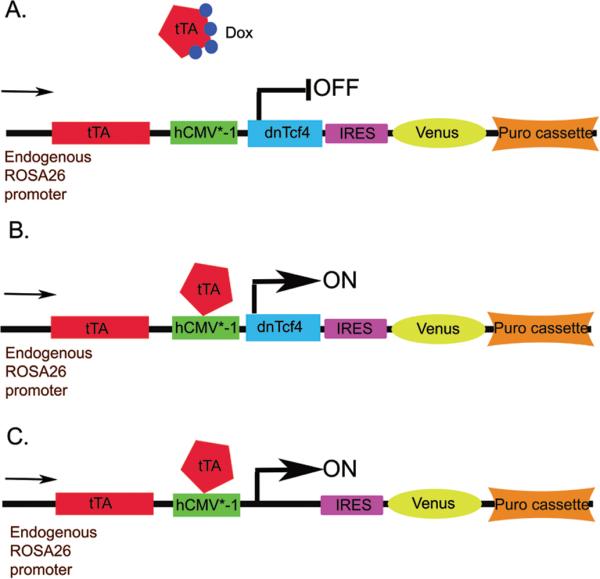
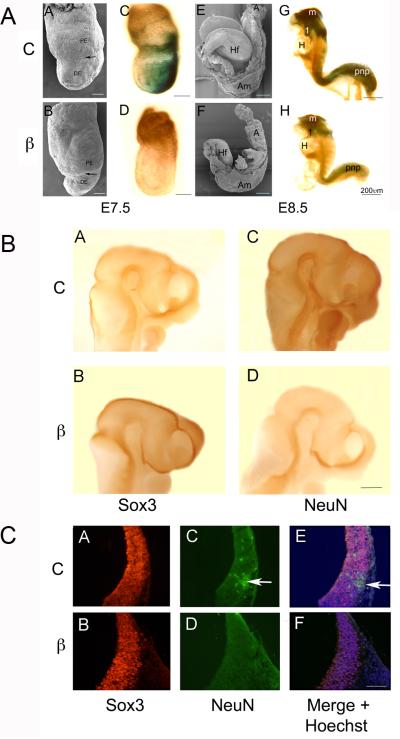
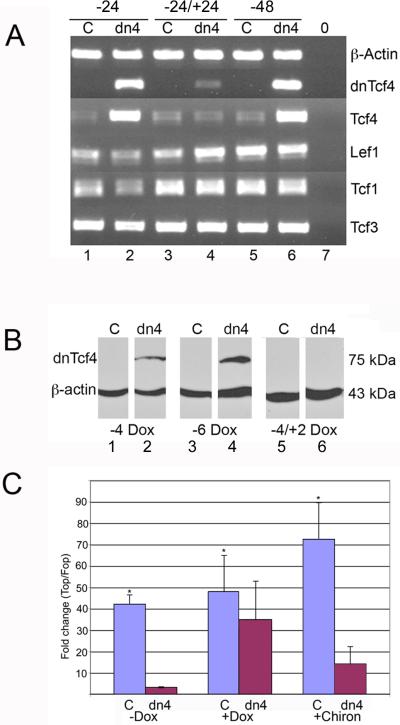
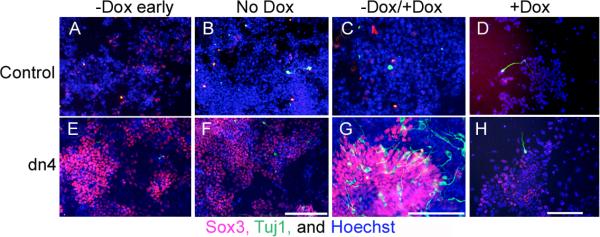
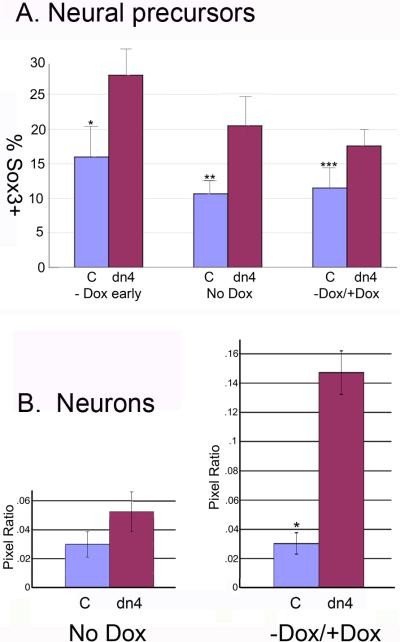
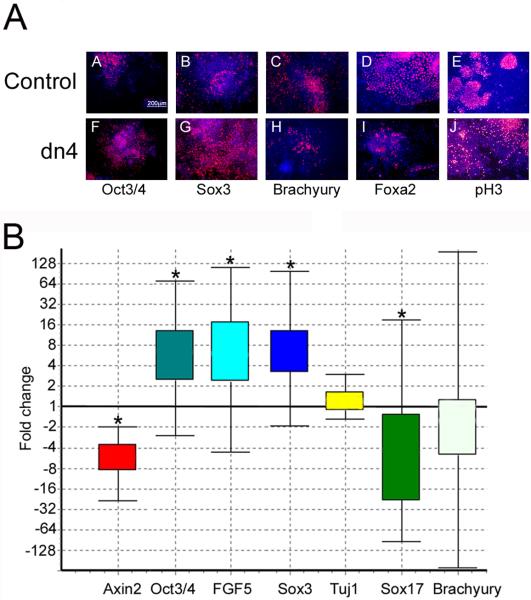
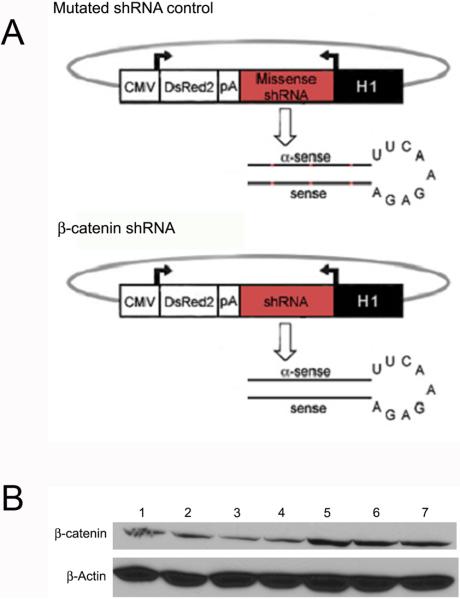
Embryonic stem cells (ESC) and the epiblast share a similar gene expression profile and an attenuated cell cycle, making them an accessible and tractable model system to study lineage choice at gastrulation. Differentiation of the epiblast and ESC to the mesendodermal lineage has been shown to rely on Wnt/β-catenin signaling; which counterintuitively, is also required to inhibit differentiation and maintain pluripotency. To examine these seemingly contradictory roles, we developed a mouse ESC (ESC) line that inducibly expresses a dominant negative Tcf4 (dnTcf4) protein to block canonical Wnt signaling. Cells expressing the dnTcf4 protein differentiated largely to Sox3 positive neural precursors but were unable to progress to βIII tubulin positive neurons unless Wnt signaling was derepressed, demonstrating a sequential requirement for Wnt signaling in lineage differentiation. To determine if Wnt/β-catenin signaling is similarily required at sequential stages of neural differentiation in the intact embryo, we delivered shRNA targeting β-catenin to pregnant mice on E5.5 of development. Blocking canonical Wnt signaling during post-implantation development increased the number of neural precursors which failed to differentiate to mature neurons, and produced defects of embryonic axis elongation, neurulation and neural tube closure that phenocopy the β-catenin null embryo. These results demonstrate that lineage differentiation relies on sequential repression and derepression of critical signaling pathways involved in maintaining pluripotency versus differentiation.
胚胎干细胞(ESC)和上胚层具有相似的基因表达谱和减弱的细胞周期,使它们成为研究原肠胚发生中谱系选择的一种易于接近和易于处理的模型系统。已经表明,上胚层和 ESC 向中胚层-内胚层谱系的分化依赖于 Wnt/β-连环蛋白信号通路;而令人费解的是,它也需要抑制分化并维持多能性。为了研究这些看似矛盾的作用,我们开发了一种可诱导表达显性负 Tcf4(dnTcf4)蛋白的小鼠 ESC(ESC)系,以阻断经典 Wnt 信号通路。表达 dnTcf4 蛋白的细胞主要分化为 Sox3 阳性神经前体细胞,但除非 Wnt 信号被解除抑制,否则无法进展为βIII 微管蛋白阳性神经元,这表明 Wnt 信号在谱系分化中具有顺序要求。为了确定 Wnt/β-连环蛋白信号通路在完整胚胎中的神经分化的连续阶段是否具有相似的要求,我们在 E5.5 时将靶向β-catenin 的 shRNA 递送到发育中的孕鼠体内。在植入后发育过程中阻断经典 Wnt 信号通路会增加未能分化为成熟神经元的神经前体细胞数量,并产生胚胎轴伸长、神经管闭合和神经管闭合缺陷,这些表型与β-catenin 缺失胚胎相似。这些结果表明,谱系分化依赖于维持多能性与分化相关的关键信号通路的顺序抑制和去抑制。