Chromatin Laboratory, Department of Biochemistry and Molecular Biology, University of Valencia, Burjassot, Valencia, Spain.
PLoS One. 2011;6(8):e23318. doi: 10.1371/journal.pone.0023318. Epub 2011 Aug 9.
Gas1 (growth arrest-specific 1) gene is known to inhibit cell proliferation in a variety of models, but its possible implication in regulating quiescence in adult tissues has not been examined to date. The knowledge of how Gas1 is regulated in quiescence may contribute to understand the deregulation occurring in neoplastic diseases.
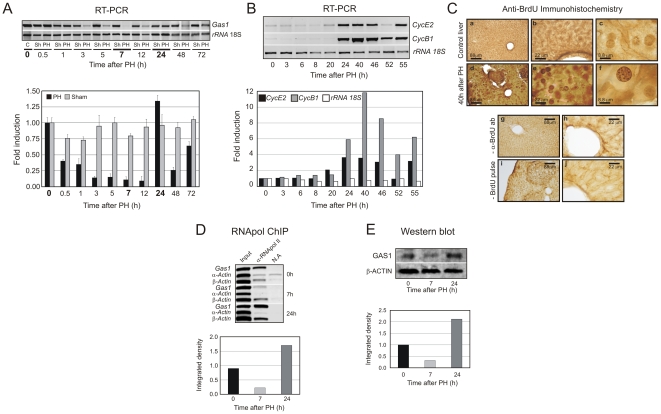
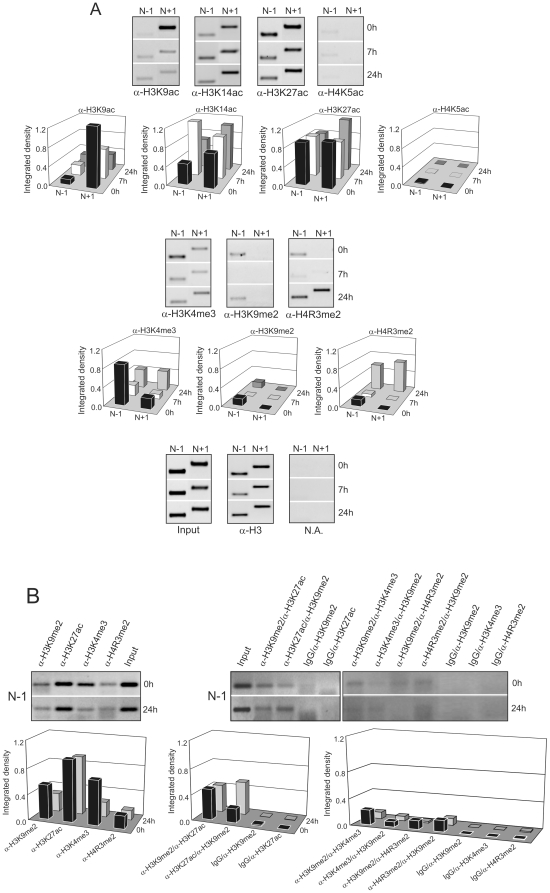
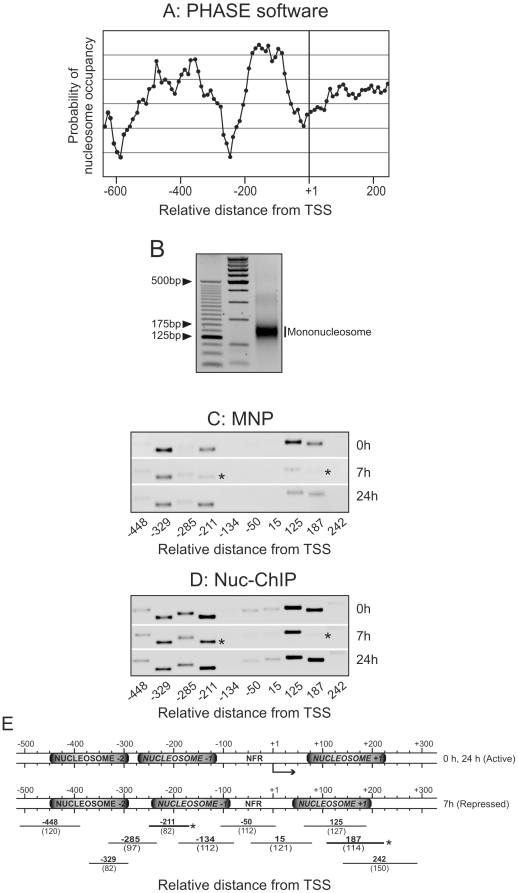
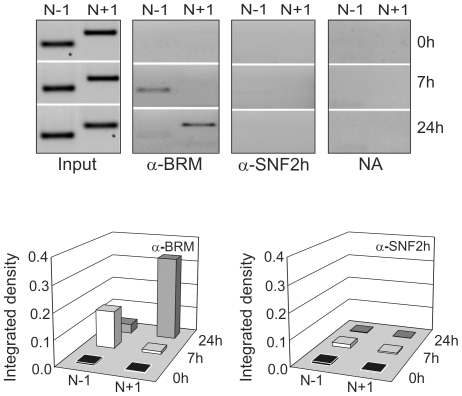
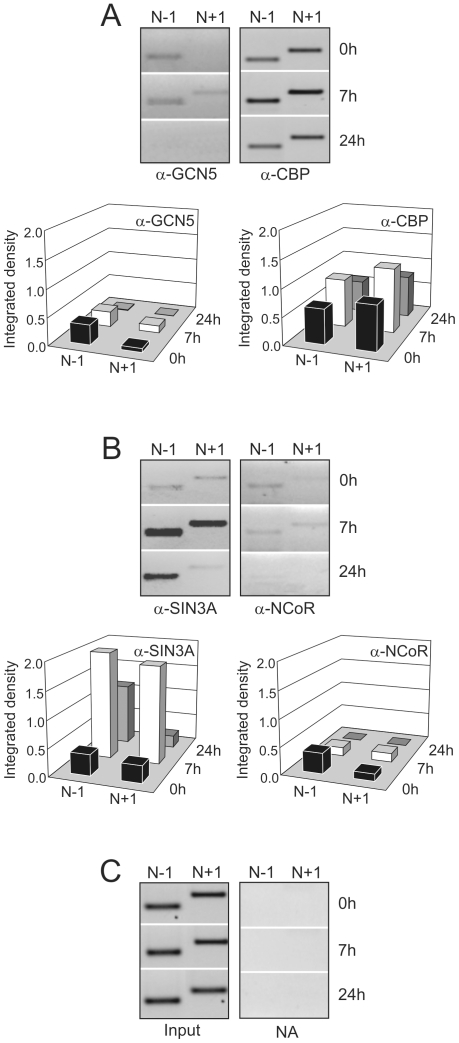
METHODOLOGY/PRINCIPAL FINDINGS: Gas1 expression has been studied in quiescent murine liver and during the naturally synchronized cell proliferation after partial hepatectomy. Chromatin immunoprecipitation at nucleosomal resolution (Nuc-ChIP) has been used to carry out the study preserving the in vivo conditions. Transcription has been assessed at real time by quantifying the presence of RNA polymerase II in coding regions (RNApol-ChIP). It has been found that Gas1 is expressed not only in quiescent liver but also at the cell cycle G(1)/S transition. The latter expression peak had not been previously reported. Two nucleosomes, flanking a nucleosome-free region, are positioned close to the transcription start site. Both nucleosomes slide in going from the active to the inactive state and vice versa. Nuc-ChIP analysis of the acquisition of histone epigenetic marks show distinctive features in both active states: H3K9ac and H3K4me2 are characteristic of transcription in G(0) and H4R3me2 in G(1)/S transition. Sequential-ChIP analysis revealed that the "repressing" mark H3K9me2 colocalize with several "activating" marks at nucleosome N-1 when Gas1 is actively transcribed suggesting a greater plasticity of epigenetic marks than proposed until now. The recruitment of chromatin-remodeling or modifying complexes also displayed distinct characteristics in quiescence and the G(1)/S transition.
CONCLUSIONS/SIGNIFICANCE: The finding that Gas1 is transcribed at the G(1)/S transition suggests that the gene may exert a novel function during cell proliferation. Transcription of this gene is modulated by specific "activating" and "repressing" epigenetic marks, and by chromatin remodeling and histone modifying complexes recruitment, at specific nucleosomes in Gas1 promoter.
Gas1(生长停滞特异性 1)基因已知在多种模型中抑制细胞增殖,但迄今为止尚未研究其在调节成人组织静止中的可能作用。了解 Gas1 在静止状态下是如何被调控的,可能有助于理解肿瘤疾病中发生的失调。
方法/主要发现:研究了静止状态下的小鼠肝和部分肝切除后自然同步细胞增殖过程中的 Gas1 表达。使用核小体分辨率染色质免疫沉淀(Nuc-ChIP)进行研究,以保持体内条件。通过实时定量聚合酶 II 在编码区的存在(RNApol-ChIP)来评估转录。发现 Gas1 不仅在静止的肝脏中表达,而且在细胞周期 G1/S 转换时也表达。后者的表达峰值以前没有报道过。两个核小体,位于无核小体区域的侧翼,靠近转录起始位点。两个核小体在从活跃状态到不活跃状态以及反之亦然的过程中滑动。在获得组蛋白表观遗传标记的 Nuc-ChIP 分析中,在两种活跃状态下都显示出独特的特征:H3K9ac 和 H3K4me2 是 G0 中转录的特征,H4R3me2 是 G1/S 转换的特征。顺序 ChIP 分析显示,当 Gas1 被转录时,“抑制”标记 H3K9me2 与核小体 N-1 上的几个“激活”标记共定位,这表明表观遗传标记的可塑性比以前提出的更大。染色质重塑或修饰复合物的募集在静止和 G1/S 转换中也显示出独特的特征。
结论/意义:Gas1 在 G1/S 转换时被转录的发现表明,该基因在细胞增殖过程中可能发挥新的功能。该基因的转录受特定的“激活”和“抑制”表观遗传标记以及染色质重塑和组蛋白修饰复合物募集的调节,在 Gas1 启动子的特定核小体上进行。