Department of Biology, University Roma Tre, Rome, Italy.
PLoS One. 2011;6(8):e22982. doi: 10.1371/journal.pone.0022982. Epub 2011 Aug 23.
HIV-1 Nef is a virulence factor that plays multiple roles during HIV replication. Recently, it has been described that Nef intersects the CD40 signalling in macrophages, leading to modification in the pattern of secreted factors that appear able to recruit, activate and render T lymphocytes susceptible to HIV infection. The engagement of CD40 by CD40L induces the activation of different signalling cascades that require the recruitment of specific tumor necrosis factor receptor-associated factors (i.e. TRAFs). We hypothesized that TRAFs might be involved in the rapid activation of NF-κB, MAPKs and IRF-3 that were previously described in Nef-treated macrophages to induce the synthesis and secretion of proinflammatory cytokines, chemokines and IFNβ to activate STAT1, -2 and -3.
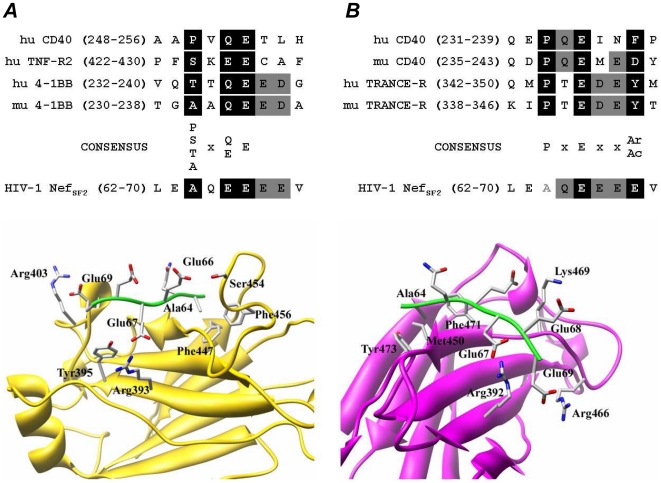
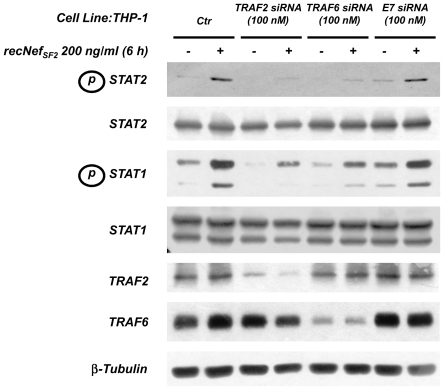
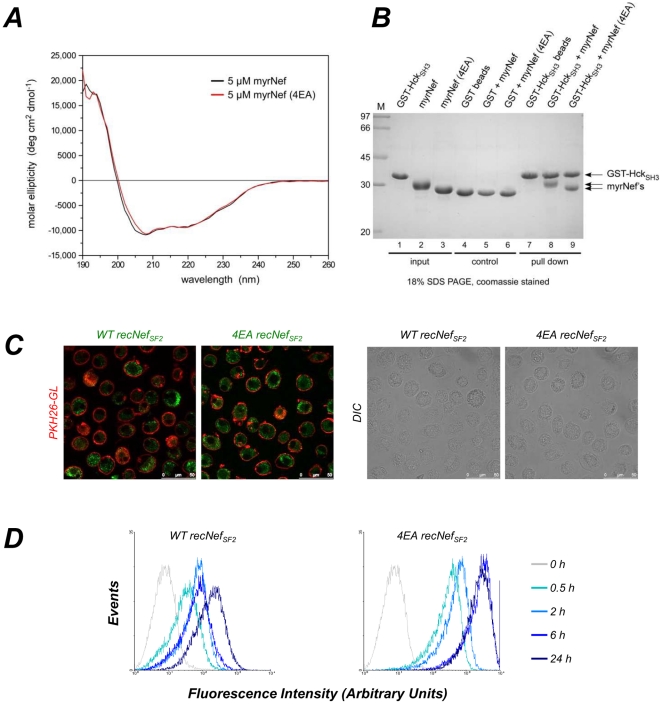
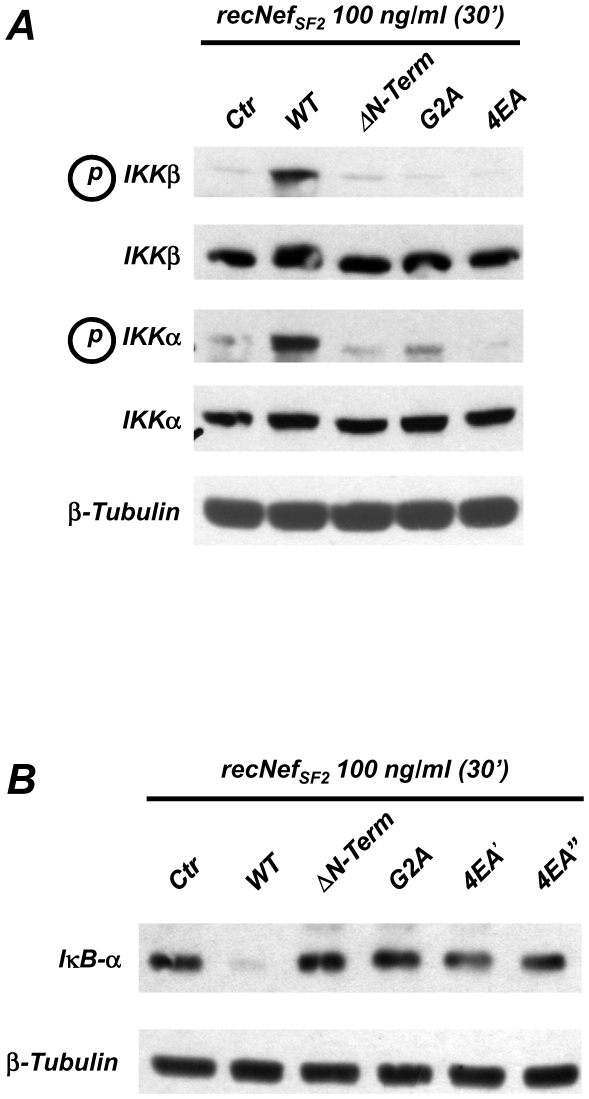
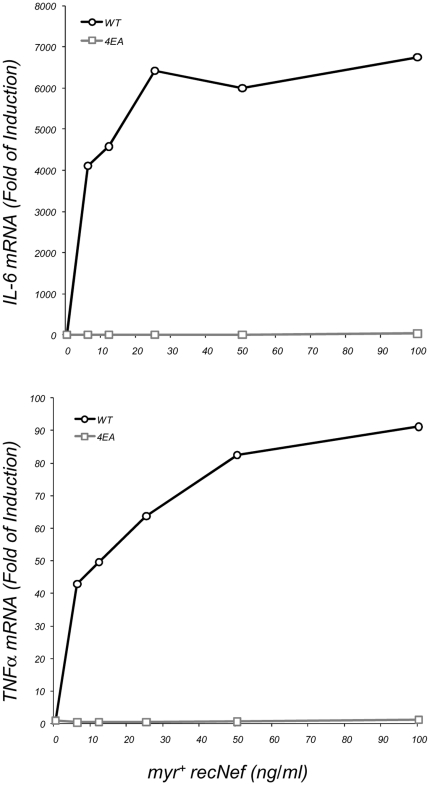
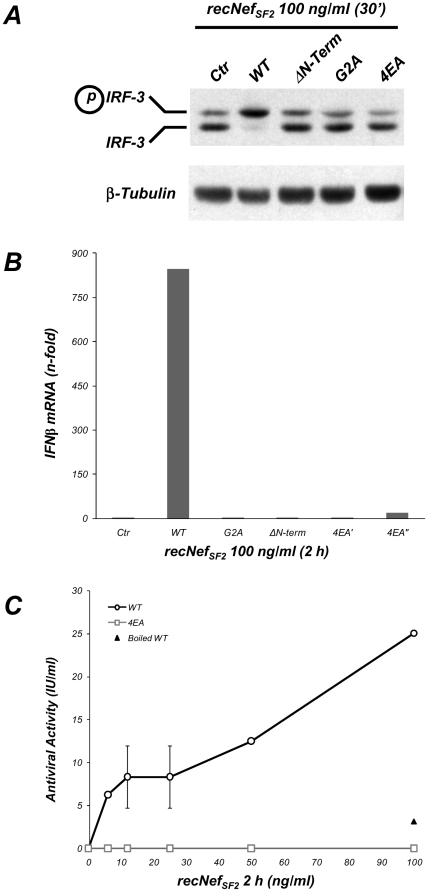
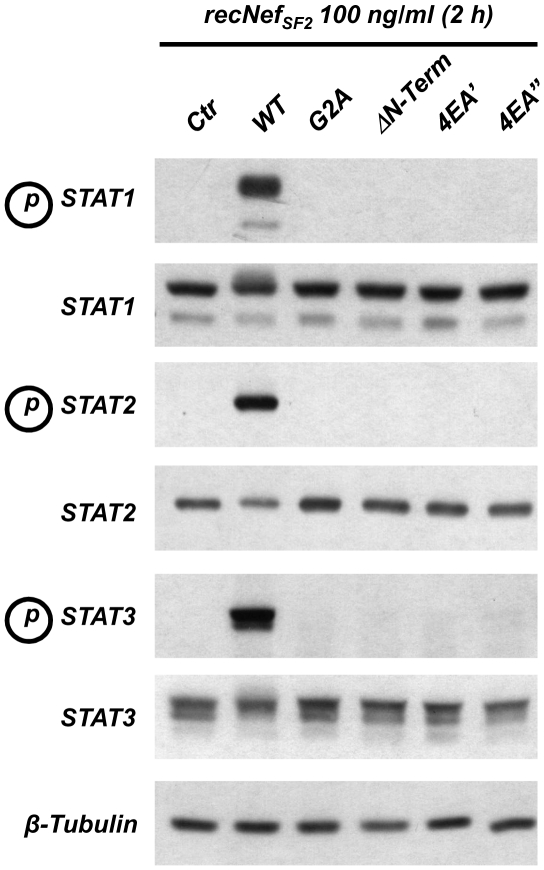
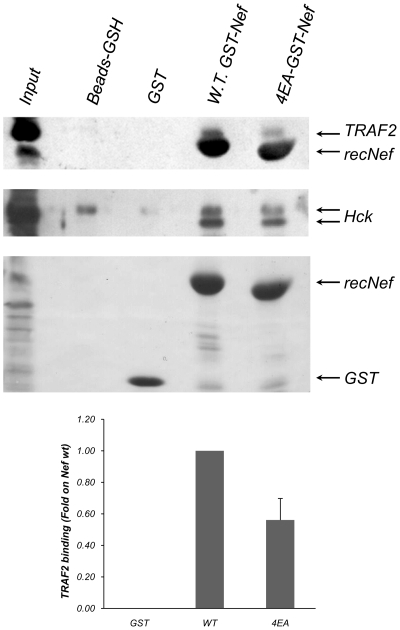
METHODOLOGY/PRINCIPAL FINDINGS: Searching for possible TRAF binding sites on Nef, we found a TRAF2 consensus binding site in the AQEEEE sequence encompassing the conserved four-glutamate acidic cluster. Here we show that all the signalling effects we observed in Nef treated macrophages depend on the integrity of the acidic cluster. In addition, Nef was able to interact in vitro with TRAF2, but not TRAF6, and this interaction involved the acidic cluster. Finally silencing experiments in THP-1 monocytic cells indicate that both TRAF2 and, surprisingly, TRAF6 are required for the Nef-induced tyrosine phosphorylation of STAT1 and STAT2.
Results reported here revealed TRAF2 as a new possible cellular interactor of Nef and highlighted that in monocytes/macrophages this viral protein is able to manipulate both the TRAF/NF-κB and TRAF/IRF-3 signalling axes, thereby inducing the synthesis of proinflammatory cytokines and chemokines as well as IFNβ.
HIV-1 Nef 是一种毒力因子,在 HIV 复制过程中发挥多种作用。最近,有人描述说 Nef 与巨噬细胞中的 CD40 信号交叉,导致分泌因子的模式发生改变,这些因子似乎能够招募、激活并使 T 淋巴细胞易感染 HIV。CD40L 与 CD40 的结合诱导不同信号级联的激活,这需要特定肿瘤坏死因子受体相关因子(即 TRAF)的募集。我们假设 TRAF 可能参与 Nef 处理的巨噬细胞中先前描述的 NF-κB、MAPK 和 IRF-3 的快速激活,以诱导促炎细胞因子、趋化因子和 IFNβ的合成和分泌,从而激活 STAT1、-2 和 -3。
方法/主要发现:在 Nef 上寻找可能的 TRAF 结合位点时,我们在包含保守的四个谷氨酸酸性簇的 AQEEEE 序列中发现了一个 TRAF2 共识结合位点。在这里,我们表明我们在 Nef 处理的巨噬细胞中观察到的所有信号效应都依赖于酸性簇的完整性。此外,Nef 能够在体外与 TRAF2 相互作用,但不能与 TRAF6 相互作用,这种相互作用涉及酸性簇。最后,在 THP-1 单核细胞中的沉默实验表明,TRAF2 和令人惊讶的是 TRAF6 都需要 Nef 诱导的 STAT1 和 STAT2 酪氨酸磷酸化。
这里报道的结果揭示了 TRAF2 作为 Nef 的一种新的可能的细胞相互作用因子,并强调了在单核细胞/巨噬细胞中,这种病毒蛋白能够操纵 TRAF/NF-κB 和 TRAF/IRF-3 信号轴,从而诱导促炎细胞因子和趋化因子以及 IFNβ 的合成。