Gumber M R, Kute V B, Goplani K R, Shah P R, Patel H V, Vanikar A V, Modi P R, Trivedi H L
Department of Nephrology and Clinical Transplantation, Dr. H. L. Trivedi Institute of Transplantation Sciences (ITS), Institute of Kidney Diseases and Research Centre (IKDRC), Civil Hospital Campus, Asarwa, Ahmedabad, Gujarat, India.
Indian J Nephrol. 2011 Jul;21(3):182-5. doi: 10.4103/0971-4065.82636.
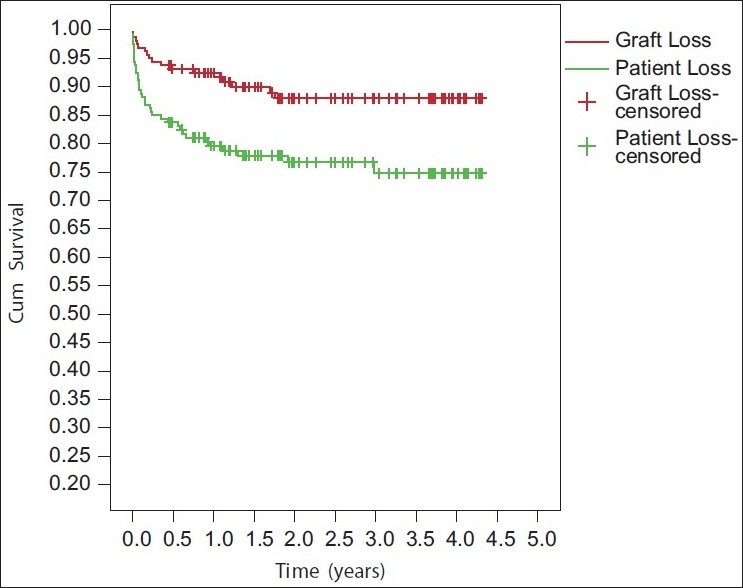
Renal transplantation (RTx) is the best therapeutic modality for patient suffering from end-stage renal disease (ESRD). Deceased donor organ transplantation (DDOT) accounts for <4% of RTx in India. We report 4 years single centre experience on DDOT vis-à-vis patient/graft survival, graft function in terms of serum creatinine (SCr), rejection episodes, and delayed graft function in 160 DDOT. Between January 2006 to December 2009, 160 RTx from 89 donors were performed, of which 25.2% were expanded criteria donors. Majority of the donors were brain dead due to road traffic/cerebrovascular accidents. The commonest recipient diseases leading to ESRD were chronic glomerulonephritis (49%), diabetes mellitus (10%), and benign nephrosclerosis (10%). Mean recipient/donor age was 35.6±14.68 and 44.03±18.19 years. Mean dialysis duration pretransplantation was 15.37±2.82 months. Mean cold ischemia time was 5.56±2.04 hours. All recipients received single dose rabbit-anti-thymocyte globulin induction and steroids, mycophenolate mofetil/calcinueurin inhibitor for maintenance of immunosuppression. Delayed graft function was observed in 30.6% patients and 14% had biopsy proven acute rejection. Over mean follow-up of 2.35±1.24 years, patient and graft survival rates were 77.5% and 89.3% with mean SCr of 1.40±0.36 mg/dl. DDOT has acceptable graft/patient survival over 4 years follow-up and should be encouraged in view of organ shortage.
肾移植(RTx)是终末期肾病(ESRD)患者的最佳治疗方式。在印度, deceased donor organ transplantation(DDOT)占肾移植的比例不到4%。我们报告了在一个单中心进行的为期4年的DDOT经验,涉及160例DDOT患者的受者/移植物存活情况、以血清肌酐(SCr)衡量的移植物功能、排斥反应发作情况以及移植肾功能延迟情况。2006年1月至2009年12月期间,对来自89名供者的160例肾移植进行了手术,其中25.2%为扩大标准供者。大多数供者因道路交通事故/脑血管意外导致脑死亡。导致ESRD的最常见受者疾病为慢性肾小球肾炎(49%)、糖尿病(10%)和良性肾硬化(10%)。受者/供者的平均年龄分别为35.6±14.68岁和44.03±18.19岁。移植前的平均透析时间为15.37±2.82个月。平均冷缺血时间为5.56±2.04小时。所有受者均接受单剂量兔抗胸腺细胞球蛋白诱导治疗以及类固醇、霉酚酸酯/钙调神经磷酸酶抑制剂以维持免疫抑制。30.6%的患者出现移植肾功能延迟,14%的患者经活检证实发生急性排斥反应。在平均2.35±1.24年的随访期内,患者和移植物存活率分别为77.5%和89.3%,平均SCr为1.40±0.36 mg/dl。在4年的随访期内,DDOT的移植物/患者存活率可以接受,鉴于器官短缺的情况,应鼓励开展DDOT。