Department of Anthropology, University of Florida, Gainesville, Florida, United States of America.
PLoS One. 2011;6(8):e23095. doi: 10.1371/journal.pone.0023095. Epub 2011 Aug 26.
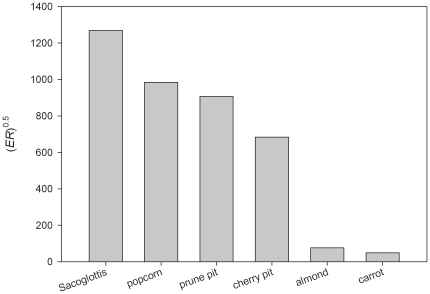
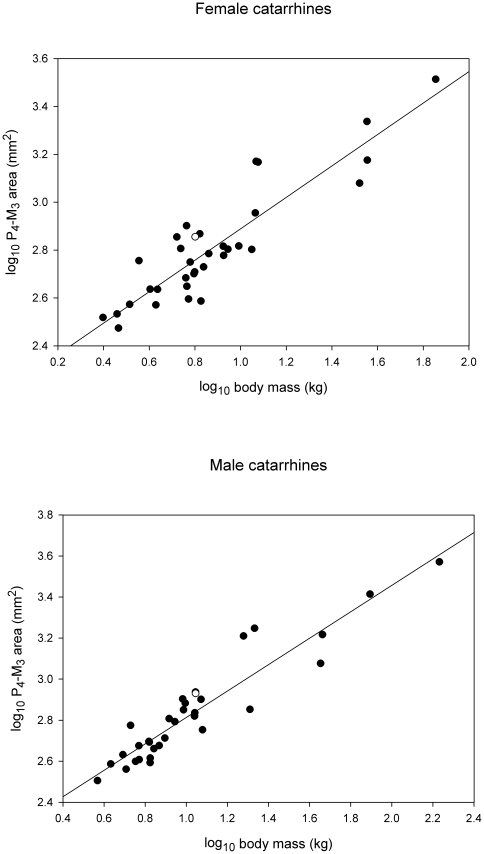
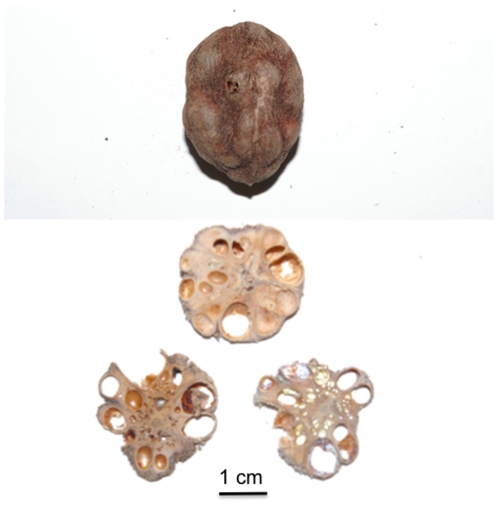
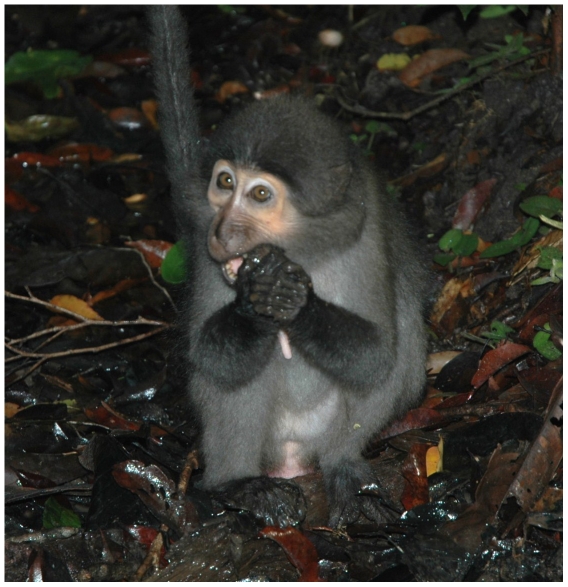
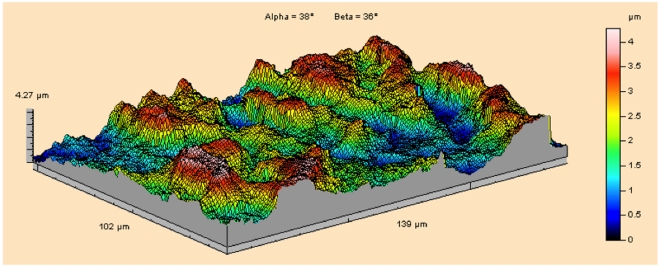
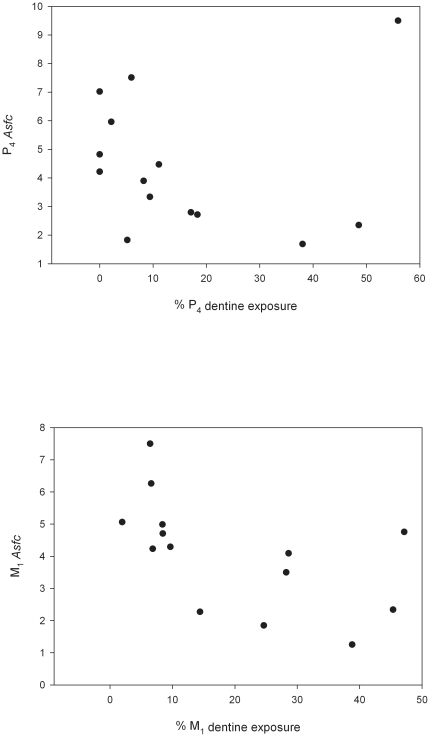
Morphology of the dentofacial complex of early hominins has figured prominently in the inference of their dietary adaptations. Recent theoretical analysis of craniofacial morphology of Australopithecus africanus proposes that skull form in this taxon represents adaptation to feeding on large, hard objects. A modern analog for this specific dietary specialization is provided by the West African sooty mangabey, Cercocebus atys. This species habitually feeds on the large, exceptionally hard nuts of Sacoglottis gabonensis, stereotypically crushing the seed casings using their premolars and molars. This type of behavior has been inferred for A. africanus based on mathematical stress analysis and aspects of dental wear and morphology. While postcanine megadontia, premolar enlargement and thick molar enamel characterize both A. africanus and C. atys, these features are not universally associated with durophagy among living anthropoids. Occlusal microwear analysis reveals complex microwear textures in C. atys unlike those observed in A. africanus, but more closely resembling textures observed in Paranthropus robustus. Since sooty mangabeys process hard objects in a manner similar to that proposed for A. africanus, yet do so without the craniofacial buttressing characteristic of this hominin, it follows that derived features of the australopith skull are sufficient but not necessary for the consumption of large, hard objects. The adaptive significance of australopith craniofacial morphology may instead be related to the toughness, rather than the hardness, of ingested foods.
早期人类的面颅形态在其饮食适应的推断中占有重要地位。最近对南非古猿颅面形态的理论分析提出,该分类群的头骨形态代表了对食用大而硬物体的适应。这种特定饮食特化的现代类似物是西非黑长尾猴(Cercocebus atys)。该物种习惯性地以 Sacoglottis gabonensis 的大而异常坚硬的坚果为食,惯用它们的前臼齿和臼齿来压碎种子外壳。根据数学应力分析和牙齿磨损和形态的某些方面,推断出 A. africanus 也存在这种行为。虽然 A. africanus 和 C. atys 都具有后齿巨化、前臼齿增大和厚的臼齿釉质等特征,但这些特征并非普遍与现生类人猿的啃咬行为相关。磨牙的咬合面微观磨损分析显示,C. atys 的微观磨损纹理与 A. africanus 观察到的不同,但与粗壮南方古猿(Paranthropus robustus)观察到的纹理更为相似。由于黑长尾猴处理坚硬物体的方式类似于为 A. africanus 所提出的方式,但却没有这种人类所特有的颅面支撑结构,因此,南方古猿头骨的衍生特征足以但非必要地用于食用大而硬的物体。南方古猿面颅形态的适应意义可能与摄入食物的韧性而非硬度有关。