Division of Immunology, Faculty of Veterinary Medicine, University of Utrecht, Utrecht, The Netherlands.
PLoS One. 2011;6(8):e23769. doi: 10.1371/journal.pone.0023769. Epub 2011 Aug 24.
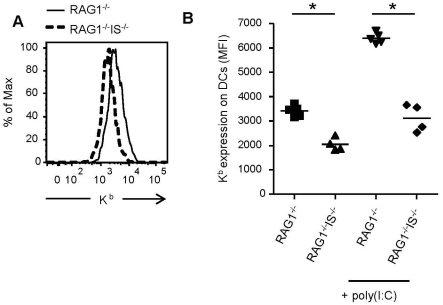
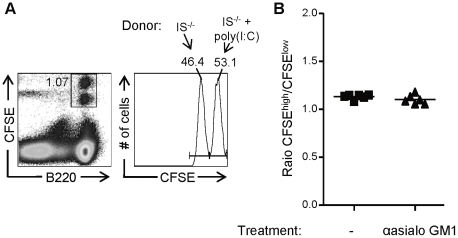
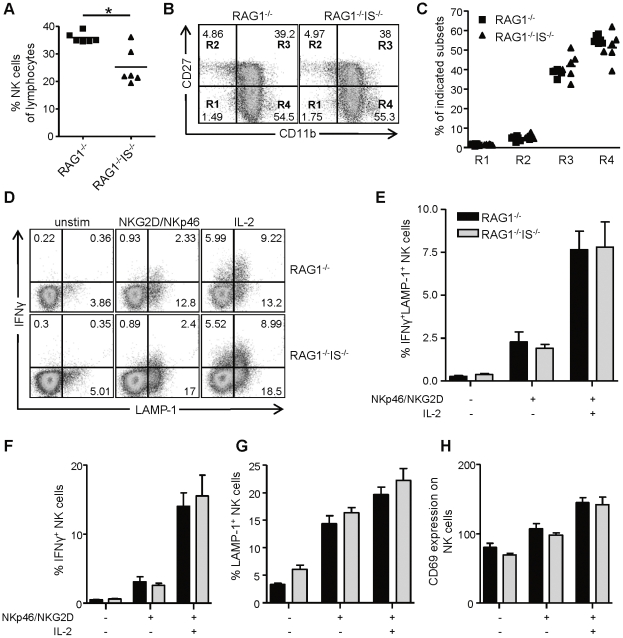
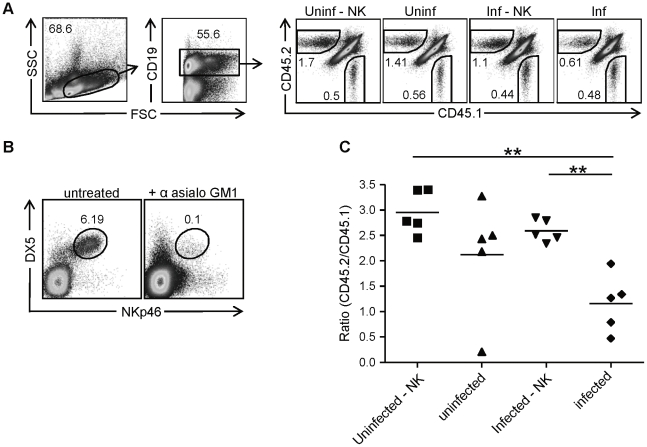
Natural killer (NK) cells are part of the innate immune system and contribute to the eradication of virus infected cells and tumors. NK cells express inhibitory and activating receptors and their decision to kill a target cell is based on the balance of signals received through these receptors. MHC class I molecules are recognized by inhibitory receptors, and their presence during NK cell education influences the responsiveness of peripheral NK cells. We here demonstrate that mice with reduced MHC class I cell surface expression, due to deficiency of immunoproteasomes, have responsive NK cells in the periphery, indicating that the lower MHC class I levels do not alter NK cell education. Following adoptive transfer into wild-type (wt) recipients, immunoproteasome-deficient splenocytes are tolerated in naive but rejected in virus-infected recipients, in an NK cell dependent fashion. These results indicate that the relatively low MHC class I levels are sufficient to protect these cells from rejection by wt NK cells, but that this tolerance is broken in infection, inducing an NK cell-dependent rejection of immunoproteasome-deficient cells.
自然杀伤 (NK) 细胞是先天免疫系统的一部分,有助于清除病毒感染的细胞和肿瘤。NK 细胞表达抑制性和激活性受体,它们杀死靶细胞的决定取决于通过这些受体接收的信号的平衡。MHC I 类分子被抑制性受体识别,它们在 NK 细胞发育过程中的存在影响外周 NK 细胞的反应性。我们在这里证明,由于免疫蛋白酶体缺乏而导致细胞表面 MHC I 表达减少的小鼠在外周具有反应性的 NK 细胞,这表明较低的 MHC I 水平不会改变 NK 细胞的发育。在过继转移到野生型 (wt) 受体后,免疫蛋白酶体缺陷的脾细胞在未感染的情况下被耐受,但在病毒感染的受体中以 NK 细胞依赖性的方式被排斥。这些结果表明,相对较低的 MHC I 水平足以保护这些细胞免受 wt NK 细胞的排斥,但这种耐受在感染时被打破,诱导 NK 细胞依赖性排斥免疫蛋白酶体缺陷细胞。