Department of Biomedical Engineering, Case Western Reserve University, Cleveland, Ohio, United States of America.
PLoS One. 2011;6(8):e23891. doi: 10.1371/journal.pone.0023891. Epub 2011 Aug 26.
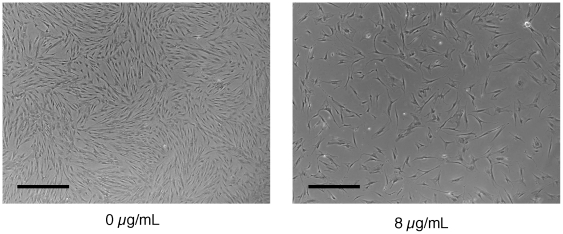
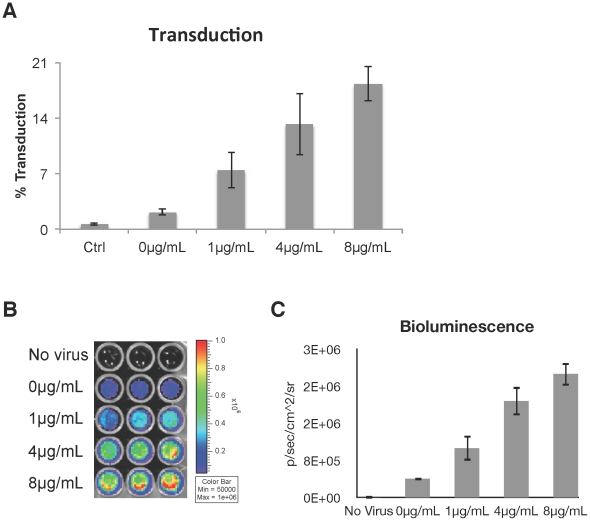
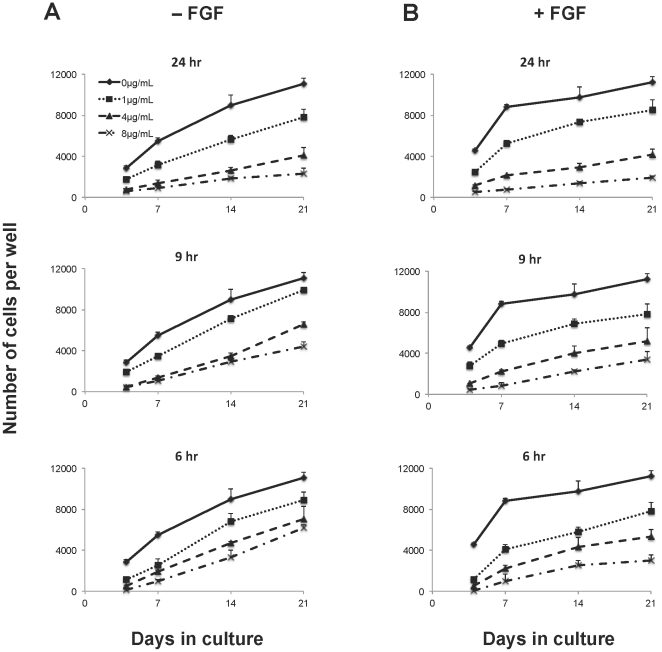
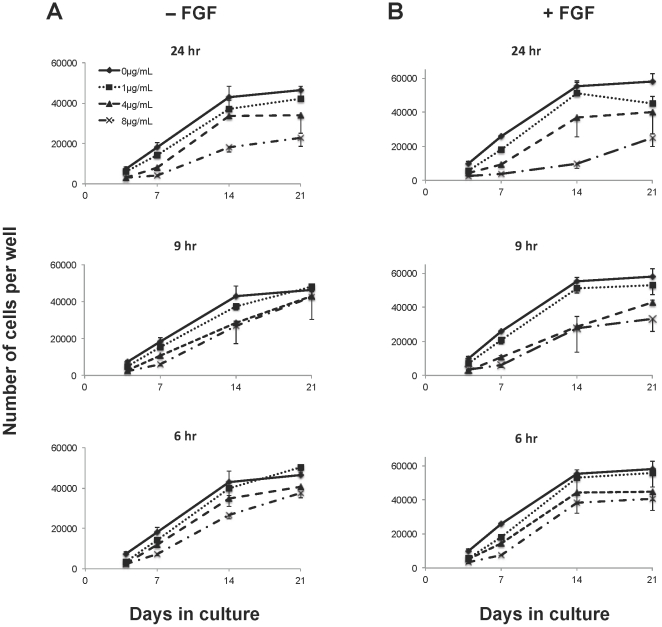
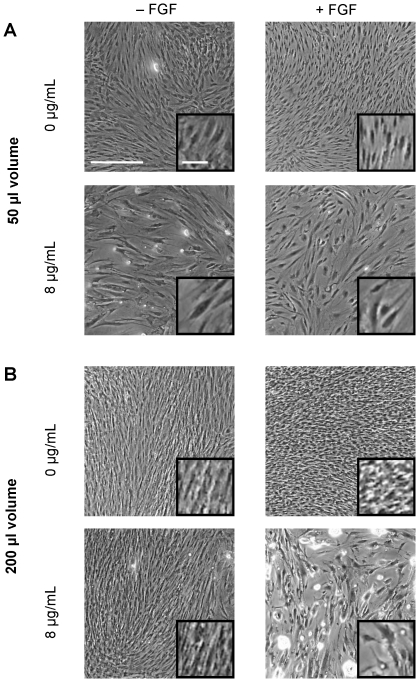
Human mesenchymal stem cells (hMSCs) can be engineered to express specific genes, either for their use in cell-based therapies or to track them in vivo over long periods of time. To obtain long-term expression of these genes, a lentivirus- or retrovirus-mediated cell transduction is often used. However, given that the efficiency with these viruses is typically low in primary cells, additives such as polybrene are always used for efficient viral transduction. Unfortunately, as presented here, exposure to polybrene alone at commonly used concentratons (1-8 µg/mL) negatively impacts hMSC proliferation in a dose-dependent manner as measured by CyQUANT, EdU incorporation, and cell cycle analysis. This inhibition of proliferation was observable in culture even 3 weeks after exposure. Culturing the cells in the presence of FGF-2, a potent mitogen, did not abrogate this negative effect of polybrene. In fact, the normally sharp increase in hMSC proliferation that occurs during the first days of exposure to FGF-2 was absent at 4 µg/mL or higher concentrations of polybrene. Similarly, the effect of stimulating cell proliferation under simulated hypoxic conditions was also decreased when cells were exposed to polybrene, though overall proliferation rates were higher. The negative influence of polybrene was, however, reduced when the cells were exposed to polybrene for a shorter period of time (6 hr vs 24 hr). Thus, careful evaluation should be done when using polybrene to aid in lentiviral transduction of human MSCs or other primary cells, especially when cell number is critical.
人骨髓间充质干细胞(hMSCs)可被工程化为表达特定基因,无论是将其用于细胞治疗还是在体内长时间跟踪它们。为了获得这些基因的长期表达,通常使用慢病毒或逆转录病毒介导的细胞转导。然而,鉴于这些病毒在原代细胞中的效率通常较低,因此总是使用聚凝胺等添加剂来提高病毒转导的效率。不幸的是,如本文所示,单独暴露于聚凝胺(常用浓度为 1-8 µg/mL)会以剂量依赖的方式对 hMSC 的增殖产生负面影响,这可以通过 CyQUANT、EdU 掺入和细胞周期分析来衡量。这种增殖抑制在暴露后 3 周的培养中仍然可见。在存在成纤维细胞生长因子-2(一种有效的有丝分裂原)的情况下培养细胞,并不能消除聚凝胺的这种负作用。事实上,在正常情况下,hMSC 对 FGF-2 的最初几天的暴露会出现急剧增加的增殖,但在 4 µg/mL 或更高浓度的聚凝胺时,这种增加就不存在了。同样,当细胞暴露于聚凝胺时,在模拟缺氧条件下刺激细胞增殖的效果也会降低,尽管总体增殖率更高。然而,当细胞暴露于聚凝胺的时间较短(6 小时与 24 小时)时,聚凝胺的负面影响会降低。因此,在使用聚凝胺辅助慢病毒转导人 MSC 或其他原代细胞时,尤其是在细胞数量至关重要时,应仔细评估其影响。