Institute of Microbiology, ETH Zürich, Zürich, Switzerland.
PLoS Pathog. 2011 Aug;7(8):e1002214. doi: 10.1371/journal.ppat.1002214. Epub 2011 Aug 25.
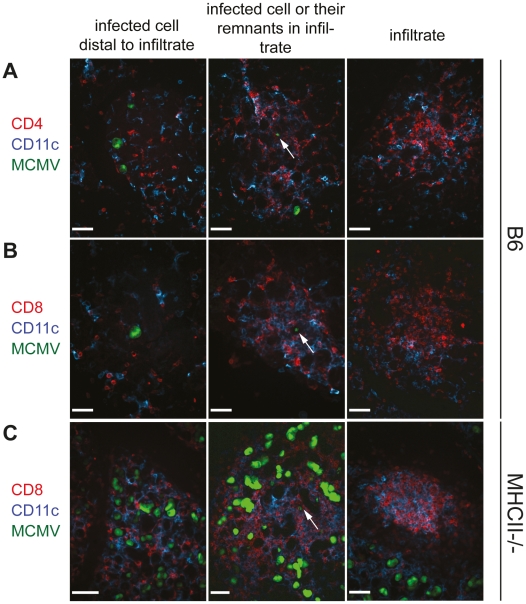
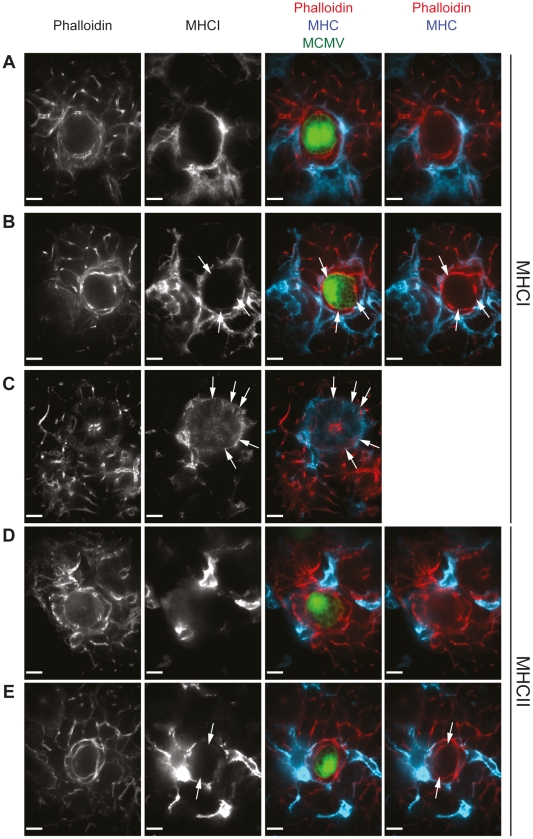
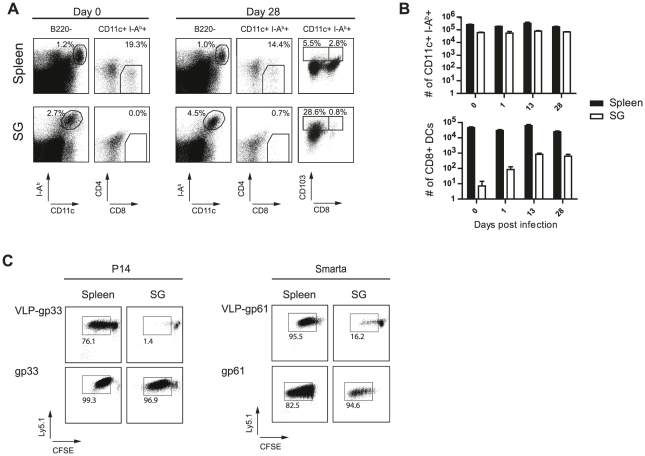
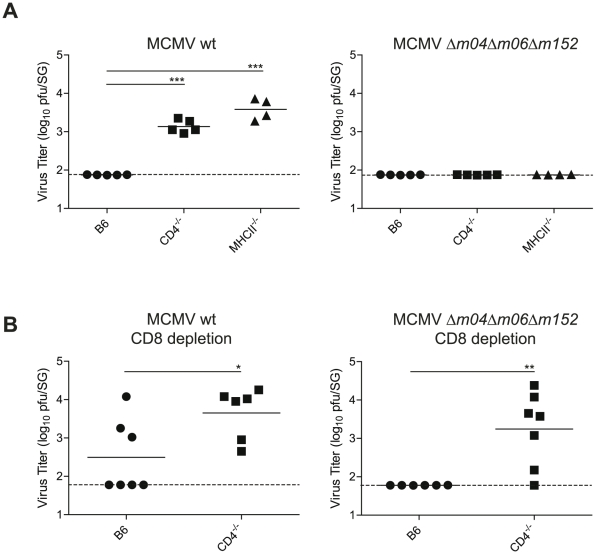
Horizontal transmission of cytomegaloviruses (CMV) occurs via prolonged excretion from mucosal surfaces. We used murine CMV (MCMV) infection to investigate the mechanisms of immune control in secretory organs. CD4 T cells were crucial to cease MCMV replication in the salivary gland (SG) via direct secretion of IFNγ that initiated antiviral signaling on non-hematopoietic cells. In contrast, CD4 T cell helper functions for CD8 T cells or B cells were dispensable. Despite SG-resident MCMV-specific CD8 T cells being able to produce IFNγ, the absence of MHC class I molecules on infected acinar glandular epithelial cells due to viral immune evasion, and the paucity of cross-presenting antigen presenting cells (APCs) prevented their local activation. Thus, local activation of MCMV-specific T cells is confined to the CD4 subset due to exclusive presentation of MCMV-derived antigens by MHC class II molecules on bystander APCs, resulting in IFNγ secretion interfering with viral replication in cells of non-hematopoietic origin.
巨细胞病毒(CMV)通过黏膜表面的长时间排泄发生水平传播。我们利用鼠巨细胞病毒(MCMV)感染来研究分泌器官中免疫控制的机制。CD4 T 细胞通过直接分泌启动非造血细胞抗病毒信号的 IFNγ,对于在唾液腺(SG)中停止 MCMV 复制至关重要。相比之下,CD4 T 细胞辅助 CD8 T 细胞或 B 细胞的功能是可有可无的。尽管 SG 中存在的 MCMV 特异性 CD8 T 细胞能够产生 IFNγ,但由于病毒免疫逃避,感染的腺泡上皮细胞上缺乏 MHC Ⅰ类分子,以及缺乏交叉呈递抗原提呈细胞(APC),阻止了它们的局部激活。因此,由于 MHC Ⅱ类分子在旁观者 APC 上唯一呈递 MCMV 衍生抗原,MCMV 特异性 T 细胞的局部激活仅限于 CD4 亚群,导致 IFNγ 的分泌干扰非造血细胞来源的病毒复制。