Medizinische Klinik für Kardiologie, Charité-Universitätsmedizin Berlin, Berlin, Germany.
PLoS Pathog. 2011 Sep;7(9):e1002233. doi: 10.1371/journal.ppat.1002233. Epub 2011 Sep 1.
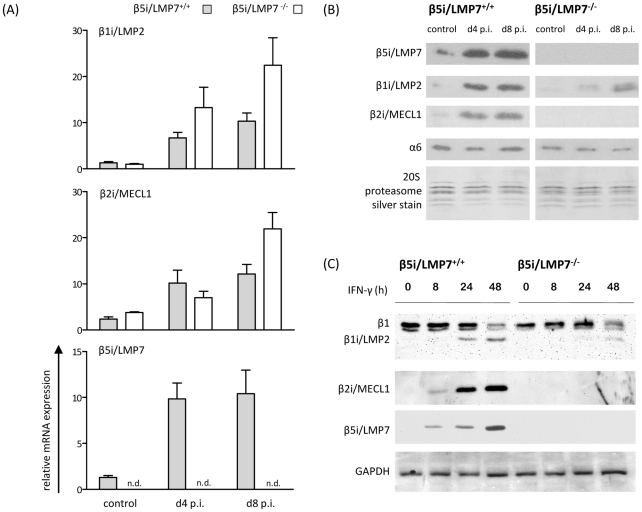
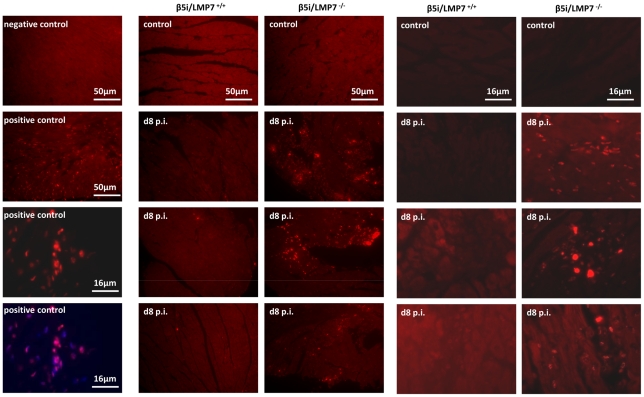
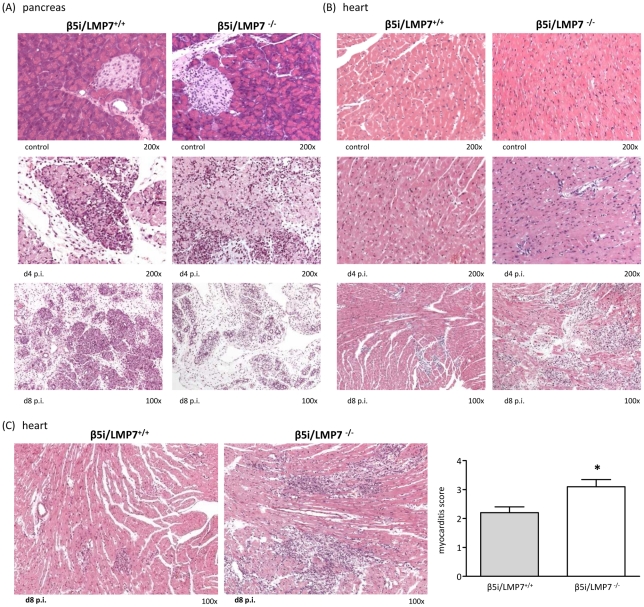
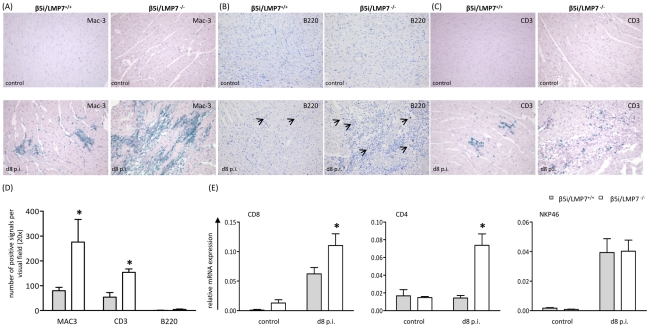
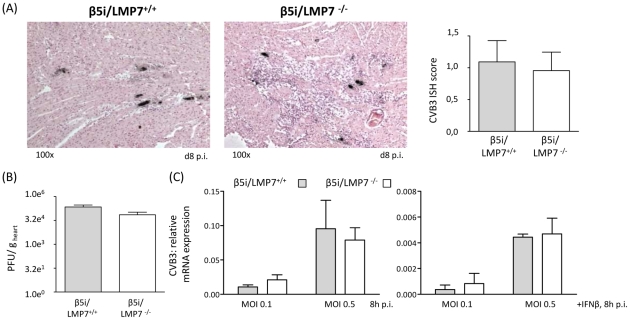
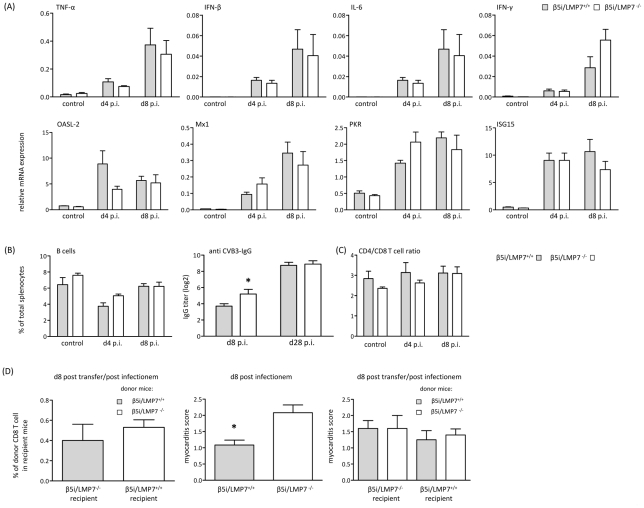
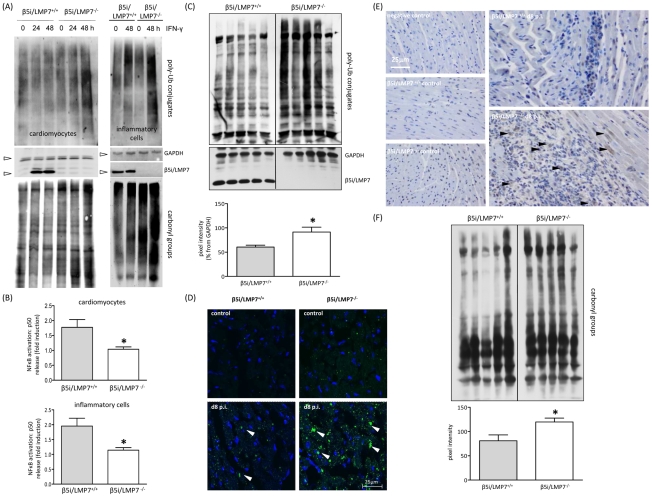
Proteasomes recognize and degrade poly-ubiquitinylated proteins. In infectious disease, cells activated by interferons (IFNs) express three unique catalytic subunits β1i/LMP2, β2i/MECL-1 and β5i/LMP7 forming an alternative proteasome isoform, the immunoproteasome (IP). The in vivo function of IPs in pathogen-induced inflammation is still a matter of controversy. IPs were mainly associated with MHC class I antigen processing. However, recent findings pointed to a more general function of IPs in response to cytokine stress. Here, we report on the role of IPs in acute coxsackievirus B3 (CVB3) myocarditis reflecting one of the most common viral disease entities among young people. Despite identical viral load in both control and IP-deficient mice, IP-deficiency was associated with severe acute heart muscle injury reflected by large foci of inflammatory lesions and severe myocardial tissue damage. Exacerbation of acute heart muscle injury in this host was ascribed to disequilibrium in protein homeostasis in viral heart disease as indicated by the detection of increased proteotoxic stress in cytokine-challenged cardiomyocytes and inflammatory cells from IP-deficient mice. In fact, due to IP-dependent removal of poly-ubiquitinylated protein aggregates in the injured myocardium IPs protected CVB3-challenged mice from oxidant-protein damage. Impaired NFκB activation in IP-deficient cardiomyocytes and inflammatory cells and proteotoxic stress in combination with severe inflammation in CVB3-challenged hearts from IP-deficient mice potentiated apoptotic cell death in this host, thus exacerbating acute tissue damage. Adoptive T cell transfer studies in IP-deficient mice are in agreement with data pointing towards an effective CD8 T cell immune. This study therefore demonstrates that IP formation primarily protects the target organ of CVB3 infection from excessive inflammatory tissue damage in a virus-induced proinflammatory cytokine milieu.
蛋白酶体识别并降解多泛素化蛋白。在传染病中,干扰素 (IFN) 激活的细胞表达三种独特的催化亚基β1i/LMP2、β2i/MECL-1 和β5i/LMP7,形成一种替代的蛋白酶体同工型,即免疫蛋白酶体 (IP)。IP 在病原体诱导的炎症中的体内功能仍然存在争议。IP 主要与 MHC Ⅰ类抗原加工相关。然而,最近的发现指出 IP 在应对细胞因子应激方面具有更普遍的功能。在这里,我们报告了 IP 在急性柯萨奇病毒 B3 (CVB3) 心肌炎中的作用,这反映了年轻人中最常见的病毒性疾病实体之一。尽管对照和 IP 缺陷小鼠的病毒载量相同,但 IP 缺陷与严重的急性心肌损伤相关,表现为炎症病灶和严重的心肌组织损伤的大焦点。在这种宿主中,急性心肌损伤的加剧归因于病毒性心脏病中蛋白质平衡的失衡,这是由细胞因子挑战的心肌细胞和 IP 缺陷小鼠的炎症细胞中检测到的增加的蛋白毒性应激所表明的。事实上,由于 IP 依赖性去除受损心肌中的多泛素化蛋白聚集体,IP 保护 CVB3 挑战的小鼠免受氧化蛋白损伤。IP 缺陷型心肌细胞和炎症细胞中 NFκB 激活受损以及蛋白毒性应激与 CVB3 挑战的心脏中的严重炎症相结合,加剧了该宿主中的凋亡细胞死亡,从而加剧了急性组织损伤。在 IP 缺陷型小鼠中的 T 细胞过继转移研究与数据一致,表明有效的 CD8 T 细胞免疫。因此,这项研究表明,在病毒诱导的促炎细胞因子环境中,IP 的形成主要保护 CVB3 感染的靶器官免受过度的炎症性组织损伤。