Institut für Medizinische Biochemie und Molekularbiologie, Universitätsmedizin Greifswald, Ferdinand-Sauerbruch-Straße, 17475 Greifswald, Germany.
Cells. 2022 Apr 22;11(9):1422. doi: 10.3390/cells11091422.
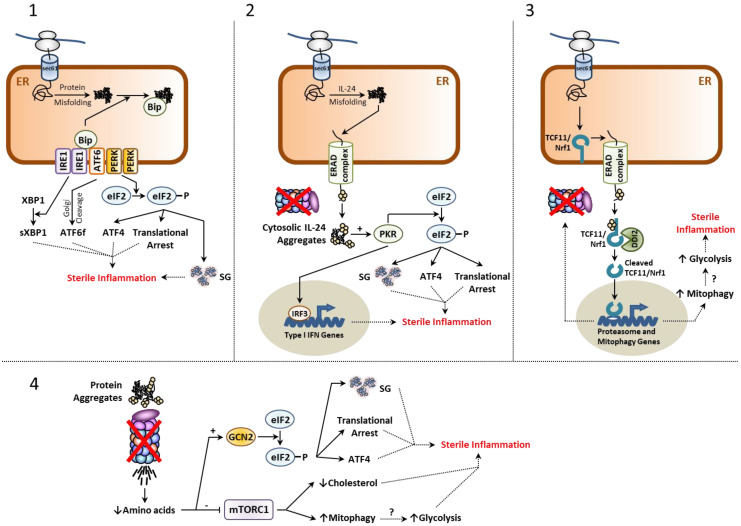
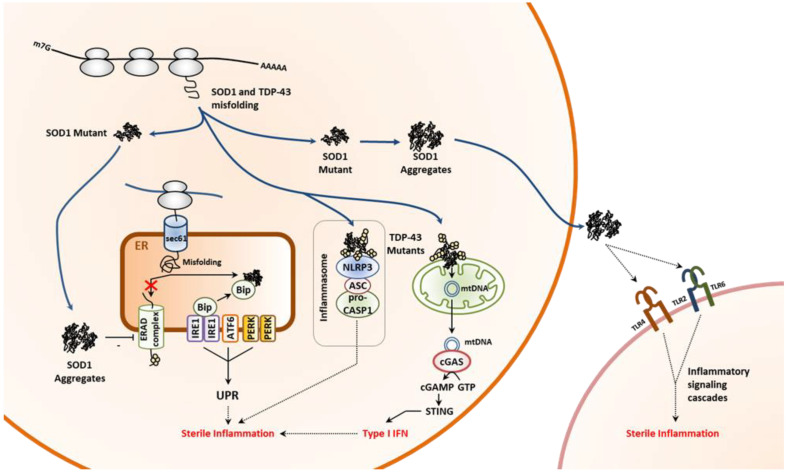
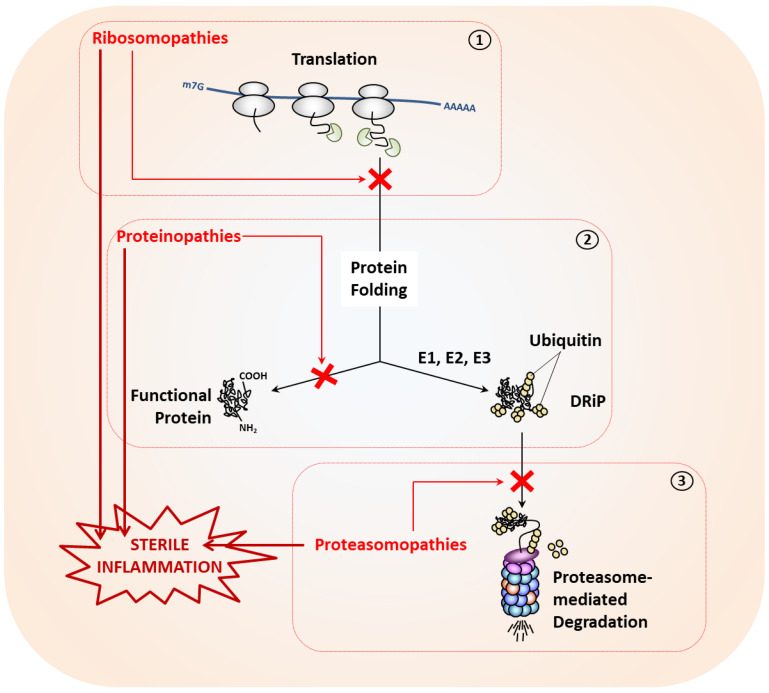
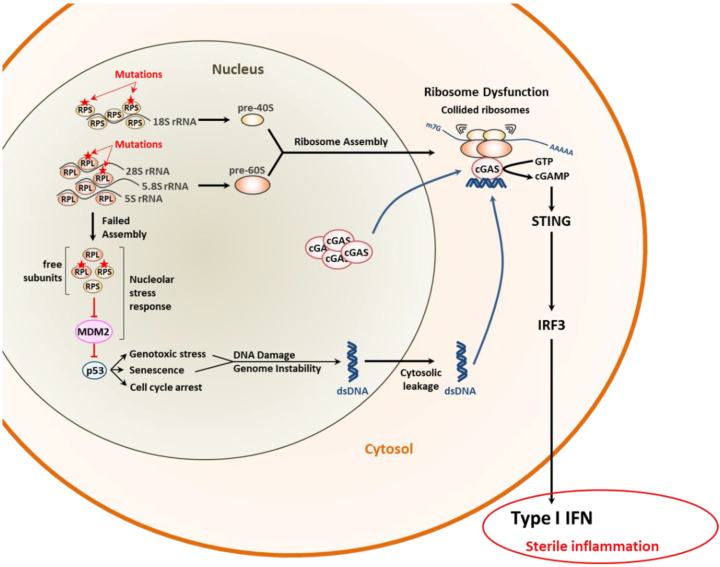
Proteostasis, a portmanteau of the words protein and homeostasis, refers to the ability of eukaryotic cells to maintain a stable proteome by acting on protein synthesis, quality control and/or degradation. Over the last two decades, an increasing number of disorders caused by proteostasis perturbations have been identified. Depending on their molecular etiology, such diseases may be classified into ribosomopathies, proteinopathies and proteasomopathies. Strikingly, most-if not all-of these syndromes exhibit an autoinflammatory component, implying a direct cause-and-effect relationship between proteostasis disruption and the initiation of innate immune responses. In this review, we provide a comprehensive overview of the molecular pathogenesis of these disorders and summarize current knowledge of the various mechanisms by which impaired proteostasis promotes autoinflammation. We particularly focus our discussion on the notion of how cells sense and integrate proteostasis perturbations as danger signals in the context of autoinflammatory diseases to provide insights into the complex and multiple facets of sterile inflammation.
蛋白质稳态,是“protein(蛋白质)”和“homeostasis(内稳状态)”两个词的混成词,指真核细胞通过对蛋白质合成、质量控制和/或降解的作用来维持稳定蛋白质组的能力。在过去的二十年中,越来越多的由蛋白质稳态失调引起的疾病被识别出来。根据其分子病因,此类疾病可分为核糖体病、蛋白质病和蛋白酶体病。引人注目的是,这些综合征中的大多数(如果不是全部的话)都表现出自炎症成分,这意味着蛋白质稳态破坏与先天免疫反应的启动之间存在直接的因果关系。在这篇综述中,我们全面概述了这些疾病的分子发病机制,并总结了目前关于受损蛋白质稳态如何通过各种机制促进自炎症的知识。我们特别关注这样一种观点,即细胞如何感知和整合自炎症疾病背景下蛋白质稳态失调作为危险信号,以深入了解无菌炎症的复杂和多方面。