Department of Biochemistry and Molecular Biology, Genes and Development Graduate Program, The University of Texas MD Anderson Cancer Center, Houston, Texas, United States of America.
PLoS Genet. 2011 Sep;7(9):e1002261. doi: 10.1371/journal.pgen.1002261. Epub 2011 Sep 1.
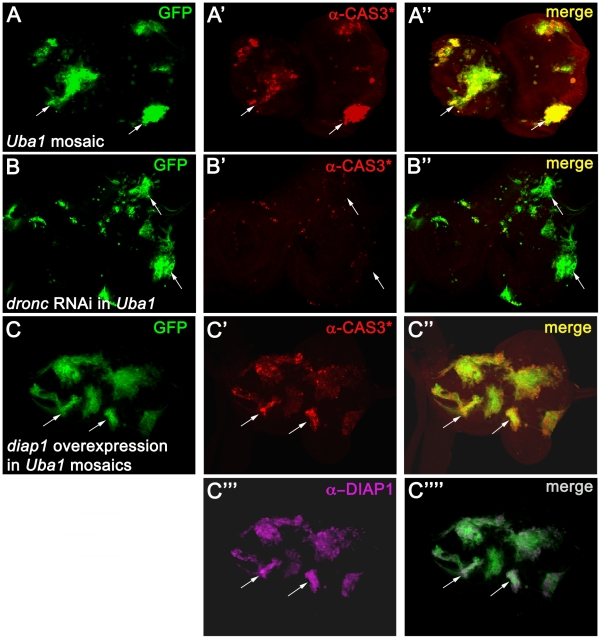
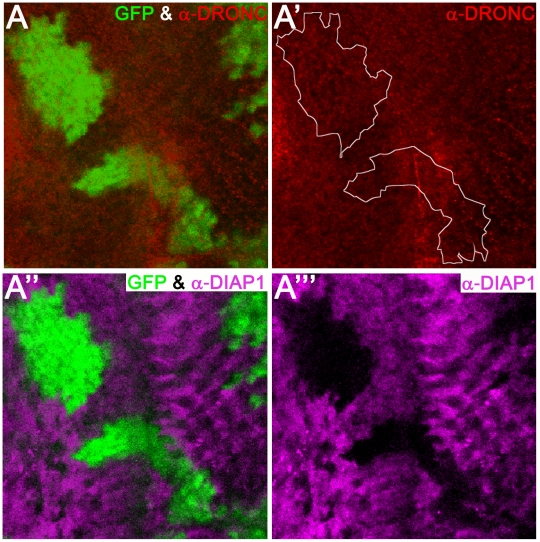
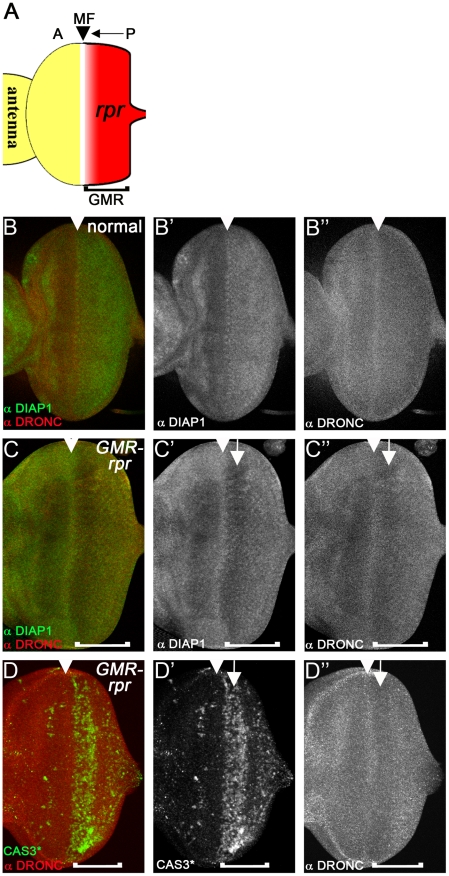
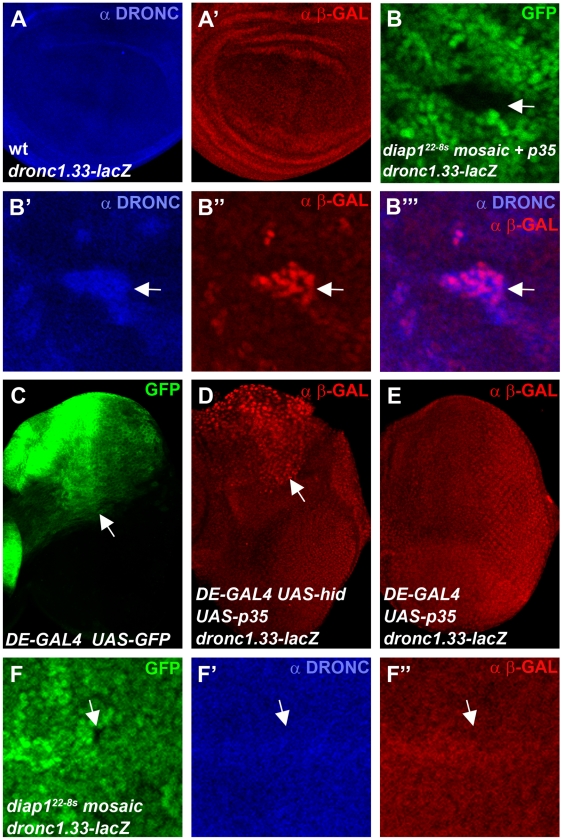
Ubiquitylation targets proteins for proteasome-mediated degradation and plays important roles in many biological processes including apoptosis. However, non-proteolytic functions of ubiquitylation are also known. In Drosophila, the inhibitor of apoptosis protein 1 (DIAP1) is known to ubiquitylate the initiator caspase DRONC in vitro. Because DRONC protein accumulates in diap1 mutant cells that are kept alive by caspase inhibition ("undead" cells), it is thought that DIAP1-mediated ubiquitylation causes proteasomal degradation of DRONC, protecting cells from apoptosis. However, contrary to this model, we show here that DIAP1-mediated ubiquitylation does not trigger proteasomal degradation of full-length DRONC, but serves a non-proteolytic function. Our data suggest that DIAP1-mediated ubiquitylation blocks processing and activation of DRONC. Interestingly, while full-length DRONC is not subject to DIAP1-induced degradation, once it is processed and activated it has reduced protein stability. Finally, we show that DRONC protein accumulates in "undead" cells due to increased transcription of dronc in these cells. These data refine current models of caspase regulation by IAPs.
泛素化将蛋白质靶向蛋白酶体介导的降解,并在包括细胞凋亡在内的许多生物学过程中发挥重要作用。然而,泛素化的非蛋白水解功能也是已知的。在果蝇中,凋亡抑制蛋白 1(DIAP1)已知在体外将起始半胱天冬酶 DRONC 泛素化。由于 DRONC 蛋白在被半胱天冬酶抑制(“不死”细胞)保持存活的 diap1 突变细胞中积累,因此人们认为 DIAP1 介导的泛素化导致 DRONC 的蛋白酶体降解,从而保护细胞免受凋亡。然而,与该模型相反,我们在这里表明,DIAP1 介导的泛素化不会引发全长 DRONC 的蛋白酶体降解,而是发挥非蛋白水解功能。我们的数据表明,DIAP1 介导的泛素化阻止了 DRONC 的加工和激活。有趣的是,虽然全长 DRONC 不受 DIAP1 诱导的降解,但一旦被加工和激活,其蛋白稳定性就会降低。最后,我们表明,由于这些细胞中 dronc 的转录增加,DRONC 蛋白在“不死”细胞中积累。这些数据细化了 IAP 对半胱天冬酶调节的现有模型。