Department of Applied Tumor Biology, Institute of Pathology, University of Heidelberg, Heidelberg, Germany.
PLoS One. 2011;6(9):e24451. doi: 10.1371/journal.pone.0024451. Epub 2011 Sep 7.
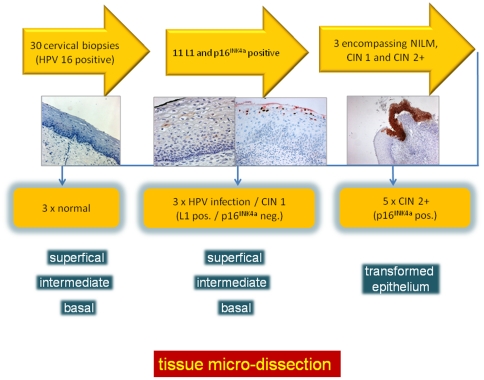
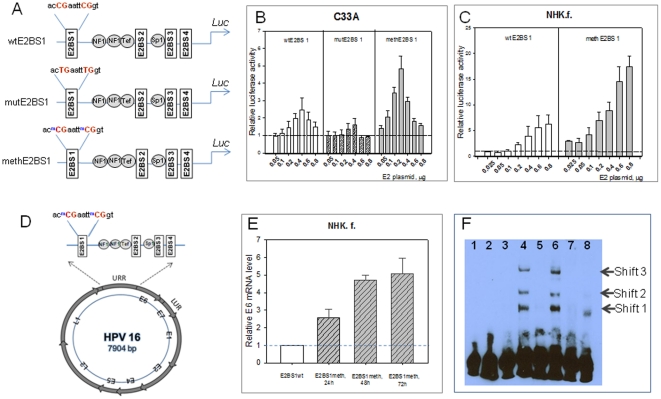
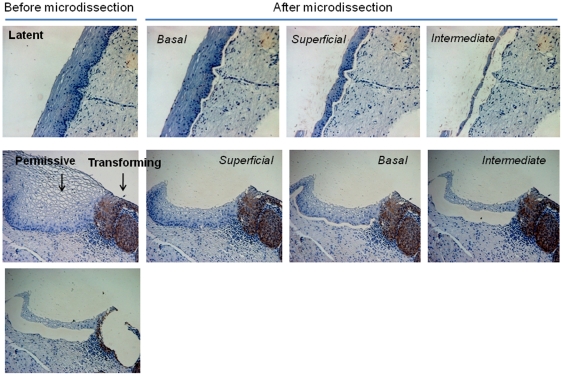
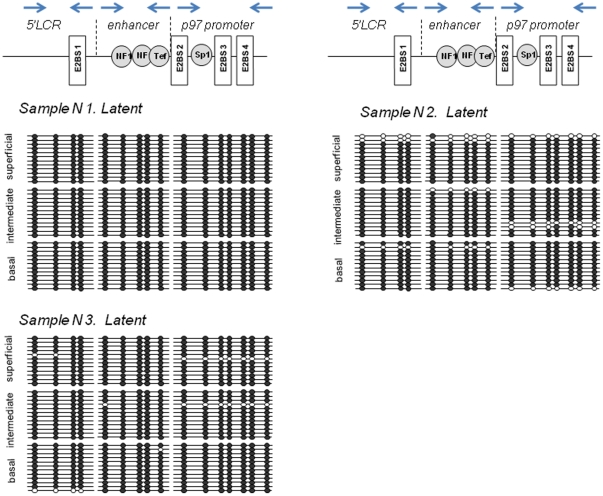
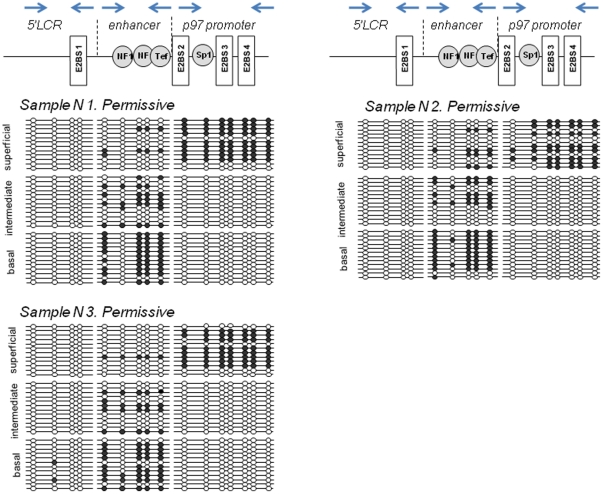
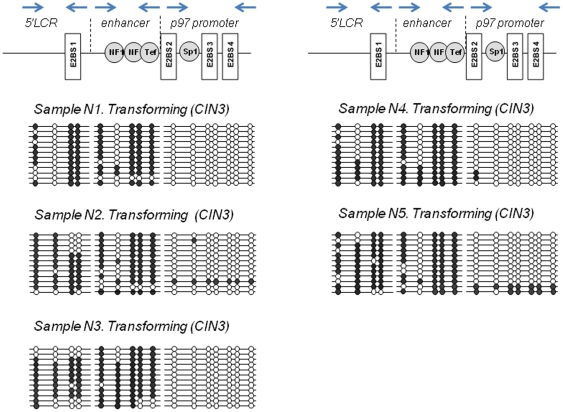
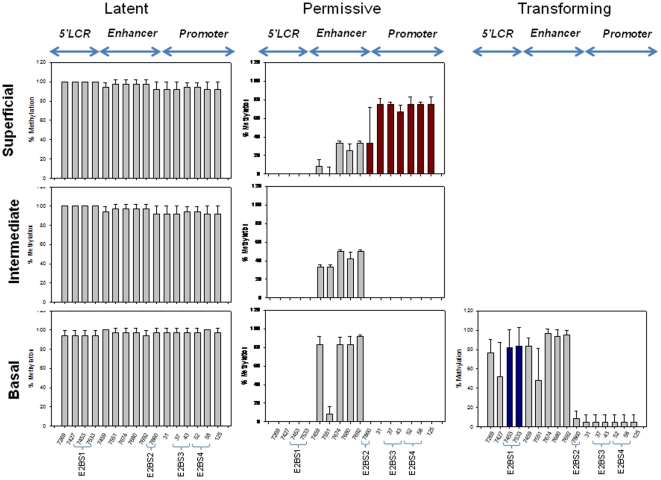
High risk human papillomaviruses are squamous epitheliotropic viruses that may cause cervical and other cancers. HPV replication depends on squamous epithelial differentiation. Transformation of HPV-infected cells goes along with substantial alteration of the viral gene expression profile and preferentially occurs at transformation zones usually at the uterine cervix. Methylation of the viral genome may affect regulatory features that control transcription and replication of the viral genome. Therefore, we analyzed the methylation pattern of the HPV16 upstream regulatory region (URR) during squamous epithelial differentiation and neoplastic transformation and analyzed how shifts in the HPV URR methylome may affect viral gene expression and replication. HPV 16 positive biopsy sections encompassing all stages of an HPV infection (latent, permissive and transforming) were micro-dissected and DNA was isolated from cell fractions representing the basal, intermediate, and superficial cell layers, each, as well as from transformed p16(INK4a)-positive cells. We observed fundamental changes in the methylation profile of transcription factor binding sites in the HPV16 upstream regulatory region linked to the squamous epithelial differentiation stage. Squamous epithelial transformation indicated by p16(INK4a) overexpression was associated with methylation of the distal E2 binding site 1 leading to hyper-activation of the HPV 16 URR. Adjacent normal but HPV 16-infected epithelial areas retained hyper-methylated HPV DNA suggesting that these viral genomes were inactivated. These data suggest that distinct shifts of the HPV 16 methylome are linked to differentiation dependent transcription and replication control and may trigger neoplastic transformation.
高危型人乳头瘤病毒是鳞状上皮嗜性病毒,可能导致宫颈癌和其他癌症。HPV 的复制依赖于鳞状上皮的分化。HPV 感染细胞的转化伴随着病毒基因表达谱的显著改变,并优先发生在转化区,通常在子宫颈。病毒基因组的甲基化可能会影响调节转录和复制病毒基因组的调控特征。因此,我们分析了 HPV16 上游调控区(URR)在鳞状上皮分化和肿瘤转化过程中的甲基化模式,并分析了 HPV URR 甲基化组的变化如何影响病毒基因的表达和复制。HPV16 阳性活检切片包含 HPV 感染的所有阶段(潜伏、许可和转化),对其进行微切割,从代表基底、中间和浅层细胞层的细胞部分中分离 DNA,以及从转化的 p16(INK4a)-阳性细胞中分离 DNA。我们观察到 HPV16 上游调控区转录因子结合位点的甲基化谱与鳞状上皮分化阶段相关的基本变化。p16(INK4a)过表达指示的鳞状上皮转化与远端 E2 结合位点 1 的甲基化有关,导致 HPV16 URR 的过度激活。相邻的正常但 HPV16 感染的上皮区域保留了高度甲基化的 HPV DNA,表明这些病毒基因组失活。这些数据表明,HPV16 甲基化组的明显改变与分化依赖的转录和复制控制有关,并可能引发肿瘤转化。