Division of Hematology & Oncology, Texas Tech University Health Sciences Center and Southwest Cancer Treatment and Research Center, Lubbock, TX, USA.
BMC Cancer. 2011 Sep 16;11:394. doi: 10.1186/1471-2407-11-394.
Multiple myeloma (MM) is a fatal malignancy ranking second in prevalence among hematological tumors. Continuous efforts are being made to develop innovative and more effective treatments. The preclinical evaluation of new therapies relies on the use of murine models of the disease.
Here we describe a new MM animal model in NOD-Rag1null IL2rgnull (NRG) mice that supports the engraftment of cell lines and primary MM cells that can be tracked with the tumor antigen, AKAP-4.
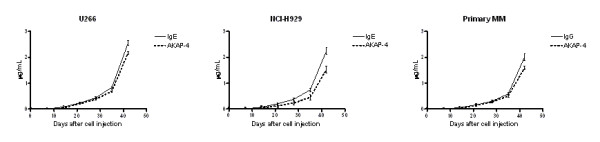
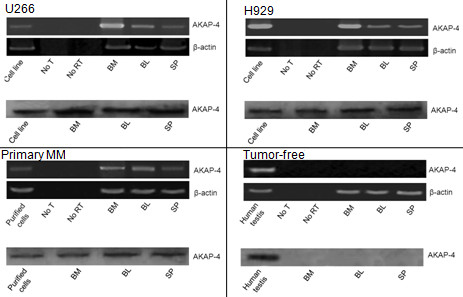
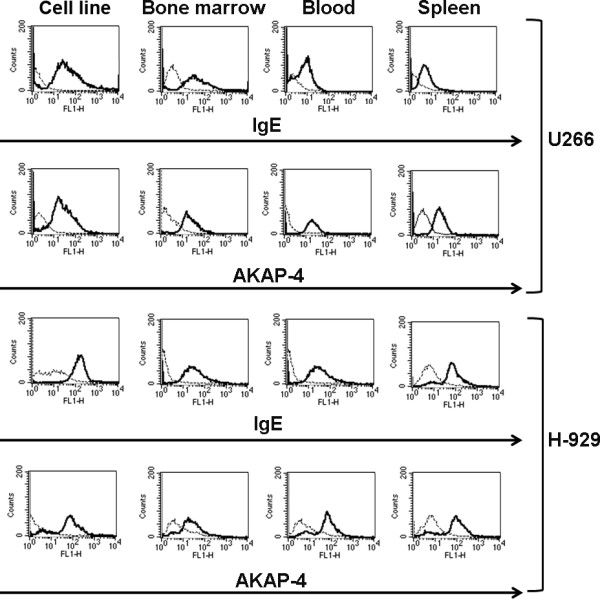
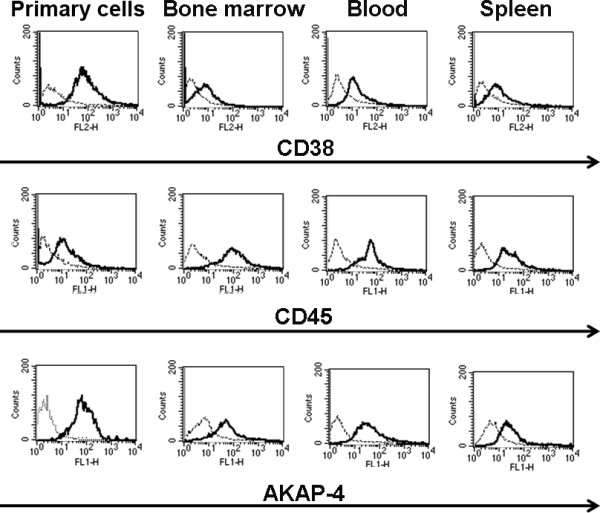
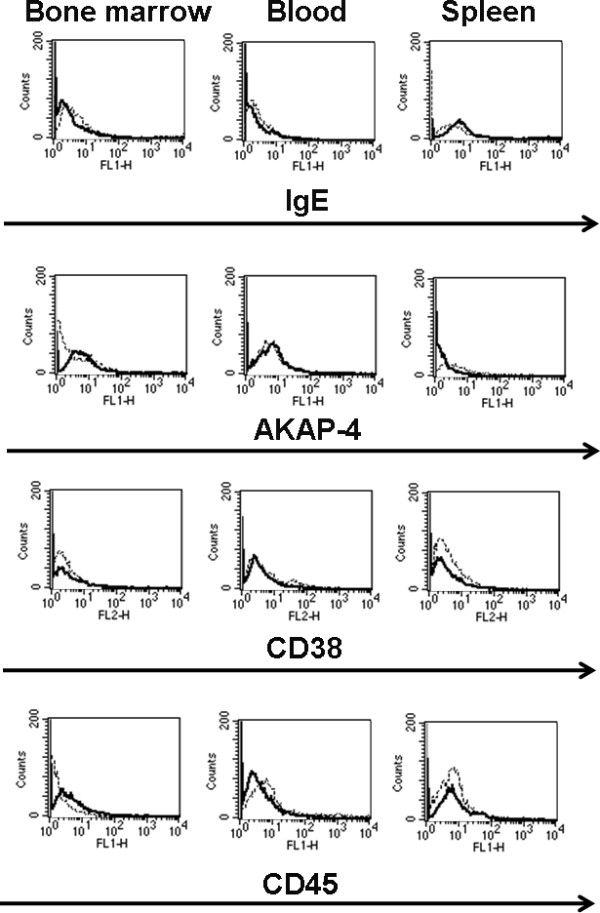
Human MM cell lines, U266 and H929, and primary MM cells were successfully engrafted in NRG mice after intravenous administration, and were found in the bone marrow, blood and spleen of tumor-challenged animals. The AKAP-4 expression pattern was similar to that of known MM markers, such as paraproteins, CD38 and CD45.
We developed for the first time a murine model allowing for the growth of both MM cell lines and primary cells in multifocal sites, thus mimicking the disease seen in patients. Additionally, we validated the use of AKAP-4 antigen to track tumor growth in vivo and to specifically identify MM cells in mouse tissues. We expect that our model will significantly improve the pre-clinical evaluation of new anti-myeloma therapies.
多发性骨髓瘤(MM)是一种致命的恶性肿瘤,在血液系统肿瘤中发病率排名第二。人们一直在努力开发创新的、更有效的治疗方法。新疗法的临床前评估依赖于疾病的鼠模型的使用。
在这里,我们描述了一种新的多发性骨髓瘤动物模型,即 NOD-Rag1null IL2rgnull(NRG)小鼠,它支持细胞系和可以用肿瘤抗原 AKAP-4 追踪的原发性 MM 细胞的植入。
人 MM 细胞系 U266 和 H929 以及原发性 MM 细胞在静脉给药后成功植入 NRG 小鼠体内,并在受肿瘤挑战的动物的骨髓、血液和脾脏中发现。AKAP-4 的表达模式与已知的 MM 标志物(如副蛋白、CD38 和 CD45)相似。
我们首次开发了一种允许 MM 细胞系和原发性细胞在多个部位生长的鼠模型,从而模拟了患者中所见的疾病。此外,我们验证了使用 AKAP-4 抗原在体内追踪肿瘤生长并特异性识别小鼠组织中的 MM 细胞。我们预计我们的模型将显著改善新的抗骨髓瘤疗法的临床前评估。