Key Laboratory of Cardiovascular Remodeling and Function Research, Chinese Ministry of Education and Chinese Ministry of Health, Qilu Hospital of Shandong University, Ji’nan, Shandong Province, China.
Diabetes. 2011 Nov;60(11):2963-74. doi: 10.2337/db11-0549. Epub 2011 Sep 20.
Tribbles 3 (TRB3) is associated with insulin resistance, an important trigger in the development of diabetic cardiomyopathy (DCM). We sought to determine whether TRB3 plays a major role in modulating DCM and the mechanisms involved.
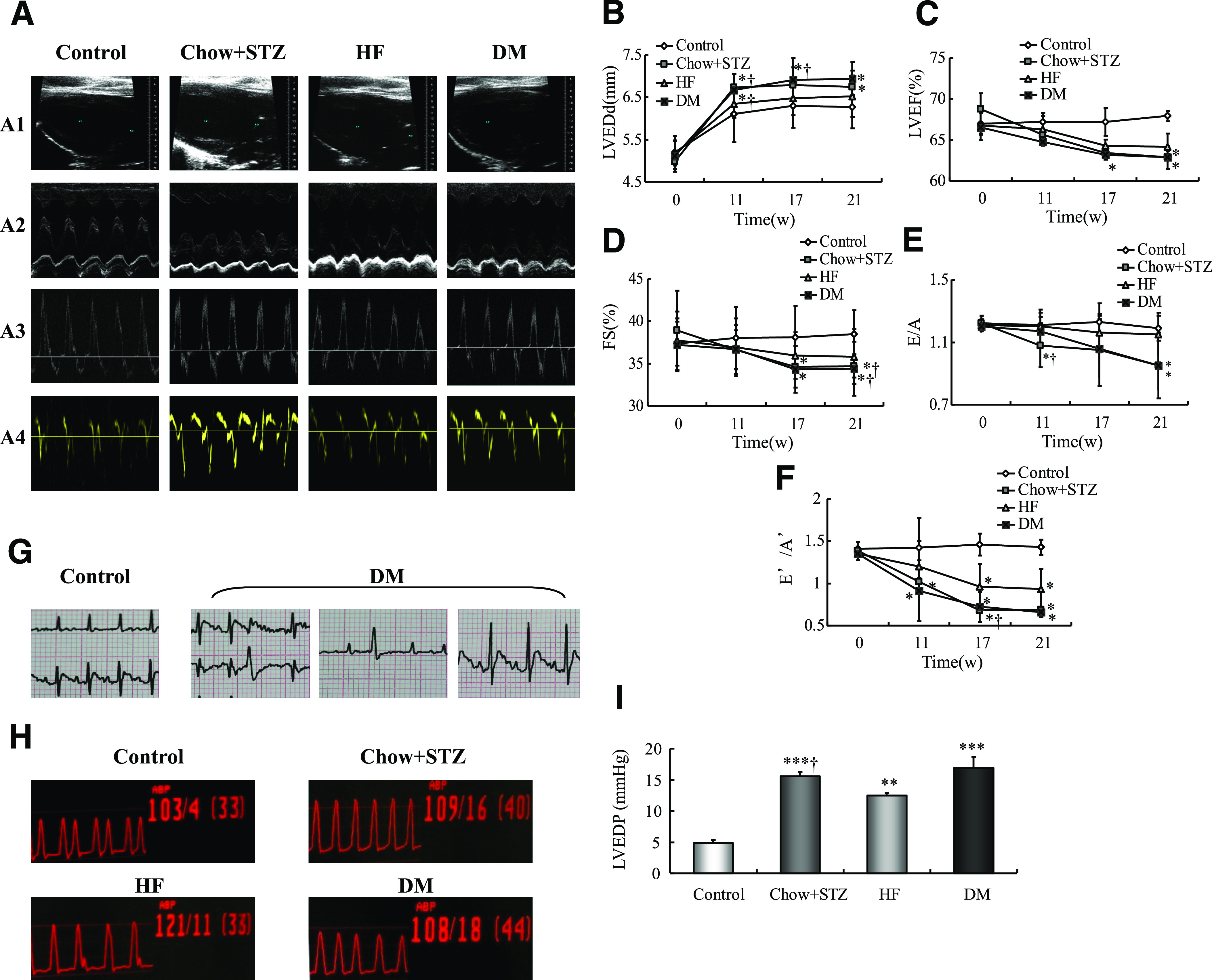
The type 2 diabetic rat model was induced by high-fat diet and low-dose streptozotocin. We evaluated the characteristics of type 2 DCM by serial echocardiography and metabolite tests, Western blot analysis for TRB3 expression, and histopathologic analyses of cardiomyocyte density, lipids accumulation, cardiac inflammation, and fibrosis area. We then used gene silencing to investigate the role of TRB3 in the pathophysiologic features of DCM.
Rats with DCM showed severe insulin resistance, left ventricular dysfunction, aberrant lipids deposition, cardiac inflammation, fibrosis, and TRB3 overexpression. We found that the silencing of TRB3 ameliorated metabolic disturbance and insulin resistance; myocardial hypertrophy, lipids accumulation, inflammation, fibrosis, and elevated collagen I-to-III content ratio in DCM rats were significantly decreased. These anatomic findings were accompanied by significant improvements in cardiac function. Furthermore, with TRB3 gene silencing, the inhibited phosphorylation of Akt was restored and the increased phosphorylation of extracellular signal-regulated kinase 1/2 and Jun NH(2)-terminal kinase in DCM was significantly decreased.
TRB3 gene silencing may exert a protective effect on DCM by improving selective insulin resistance, implicating its potential role for treatment of human DCM.
Tribbles 3(TRB3)与胰岛素抵抗有关,而后者是糖尿病心肌病(DCM)发生的重要触发因素。我们试图确定 TRB3 是否在调节 DCM 及其相关机制中发挥主要作用。
通过高脂肪饮食和小剂量链脲佐菌素诱导 2 型糖尿病大鼠模型。我们通过连续超声心动图和代谢物测试、TRB3 表达的 Western blot 分析以及心肌细胞密度、脂质积累、心脏炎症和纤维化面积的组织病理学分析来评估 2 型 DCM 的特征。然后,我们使用基因沉默技术来研究 TRB3 在 DCM 病理生理特征中的作用。
DCM 大鼠表现出严重的胰岛素抵抗、左心室功能障碍、异常脂质沉积、心脏炎症、纤维化和 TRB3 过表达。我们发现,沉默 TRB3 可改善代谢紊乱和胰岛素抵抗;DCM 大鼠的心肌肥厚、脂质积累、炎症、纤维化和胶原 I 至 III 含量比值升高均明显减少。这些解剖学发现伴随着心脏功能的显著改善。此外,随着 TRB3 基因沉默,抑制的 Akt 磷酸化得到恢复,DCM 中细胞外信号调节激酶 1/2 和 Jun NH2-末端激酶的过度磷酸化明显减少。
沉默 TRB3 基因可能通过改善选择性胰岛素抵抗对 DCM 发挥保护作用,提示其在治疗人类 DCM 中的潜在作用。