Department of Cell and Molecular Biology, John A. Burns School of Medicine, University of Hawaii, Honolulu, Hawaii, United States of America.
PLoS One. 2011;6(9):e24738. doi: 10.1371/journal.pone.0024738. Epub 2011 Sep 14.
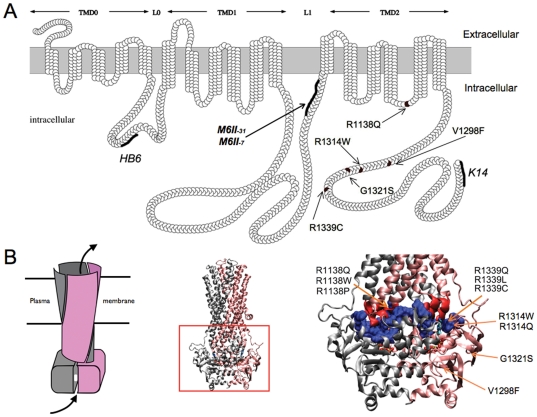
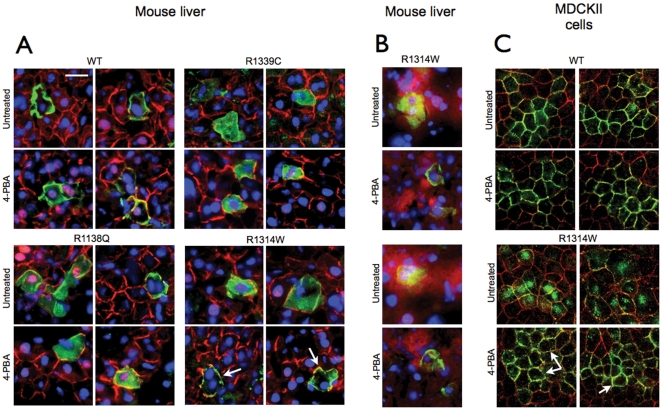
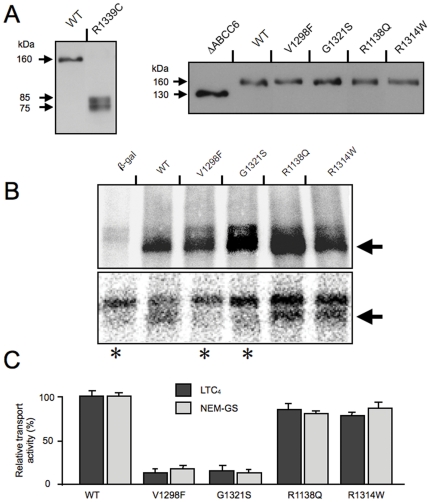
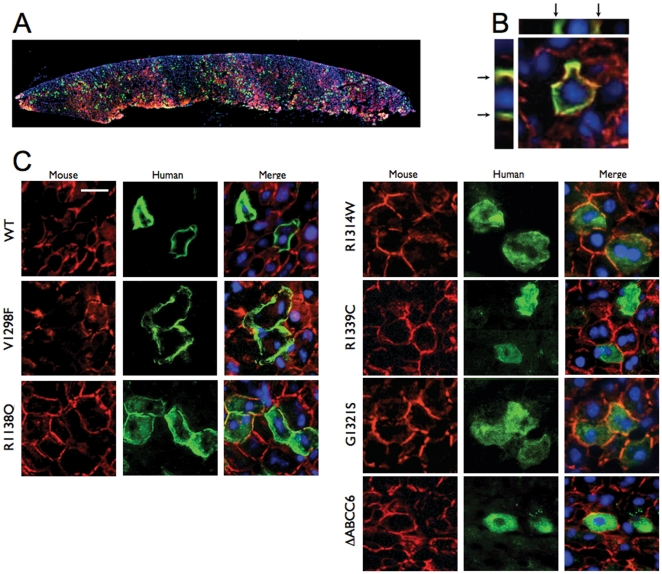
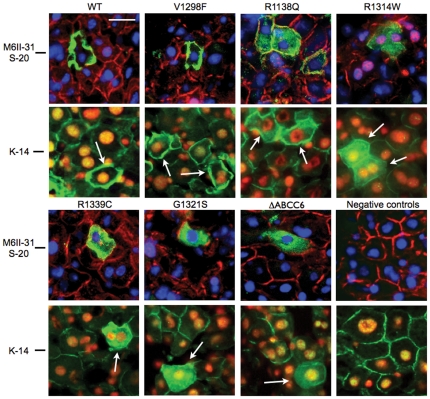
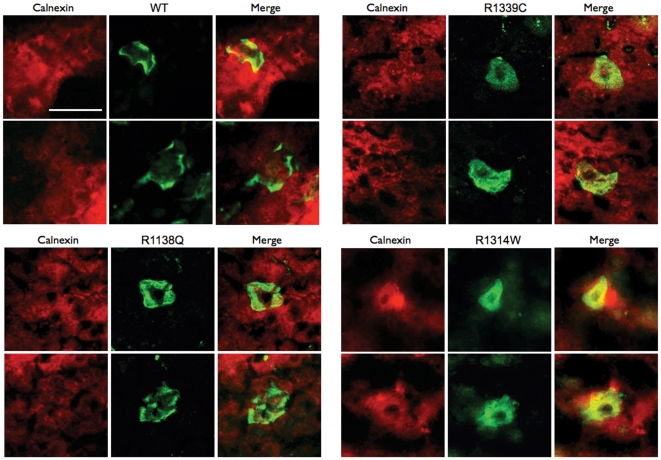
Loss-of-function mutations in ABCC6 can cause chronic or acute forms of dystrophic mineralization described in disease models such as pseudoxanthoma elasticum (OMIM 26480) in human and dystrophic cardiac calcification in mice. The ABCC6 protein is a large membrane-embedded organic anion transporter primarily found in the plasma membrane of hepatocytes. We have established a complex experimental strategy to determine the structural and functional consequences of disease-causing mutations in the human ABCC6. The major aim of our study was to identify mutants with preserved transport activity but failure in intracellular targeting. Five missense mutations were investigated: R1138Q, V1298F, R1314W, G1321S and R1339C. Using in vitro assays, we have identified two variants; R1138Q and R1314W that retained significant transport activity. All mutants were transiently expressed in vivo, in mouse liver via hydrodynamic tail vein injections. The inactive V1298F was the only mutant that showed normal cellular localization in liver hepatocytes while the other mutants showed mostly intracellular accumulation indicating abnormal trafficking. As both R1138Q and R1314W displayed endoplasmic reticulum localization, we tested whether 4-phenylbutyrate (4-PBA), a drug approved for clinical use, could restore their intracellular trafficking to the plasma membrane in MDCKII and mouse liver. The cellular localization of R1314W was significantly improved by 4-PBA treatment, thus potentially rescuing its physiological function. Our work demonstrates the feasibility of the in vivo rescue of cellular maturation of some ABCC6 mutants in physiological conditions very similar to the biology of the fully differentiated human liver and could have future human therapeutic application.
ABCC6 基因的功能丧失性突变可导致疾病模型中出现慢性或急性的营养不良性矿化,如人类的弹性假黄瘤(OMIM 26480)和小鼠的营养不良性心脏钙化。ABCC6 蛋白是一种大型的膜嵌入有机阴离子转运体,主要存在于肝细胞的质膜中。我们已经建立了一种复杂的实验策略,以确定人类 ABCC6 致病突变的结构和功能后果。我们研究的主要目的是确定具有保留转运活性但细胞内靶向失败的突变体。研究了 5 种错义突变:R1138Q、V1298F、R1314W、G1321S 和 R1339C。通过体外测定,我们鉴定了两种具有显著转运活性的变体:R1138Q 和 R1314W。所有突变体均通过水力尾静脉注射瞬时表达于体内的小鼠肝脏。不活跃的 V1298F 是唯一一种在肝实质细胞中显示正常细胞定位的突变体,而其他突变体则主要在细胞内积累,表明其转运异常。由于 R1138Q 和 R1314W 均显示内质网定位,我们测试了 4-苯基丁酸(4-PBA)是否可以恢复其在 MDCKII 和小鼠肝脏中的细胞内转运至质膜。4-PBA 处理显著改善了 R1314W 的细胞定位,从而可能恢复其生理功能。我们的工作证明了在非常类似于完全分化的人类肝脏生物学的生理条件下,体内拯救某些 ABCC6 突变体的细胞成熟的可行性,并可能具有未来的人类治疗应用。