Laboratory of Signal Mediated Gene Expression, Institute of Biological Research and Biotechnology, National Hellenic Research Foundation, Vas, Constantinou Ave. 48, 11635, Athens, Greece.
Mol Cancer. 2011 Sep 23;10:118. doi: 10.1186/1476-4598-10-118.
Colorectal cancer is a common disease that involves genetic alterations, such as inactivation of tumour suppressor genes and activation of oncogenes. Among them are RAS and BRAF mutations, which rarely coexist in the same tumour. Individual members of the Rho (Ras homology) GTPases contribute with distinct roles in tumour cell morphology, invasion and metastasis. The aim of this study is to dissect cell migration and invasion pathways that are utilised by BRAFV600E as compared to KRASG12V and HRASG12V oncoproteins. In particular, the role of RhoA (Ras homolog gene family, member A), Rac1 (Ras-related C3 botulinum toxin substrate 1) and Cdc42 (cell division cycle 42) in cancer progression induced by each of the three oncogenes is described.
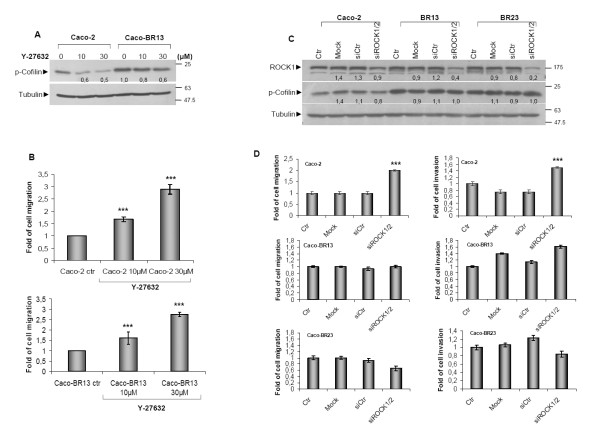
Colon adenocarcinoma cells with endogenous as well as ectopically expressed or silenced oncogenic mutations of BRAFV600E, KRASG12V and HRASG12V were employed. Signalling pathways and Rho GTPases were inhibited with specific kinase inhibitors and siRNAs. Cell motility and invasion properties were correlated with cytoskeletal properties and Rho GTPase activities.
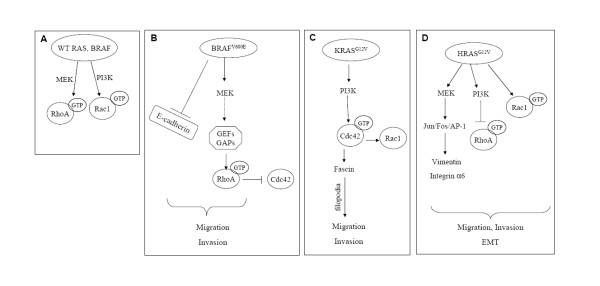
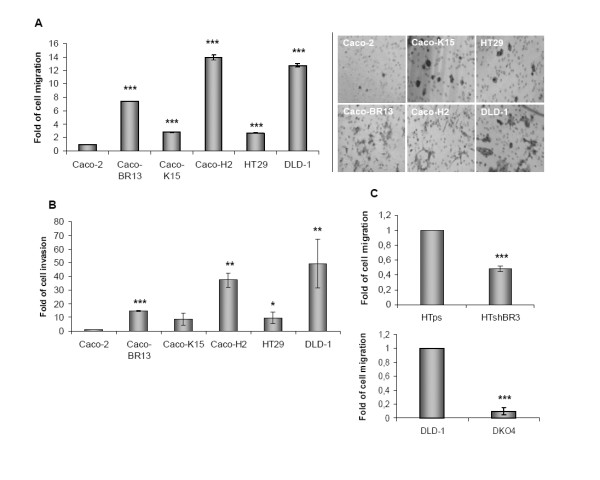
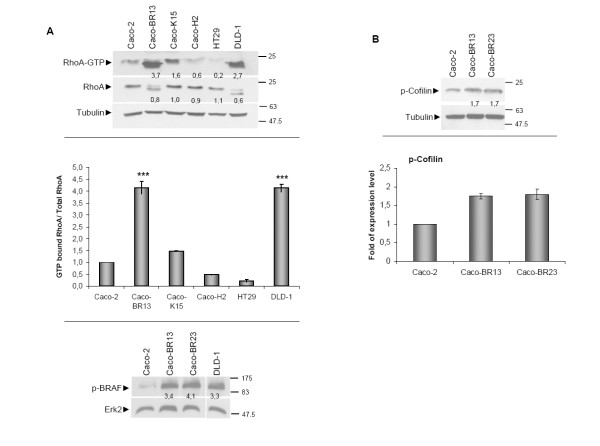
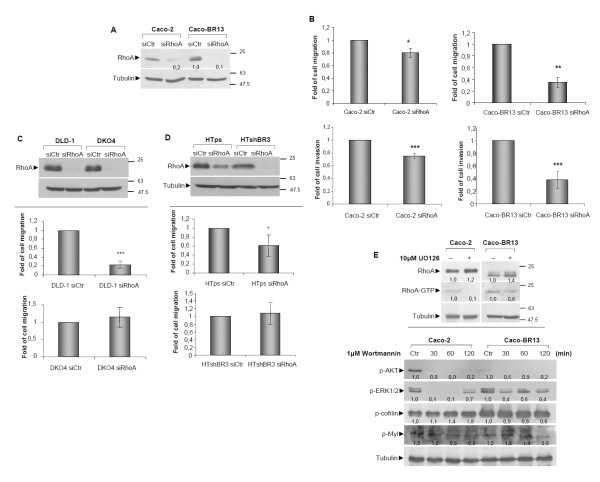
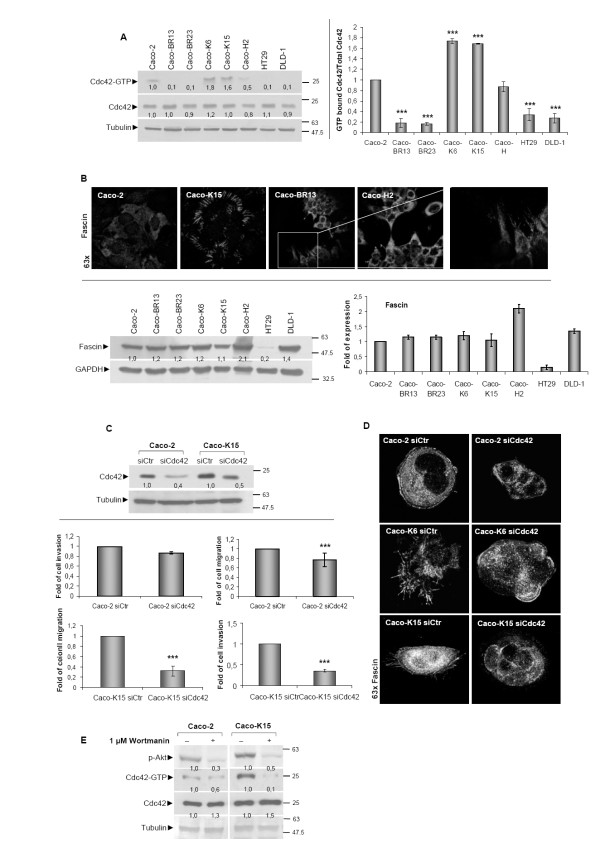
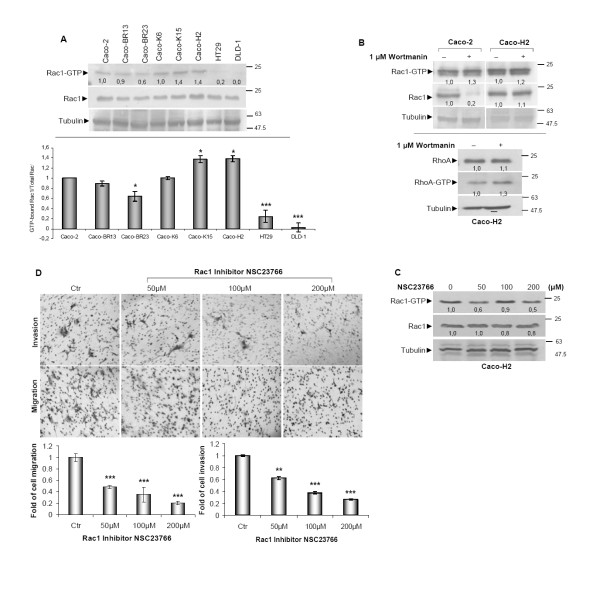
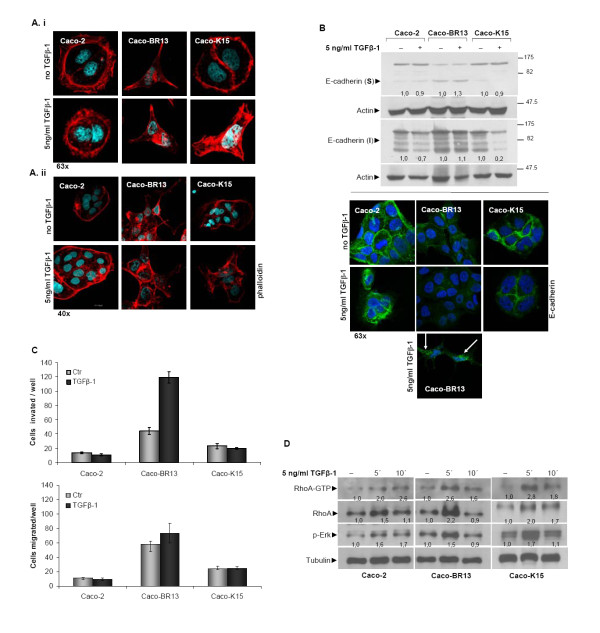
Evidence presented here indicate that BRAFV600E significantly induces cell migration and invasion properties in vitro in colon cancer cells, at least in part through activation of RhoA GTPase. The relationship established between BRAFV600E and RhoA activation is mediated by the MEK-ERK pathway. In parallel, KRASG12V enhances the ability of colon adenocarcinoma cells Caco-2 to migrate and invade through filopodia formation and PI3K-dependent Cdc42 activation. Ultimately increased cell migration and invasion, mediated by Rac1, along with the mesenchymal morphology obtained through the Epithelial-Mesenchymal Transition (EMT) were the main characteristics rendered by HRASG12V in Caco-2 cells. Moreover, BRAF and KRAS oncogenes are shown to cooperate with the TGFβ-1 pathway to provide cells with additional transforming properties.
This study discriminates oncogene-specific cell migration and invasion pathways mediated by Rho GTPases in colon cancer cells and reveals potential new oncogene-specific characteristics for targeted therapeutics.
结直肠癌是一种常见的疾病,涉及遗传改变,如肿瘤抑制基因失活和癌基因激活。其中包括 RAS 和 BRAF 突变,它们很少在同一肿瘤中共存。Rho(Ras 同源)GTPases 家族的各个成员在肿瘤细胞形态、侵袭和转移中发挥着不同的作用。本研究旨在剖析 BRAFV600E 与 KRASG12V 和 HRASG12V 癌蛋白相比所利用的细胞迁移和侵袭途径。特别是,描述了 RhoA(Ras 同源基因家族,成员 A)、Rac1(Ras 相关 C3 肉毒杆菌毒素底物 1)和 Cdc42(细胞分裂周期 42)在这三种癌基因诱导的癌症进展中的作用。
使用具有内源性以及异位表达或沉默 BRAFV600E、KRASG12V 和 HRASG12V 致癌突变的结肠腺癌细胞。使用特定的激酶抑制剂和 siRNA 抑制信号通路和 Rho GTPases。细胞迁移和侵袭特性与细胞骨架特性和 Rho GTPase 活性相关联。
本文提供的证据表明,BRAFV600E 至少部分通过激活 RhoA GTPase,显著诱导体外结肠癌细胞的迁移和侵袭特性。在 BRAFV600E 与 RhoA 激活之间建立的关系是由 MEK-ERK 途径介导的。同时,KRASG12V 通过片状伪足形成和 PI3K 依赖性 Cdc42 激活增强结肠腺癌 Caco-2 细胞迁移和侵袭的能力。最终,通过 Rac1 介导的增加的细胞迁移和侵袭以及通过上皮-间充质转化(EMT)获得的间充质形态是 HRASG12V 在 Caco-2 细胞中呈现的主要特征。此外,还表明 BRAF 和 KRAS 癌基因与 TGFβ-1 途径合作,为细胞提供额外的转化特性。
本研究区分了结肠癌细胞中 Rho GTPases 介导的癌基因特异性细胞迁移和侵袭途径,并揭示了针对靶向治疗的潜在新的癌基因特异性特征。