1Massachusetts Eye and Ear Infirmary, Harvard Medical School, Boston, MA 02114, USA.
Neuroscientist. 2012 Dec;18(6):567-88. doi: 10.1177/1073858411423441. Epub 2011 Oct 7.
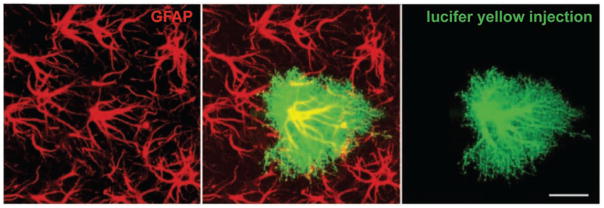
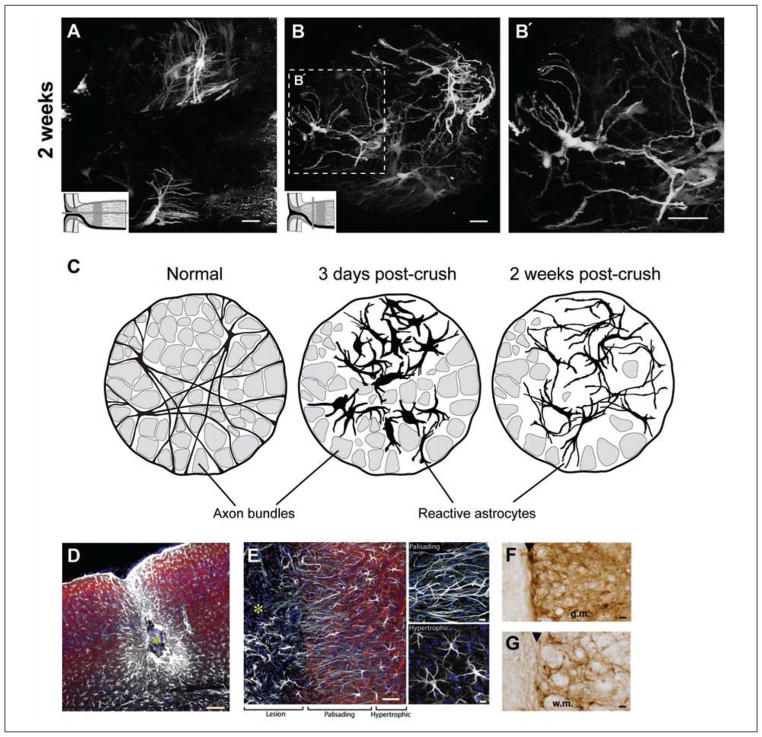
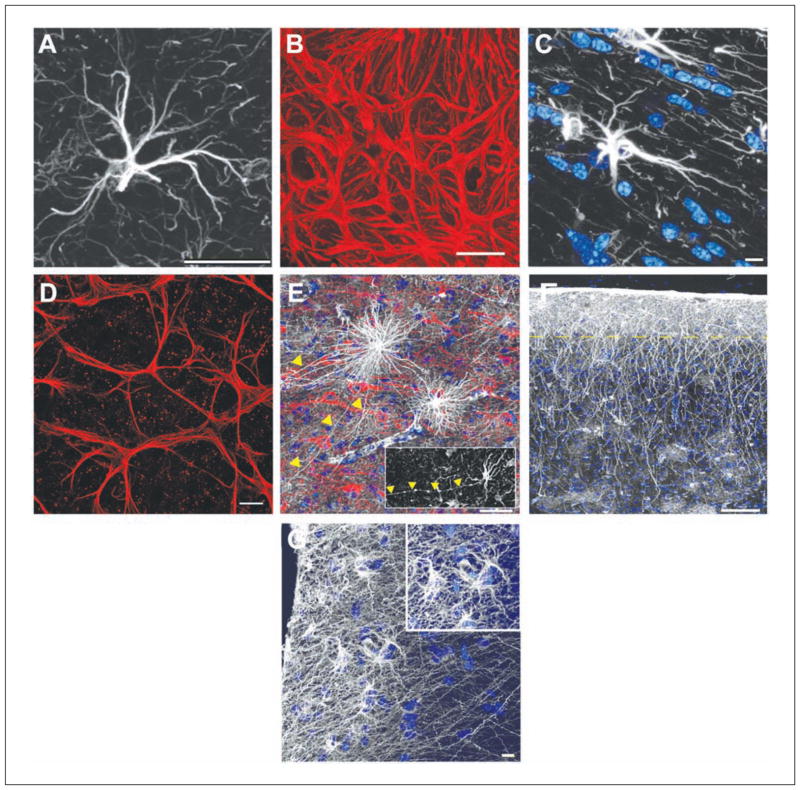
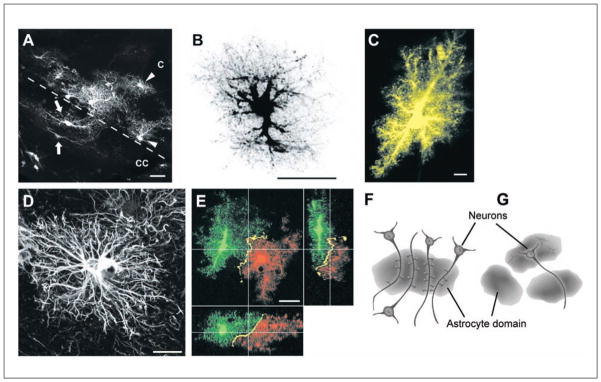
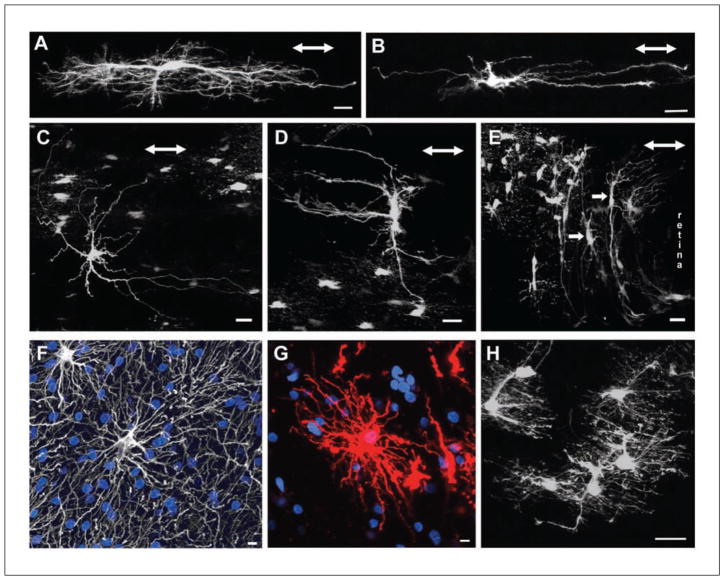
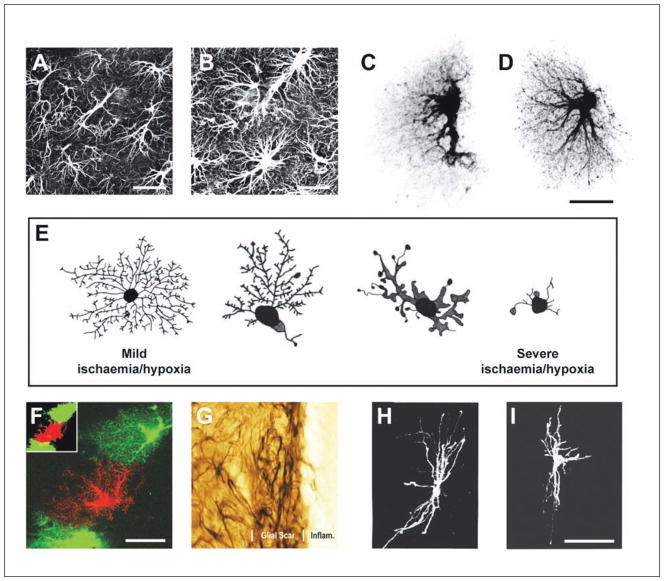
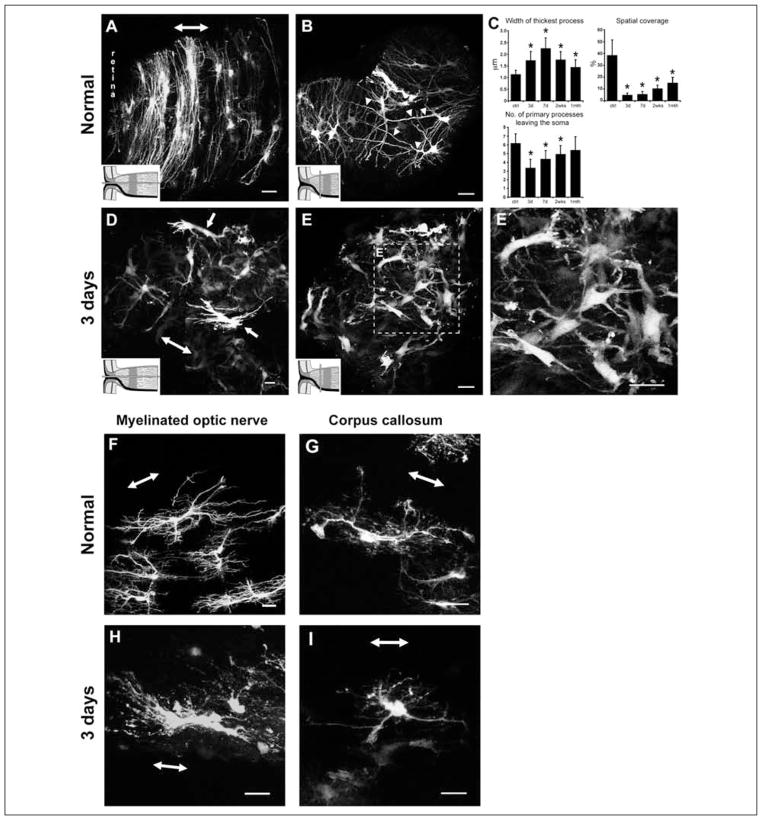
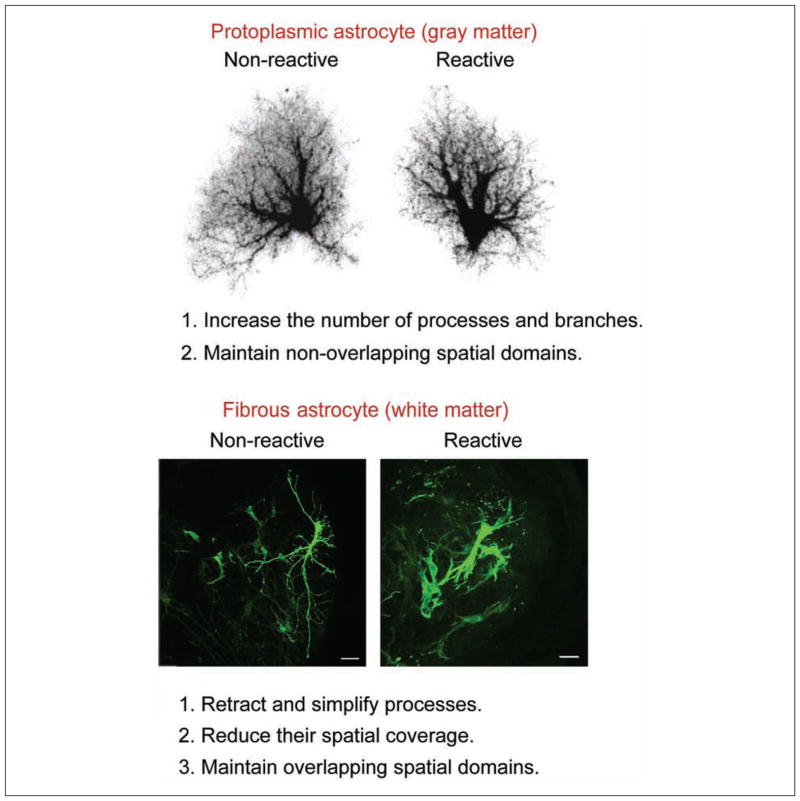
Astrocytes respond to all forms of CNS insult and disease by becoming reactive, a nonspecific but highly characteristic response that involves various morphological and molecular changes. Probably the most recognized aspect of reactive astrocytes is the formation of a glial scar that impedes axon regeneration. Although the reactive phenotype was first suggested more than 100 years ago based on morphological changes, the remodeling process is not well understood. We know little about the actual structure of a reactive astrocyte, how an astrocyte remodels during the progression of an insult, and how populations of these cells reorganize to form the glial scar. New methods of labeling astrocytes, along with transgenic mice, allow the complete morphology of reactive astrocytes to be visualized. Recent studies show that reactivity can induce a remarkable change in the shape of a single astrocyte, that not all astrocytes react in the same way, and that there is plasticity in the reactive response.
星形胶质细胞对中枢神经系统损伤和疾病的所有形式的反应变得活跃,这是一种非特异性但高度特征性的反应,涉及各种形态和分子变化。可能最被认可的反应性星形胶质细胞的方面是形成阻碍轴突再生的神经胶质瘢痕。尽管反应性表型早在 100 多年前基于形态变化就被提出,但重塑过程尚不清楚。我们对反应性星形胶质细胞的实际结构知之甚少,也不知道星形胶质细胞在损伤过程中如何重塑,以及这些细胞群体如何重组形成神经胶质瘢痕。新的星形胶质细胞标记方法和转基因小鼠使反应性星形胶质细胞的完整形态能够可视化。最近的研究表明,反应性可以诱导单个星形胶质细胞形状发生显著变化,并非所有星形胶质细胞以相同的方式反应,并且反应性具有可塑性。