Center for Systems Biology, Massachusetts General Hospital and Harvard Medical School, Boston, Massachusetts, USA.
Nat Biotechnol. 2011 Oct 9;29(11):1005-10. doi: 10.1038/nbt.1989.
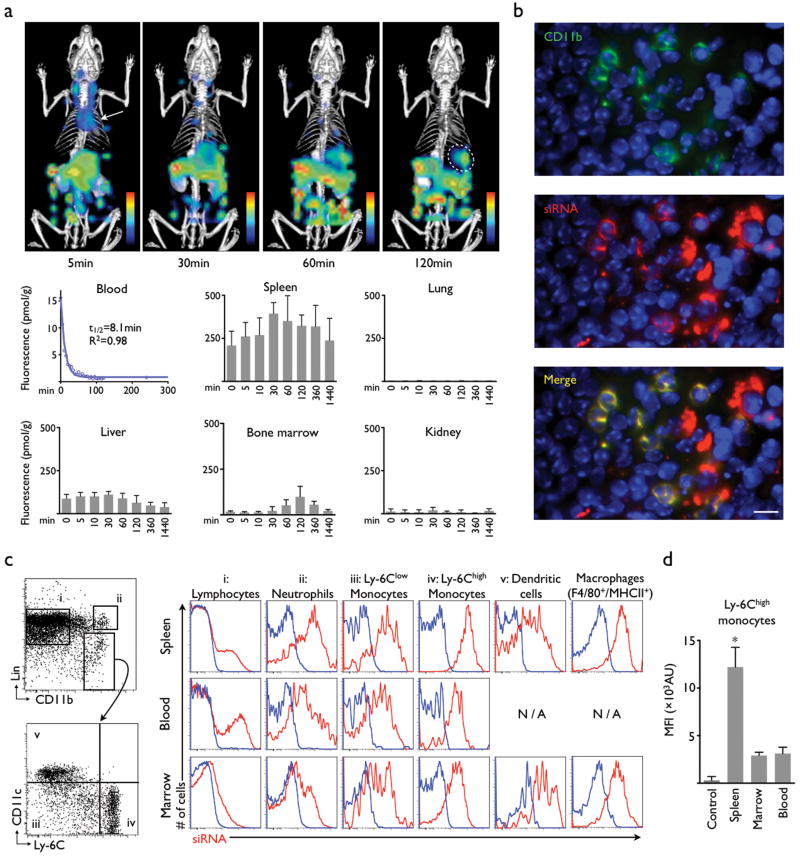
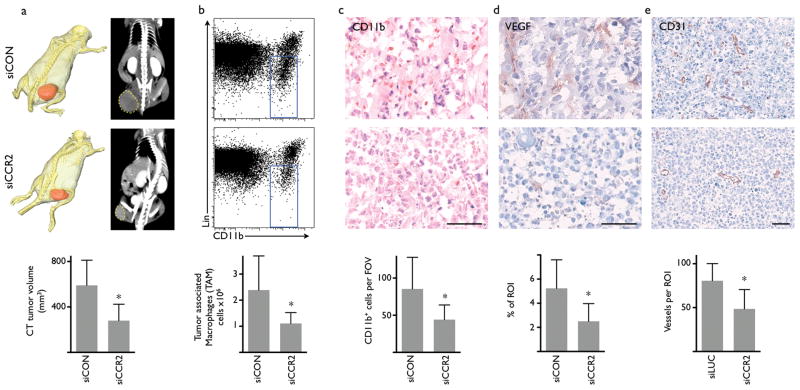
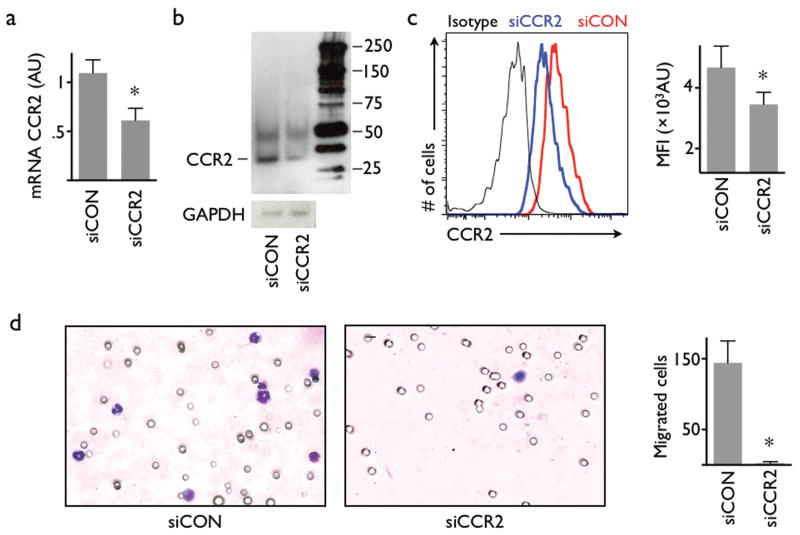
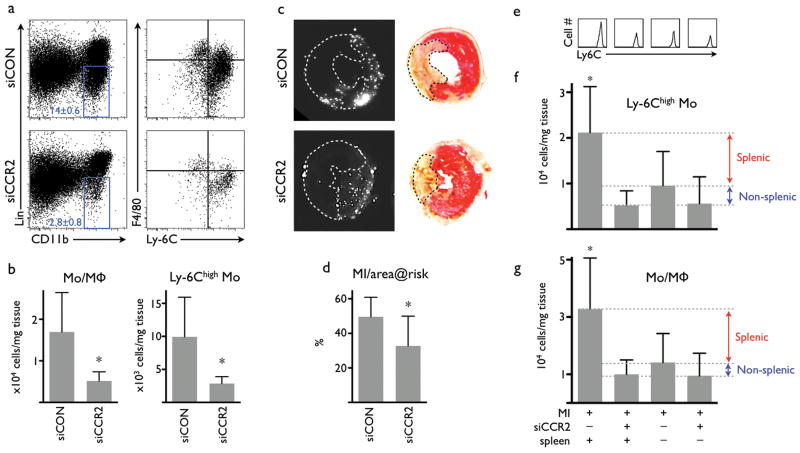
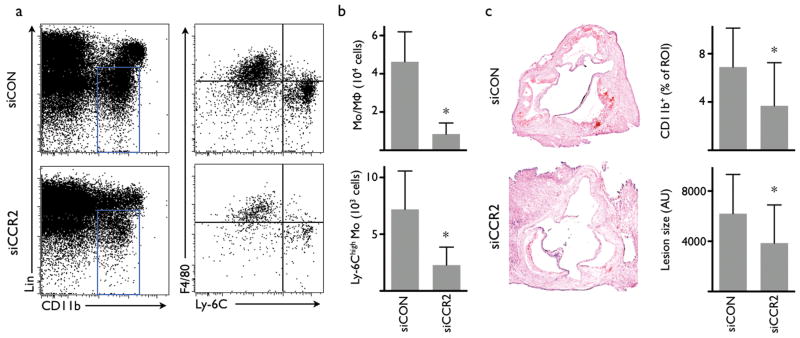
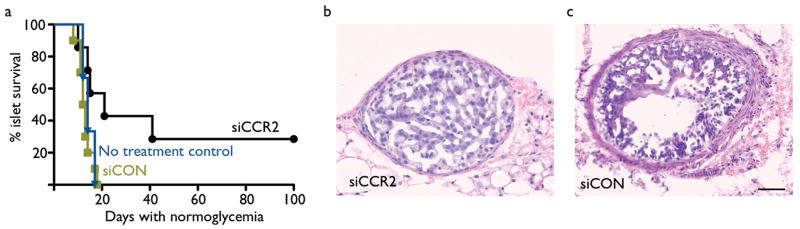
Excessive and prolonged activity of inflammatory monocytes is a hallmark of many diseases with an inflammatory component. In such conditions, precise targeting of these cells could be therapeutically beneficial while sparing many essential functions of the innate immune system, thus limiting unwanted effects. Inflammatory monocytes-but not the noninflammatory subset-depend on the chemokine receptor CCR2 for localization to injured tissue. Here we present an optimized lipid nanoparticle and a CCR2-silencing short interfering RNA that, when administered systemically in mice, show rapid blood clearance, accumulate in spleen and bone marrow, and localize to monocytes. Efficient degradation of CCR2 mRNA in monocytes prevents their accumulation in sites of inflammation. Specifically, the treatment attenuates their number in atherosclerotic plaques, reduces infarct size after coronary artery occlusion, prolongs normoglycemia in diabetic mice after pancreatic islet transplantation, and results in reduced tumor volumes and lower numbers of tumor-associated macrophages.
炎症单核细胞的过度和持续激活是许多具有炎症成分的疾病的标志。在这种情况下,精确靶向这些细胞可能具有治疗益处,同时保留先天免疫系统的许多基本功能,从而限制不良反应。炎症单核细胞 - 而不是非炎症亚群 - 依赖趋化因子受体 CCR2 定位到损伤组织。在这里,我们提出了一种经过优化的脂质纳米颗粒和一种 CCR2 沉默的小干扰 RNA,当在小鼠中系统给药时,它们显示出快速的血液清除率,在脾脏和骨髓中积累,并定位于单核细胞。单核细胞中 CCR2 mRNA 的有效降解可防止其在炎症部位积聚。具体而言,该治疗可减少动脉粥样硬化斑块中的单核细胞数量,减少冠状动脉闭塞后的梗塞面积,延长胰岛移植后糖尿病小鼠的正常血糖水平,并减少肿瘤体积和肿瘤相关巨噬细胞的数量。