Departamento de Biología Molecular de Plantas, Instituto de Biotecnología/Universidad Nacional Autónoma de México, Av Universidad 2001, Cuernavaca, Morelos 62210, México.
BMC Plant Biol. 2011 Oct 10;11:134. doi: 10.1186/1471-2229-11-134.
The legume-rhizobium symbiosis requires the formation of root nodules, specialized organs where the nitrogen fixation process takes place. Nodule development is accompanied by the induction of specific plant genes, referred to as nodulin genes. Important roles in processes such as morphogenesis and metabolism have been assigned to nodulins during the legume-rhizobium symbiosis.
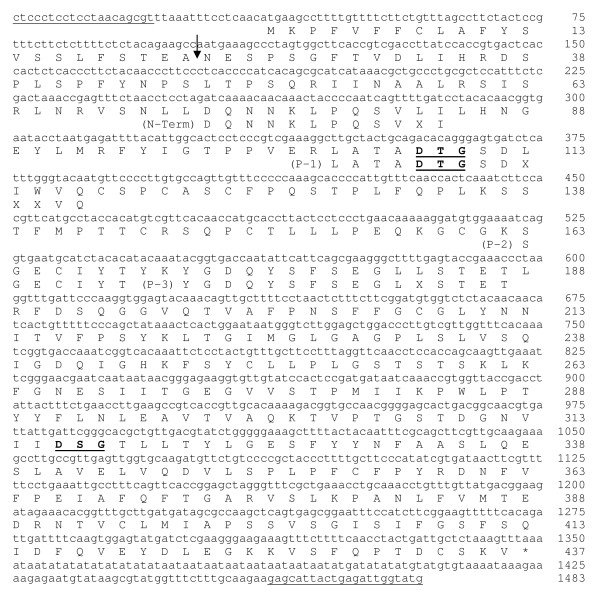
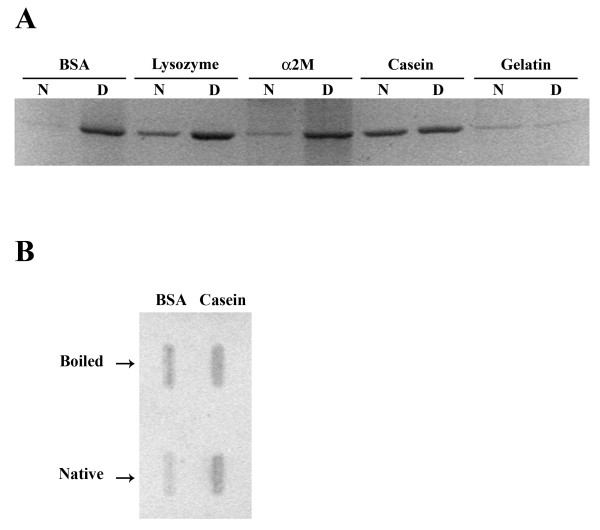
Here we report the purification and biochemical characterization of a novel nodulin from common bean (Phaseolus vulgaris L.) root nodules. This protein, called nodulin 41 (PvNod41) was purified through affinity chromatography and was partially sequenced. A genomic clone was then isolated via PCR amplification. PvNod41 is an atypical aspartyl peptidase of the A1B subfamily with an optimal hydrolytic activity at pH 4.5. We demonstrate that PvNod41 has limited peptidase activity against casein and is partially inhibited by pepstatin A. A PvNod41-specific antiserum was used to assess the expression pattern of this protein in different plant organs and throughout root nodule development, revealing that PvNod41 is found only in bean root nodules and is confined to uninfected cells.
To date, only a small number of atypical aspartyl peptidases have been characterized in plants. Their particular spatial and temporal expression patterns along with their unique enzymatic properties imply a high degree of functional specialization. Indeed, PvNod41 is closely related to CDR1, an Arabidopsis thaliana extracellular aspartyl protease involved in defense against bacterial pathogens. PvNod41's biochemical properties and specific cell-type localization, in uninfected cells of the common bean root nodule, strongly suggest that this aspartyl peptidase has a key role in plant defense during the symbiotic interaction.
豆科植物与根瘤菌的共生关系需要形成根瘤,这是一种专门的器官,其中发生固氮过程。根瘤的发育伴随着特定植物基因的诱导,这些基因被称为结瘤素基因。在豆科植物与根瘤菌的共生关系中,结瘤素在形态发生和代谢等过程中发挥了重要作用。
本文报道了从普通菜豆(Phaseolus vulgaris L.)根瘤中纯化和生化表征的一种新的结瘤素。这种蛋白质称为结瘤素 41(PvNod41),通过亲和层析进行纯化,并部分测序。然后通过 PCR 扩增分离出一个基因组克隆。PvNod41 是 A1B 亚家族的一种非典型天冬氨酰肽酶,在 pH4.5 时具有最佳的水解活性。我们证明 PvNod41 对酪蛋白的肽酶活性有限,并且被胃抑素 A 部分抑制。使用 PvNod41 特异性抗血清评估该蛋白在不同植物器官和整个根瘤发育过程中的表达模式,结果表明 PvNod41 仅存在于菜豆根瘤中,并且局限于未感染的细胞。
迄今为止,仅在植物中鉴定出少数几种非典型天冬氨酰肽酶。它们独特的时空表达模式及其独特的酶学特性表明其具有高度的功能专业化。事实上,PvNod41 与 CDR1 密切相关,CDR1 是一种拟南芥细胞外天冬氨酰蛋白酶,参与对细菌病原体的防御。PvNod41 的生化特性和在未感染的普通菜豆根瘤细胞中的特定细胞类型定位强烈表明,这种天冬氨酰肽酶在共生互作过程中植物防御中发挥关键作用。