Campbell C, Skovdal M, Mupambireyi Z, Madanhire C, Robertson L, Nyamukapa C A, Gregson S
Institute of Social Psychology, London School of Economics and Political Science, UK.
Child Care Health Dev. 2012 Sep;38(5):732-42. doi: 10.1111/j.1365-2214.2011.01311.x. Epub 2011 Oct 11.
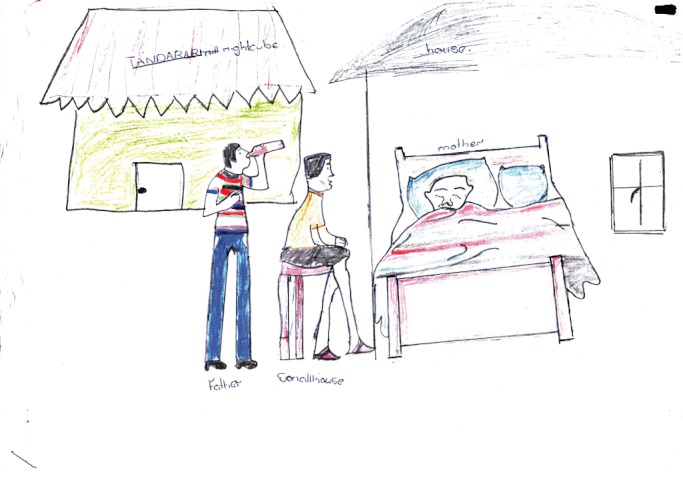
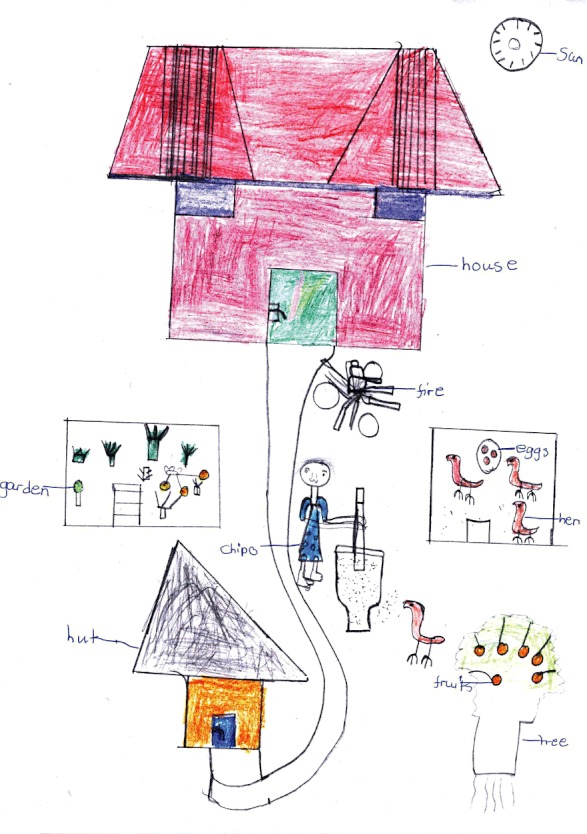
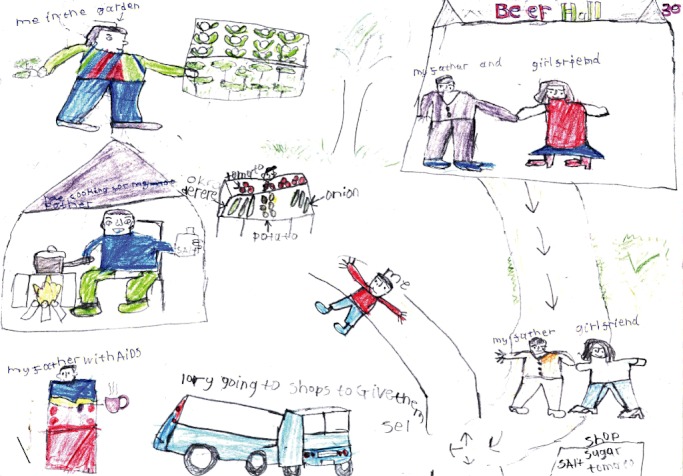
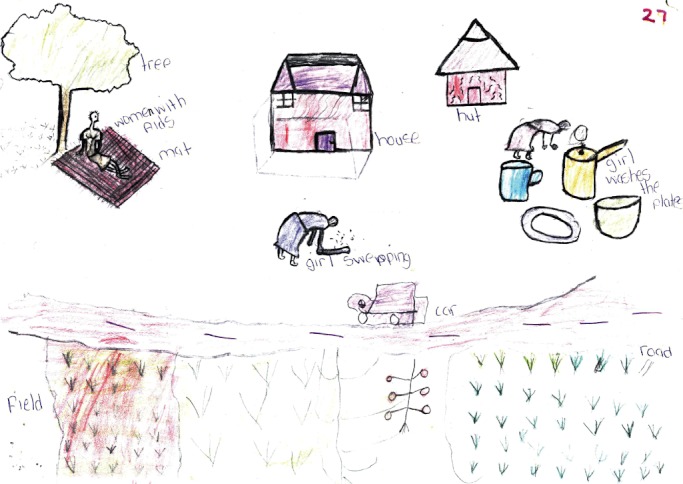
We use children's drawings to investigate social stigmatization of AIDS-affected and poverty-affected children by their peers, in the light of suggestions that the stigmatization of AIDS-affected children might derive more from the poverty experienced by these children than from their association with AIDS.
A qualitative study, in rural Zimbabwe, used draw-and-write techniques to elicit children's (10-12 years) representations of AIDS-affected children (n= 30) and poverty-affected children (n= 33) in 2009 and 2010 respectively.
Representations of children affected by AIDS and by poverty differed significantly. The main problems facing AIDS-affected children were said to be the psychosocial humiliations of AIDS stigma and children's distress about sick relatives. Contrastingly, poverty-affected children were depicted as suffering from physical and material neglect and deprivation. Children affected by AIDS were described as caregivers of parents whom illness prevented from working. This translated into admiration and respect for children's active contribution to household survival. Poverty-affected children were often portrayed as more passive victims of their guardians' inability or unwillingness to work or to prioritize their children's needs, with these children having fewer opportunities to exercise agency in response to their plight.
The nature of children's stigmatization of their AIDS-affected peers may often be quite distinct from poverty stigma, in relation to the nature of suffering (primarily psychosocial and material respectively), the opportunities for agency offered by each affliction, and the opportunities each condition offers for affected children to earn the respect of their peers and community. We conclude that the particular nature of AIDS stigma offers greater opportunities for stigma reduction than poverty stigma.
鉴于有观点认为受艾滋病影响儿童所遭受的污名化可能更多源于这些儿童所经历的贫困,而非他们与艾滋病的关联,我们利用儿童绘画来调查受艾滋病影响儿童和受贫困影响儿童在同龄人中所遭受的社会污名化情况。
在津巴布韦农村地区开展了一项定性研究,于2009年和2010年分别采用绘画与写作技巧,让儿童(10至12岁)描绘受艾滋病影响儿童(n = 30)和受贫困影响儿童(n = 33)。
受艾滋病影响儿童和受贫困影响儿童的描绘存在显著差异。据说受艾滋病影响儿童面临的主要问题是艾滋病污名带来的心理社会羞辱以及儿童对患病亲属的痛苦。相比之下,受贫困影响儿童被描绘为遭受身体和物质上的忽视与匮乏。受艾滋病影响儿童被描述为父母患病无法工作时的家庭照料者。这转化为对儿童为家庭生存所做积极贡献的钦佩和尊重。受贫困影响儿童往往被描绘为其监护人无力或不愿工作或优先考虑子女需求的更为被动的受害者,这些儿童应对自身困境的能动性机会较少。
就痛苦的性质(分别主要是心理社会方面和物质方面)、每种苦难所提供的能动性机会以及每种状况为受影响儿童赢得同龄人和社区尊重所提供的机会而言,儿童对受艾滋病影响同伴的污名化性质可能往往与贫困污名截然不同。我们得出结论,艾滋病污名的特殊性质比贫困污名提供了更大的减少污名化的机会。