Molecular Biology Institute, University of California Los Angeles, Los Angeles, California, United States of America.
PLoS Pathog. 2011 Oct;7(10):e1002292. doi: 10.1371/journal.ppat.1002292. Epub 2011 Oct 6.
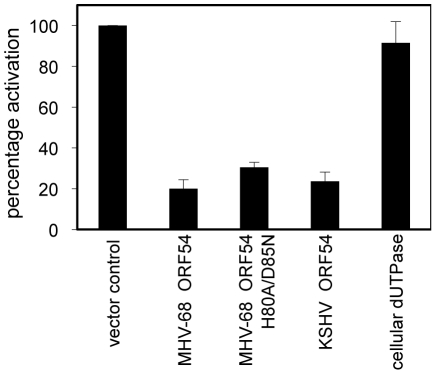
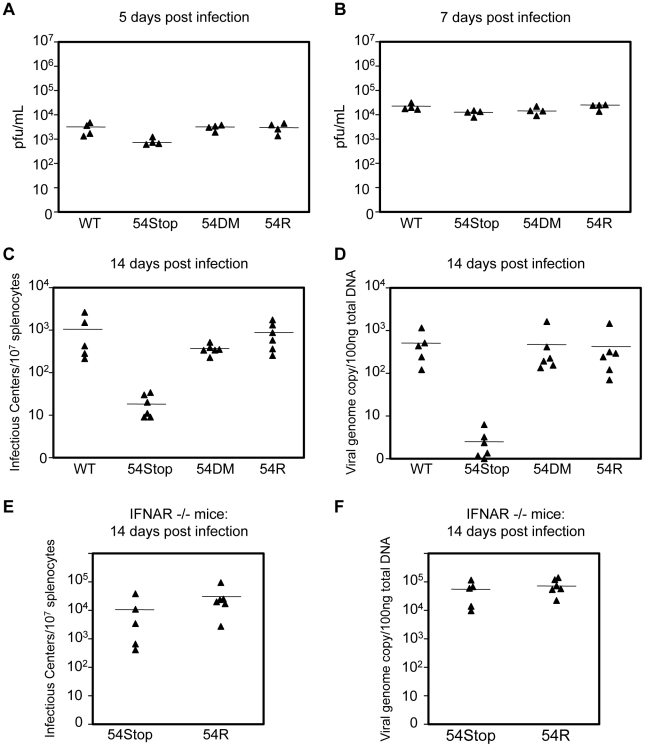
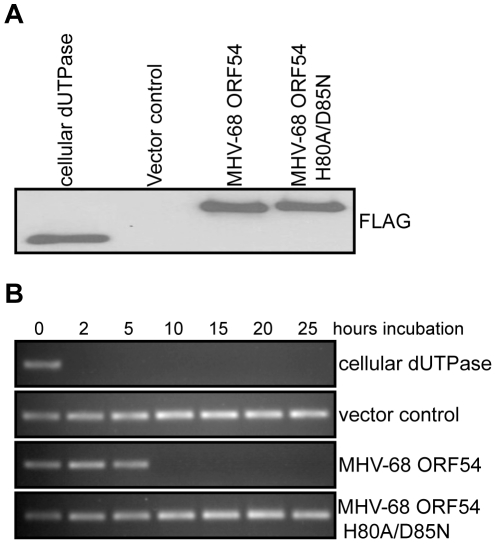
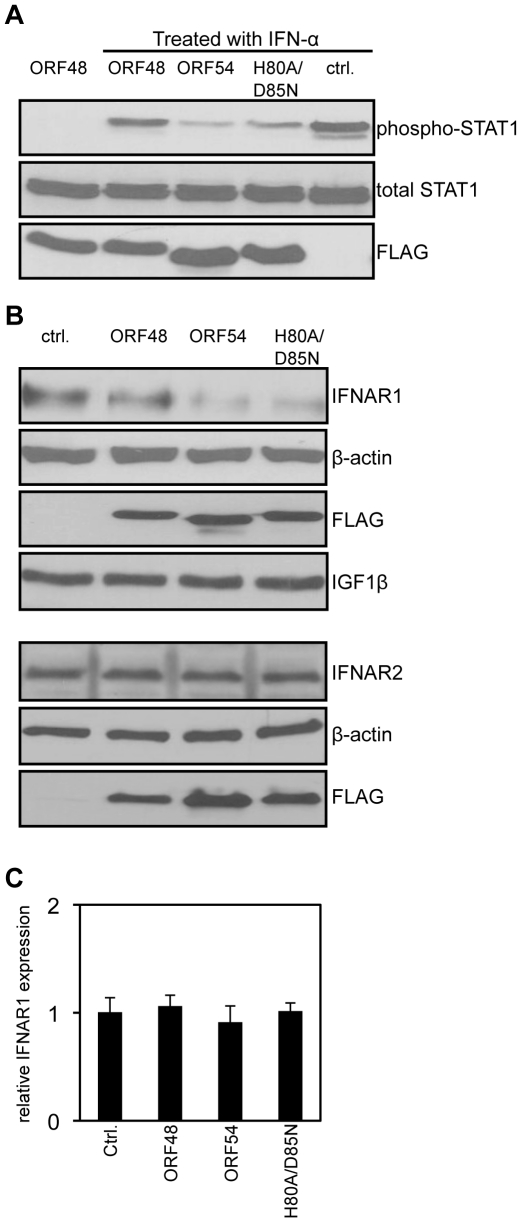
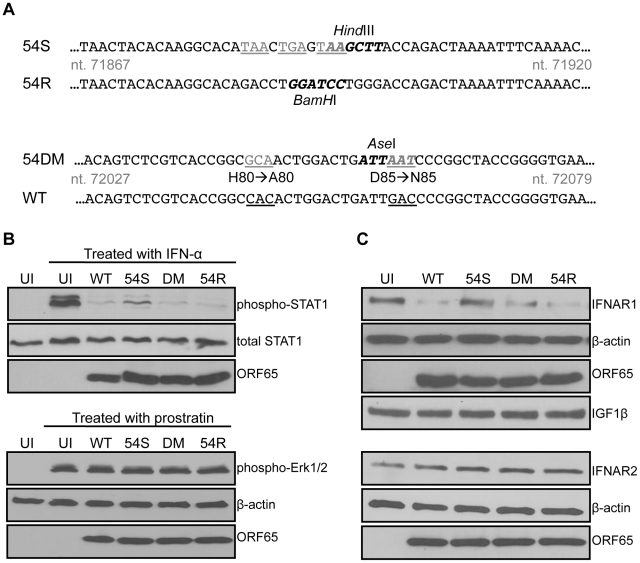
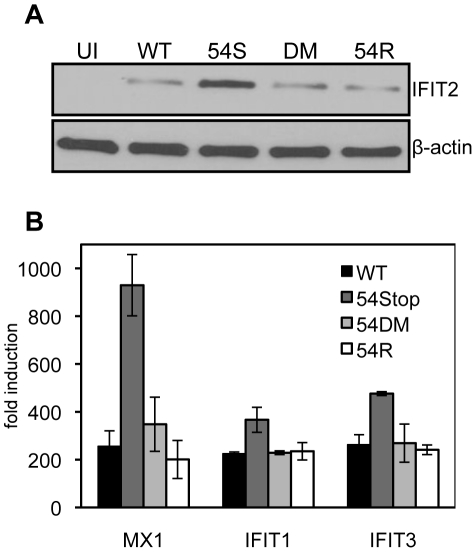
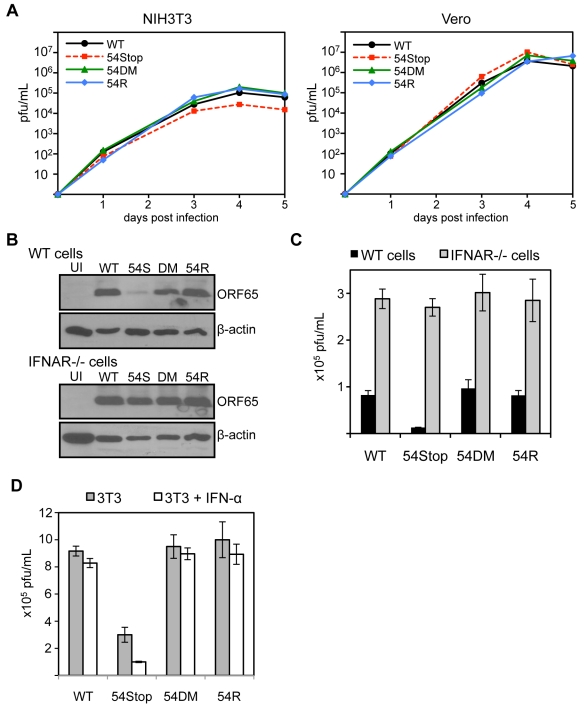
Gammaherpesviruses such as KSHV and EBV establish lifelong persistent infections through latency in lymphocytes. These viruses have evolved several strategies to counteract the various components of the innate and adaptive immune systems. We conducted an unbiased screen using the genetically and biologically related virus, MHV-68, to find viral ORFs involved in the inhibition of type I interferon signaling and identified a conserved viral dUTPase, ORF54. Here we define the contribution of ORF54 in type I interferon inhibition by ectopic expression and through the use of genetically modified MHV-68. ORF54 and an ORF54 lacking dUTPase enzymatic activity efficiently inhibit type I interferon signaling by inducing the degradation of the type I interferon receptor protein IFNAR1. Subsequently, we show in vitro that the lack of ORF54 causes a reduction in lytic replication in the presence of type I interferon signaling. Investigation of the physiological consequence of IFNAR1 degradation and importance of ORF54 during MHV-68 in vivo infection demonstrates that ORF54 has an even greater impact on persistent infection than on lytic replication. MHV-68 lacking ORF54 expression is unable to efficiently establish latent infection in lymphocytes, although it replicates relatively normally in lung tissues. However, infection of IFNAR-/- mice alleviates this phenotype, emphasizing the specific role of ORF54 in type I interferon inhibition. Infection of mice and cells by a recombinant MHV-68 virus harboring a site specific mutation in ORF54 rendering the dUTPase inactive demonstrates that dUTPase enzymatic activity is not required for anti-interferon function of ORF54. Moreover, we find that dUTPase activity is dispensable at all stages of MHV-68 infection analyzed. Overall, our data suggest that ORF54 has evolved anti-interferon activity in addition to its dUTPase enzymatic activity, and that it is actually the anti-interferon role that renders ORF54 critical for establishing an effective persistent infection of MHV-68.
γ疱疹病毒(如 KSHV 和 EBV)通过潜伏在淋巴细胞中建立终身持续性感染。这些病毒已经进化出几种策略来对抗先天和适应性免疫系统的各种成分。我们使用遗传和生物学上相关的病毒 MHV-68 进行了一项无偏见的筛选,以找到参与抑制 I 型干扰素信号的病毒 ORF,并鉴定出一种保守的病毒 dUTPase,ORF54。在这里,我们通过异位表达和使用遗传修饰的 MHV-68 来定义 ORF54 在 I 型干扰素抑制中的作用。ORF54 和缺乏 dUTPase 酶活性的 ORF54 有效地通过诱导 I 型干扰素受体蛋白 IFNAR1 的降解来抑制 I 型干扰素信号。随后,我们在体外表明,在存在 I 型干扰素信号的情况下,缺乏 ORF54 会导致裂解复制减少。在 MHV-68 体内感染过程中,我们研究了 IFNAR1 降解的生理后果和 ORF54 的重要性,表明 ORF54 对持续性感染的影响甚至大于对裂解复制的影响。缺乏 ORF54 表达的 MHV-68 无法有效地在淋巴细胞中建立潜伏感染,尽管它在肺组织中相对正常复制。然而,IFNAR-/- 小鼠的感染缓解了这种表型,强调了 ORF54 在 I 型干扰素抑制中的特殊作用。携带 ORF54 点突变的重组 MHV-68 病毒感染小鼠和细胞,使 dUTPase 失活,证明 dUTPase 酶活性不是 ORF54 抗干扰素功能所必需的。此外,我们发现 dUTPase 活性在分析的 MHV-68 感染的所有阶段都是可有可无的。总体而言,我们的数据表明,ORF54 除了具有 dUTPase 酶活性外,还进化出了抗干扰素活性,实际上是抗干扰素作用使 ORF54 对建立有效的 MHV-68 持续性感染至关重要。