Kawashita Yumiko, Kitamura Masayasu, Saito Toshiyuki
Department of Oral Health, Nagasaki University Graduate School of Biomedical Sciences, 1-7-1 Sakamoto, Nagasaki 852-8588, Japan.
Int J Dent. 2011;2011:725320. doi: 10.1155/2011/725320. Epub 2011 Oct 10.
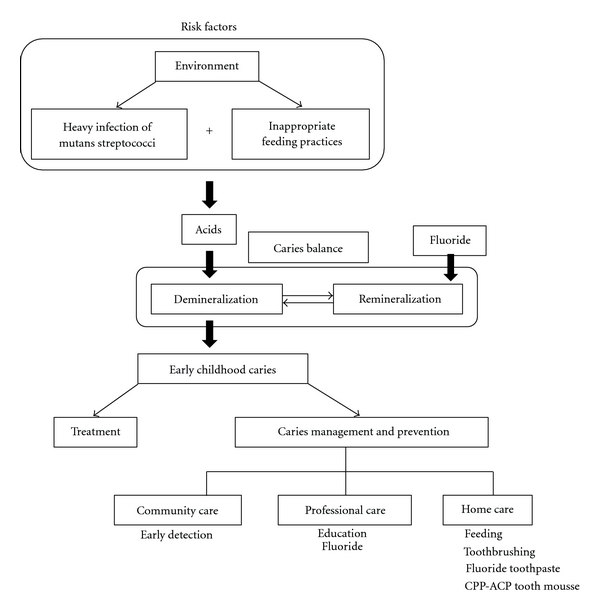
Dental caries is one of the most common childhood diseases, and people continue to be susceptible to it throughout their lives. Although dental caries can be arrested and potentially even reversed in its early stages, it is often not self-limiting and progresses without proper care until the tooth is destroyed. Early childhood caries (ECC) is often complicated by inappropriate feeding practices and heavy infection with mutans streptococci. Such children should be targeted with a professional preventive program that includes oral hygiene instructions for mothers or caregivers, along with fluoride and diet counseling. However, these strategies alone are not sufficient to prevent dental caries in high-risk children; prevention of ECC also requires addressing the socioeconomic factors that face many families in which ECC is endemic. The aim of this paper is to systematically review information about ECC and to describe why many children are suffering from dental caries.
龋齿是最常见的儿童疾病之一,人们在一生中都易患此病。尽管龋齿在早期阶段可以得到控制,甚至有可能逆转,但它通常不会自行停止发展,如果没有适当的护理,它会不断进展,直至牙齿被破坏。幼儿龋齿(ECC)往往因不当的喂养习惯和变形链球菌的严重感染而复杂化。对于这类儿童,应实施专业的预防计划,包括对母亲或照顾者进行口腔卫生指导,以及提供氟化物和饮食咨询。然而,仅靠这些策略不足以预防高危儿童的龋齿;预防ECC还需要解决许多ECC流行家庭所面临的社会经济因素。本文的目的是系统地综述有关ECC的信息,并描述许多儿童患龋齿的原因。