Department of Pathology, University of Pittsburgh, S-405 Biomedical Science Tower, 200 Lothrop Street, Pittsburgh, PA 15261, USA.
Nat Rev Nephrol. 2011 Oct 18;7(12):684-96. doi: 10.1038/nrneph.2011.149.
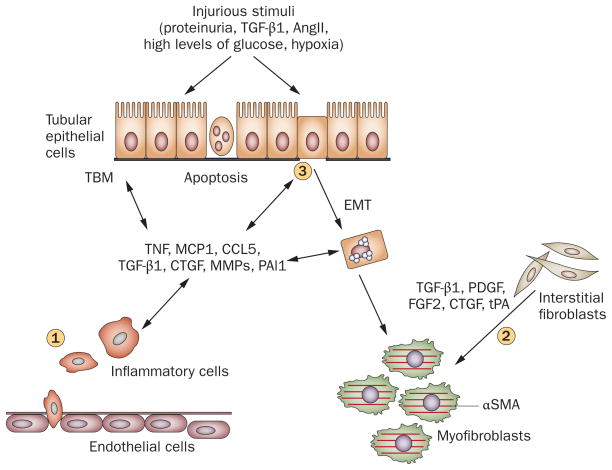
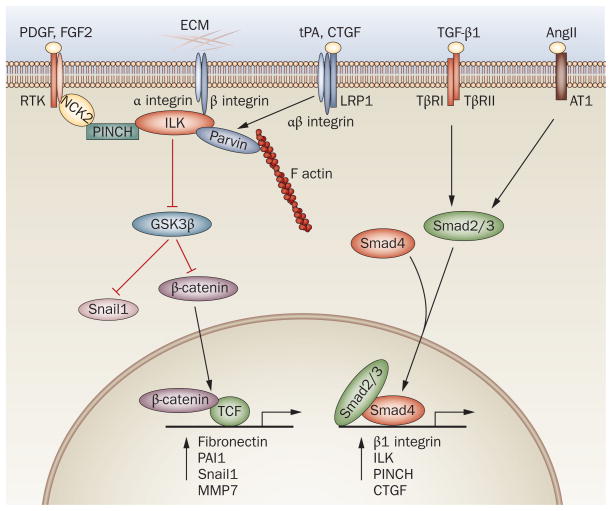
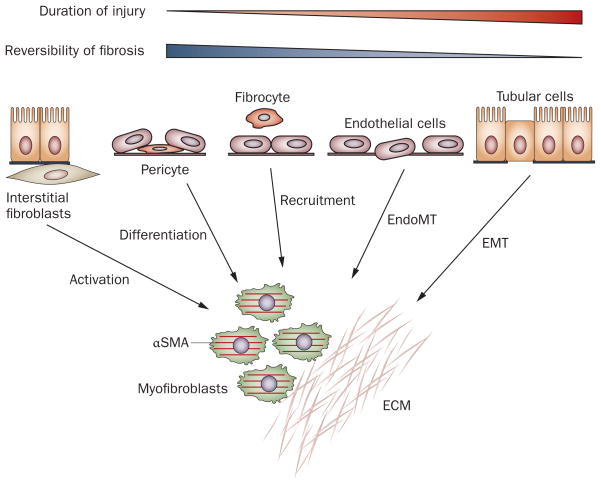
Renal fibrosis, particularly tubulointerstitial fibrosis, is the common final outcome of almost all progressive chronic kidney diseases. Renal fibrosis is also a reliable predictor of prognosis and a major determinant of renal insufficiency. Irrespective of the initial causes, renal fibrogenesis is a dynamic and converging process that consists of four overlapping phases: priming, activation, execution and progression. Nonresolving inflammation after a sustained injury sets up the fibrogenic stage (priming) and triggers the activation and expansion of matrix-producing cells from multiple sources through diverse mechanisms, including activation of interstitial fibroblasts and pericytes, phenotypic conversion of tubular epithelial and endothelial cells and recruitment of circulating fibrocytes. Upon activation, matrix-producing cells assemble a multicomponent, integrin-associated protein complex that integrates input from various fibrogenic signals and orchestrates the production of matrix components and their extracellular assembly. Multiple cellular and molecular events, such as tubular atrophy, microvascular rarefaction and tissue hypoxia, promote scar formation and ensure a vicious progression to end-stage kidney failure. This Review outlines our current understanding of the cellular and molecular mechanisms of renal fibrosis, which could offer novel insights into the development of new therapeutic strategies.
肾纤维化,特别是肾小管间质纤维化,是几乎所有进行性慢性肾脏病的共同终末结局。肾纤维化也是预后的可靠预测指标,也是肾功能不全的主要决定因素。无论最初的原因是什么,肾纤维化是一个动态和收敛的过程,由四个重叠的阶段组成:启动、激活、执行和进展。持续损伤后的非解决炎症引发纤维化阶段(启动),并通过多种机制触发基质产生细胞的激活和扩张,这些机制包括间质成纤维细胞和周细胞的激活、管状上皮和内皮细胞的表型转化以及循环纤维细胞的募集。激活后,基质产生细胞组装一个多成分、整合素相关蛋白复合物,整合来自各种纤维化信号的输入,并协调基质成分的产生及其细胞外组装。多种细胞和分子事件,如肾小管萎缩、微血管稀疏和组织缺氧,促进瘢痕形成,并确保向终末期肾衰竭的恶性进展。这篇综述概述了我们对肾纤维化的细胞和分子机制的理解,这可能为新的治疗策略的发展提供新的见解。