Chatterjee Sumantra, Bourque Guillaume, Lufkin Thomas
Stem Cell and Developmental Biology, Genome Institute of Singapore, 60 Biopolis Street, 138672, Singapore.
BMC Dev Biol. 2011 Oct 20;11:63. doi: 10.1186/1471-213X-11-63.
Identifying DNA sequences (enhancers) that direct the precise spatial and temporal expression of developmental control genes remains a significant challenge in the annotation of vertebrate genomes. Locating these sequences, which in many cases lie at a great distance from the transcription start site, has been a major obstacle in deciphering gene regulation. Coupling of comparative genomics with functional validation to locate such regulatory elements has been a successful method in locating many such regulatory elements. But most of these studies looked either at a single gene only or the whole genome without focusing on any particular process. The pressing need is to integrate the tools of comparative genomics with knowledge of developmental biology to validate enhancers for developmental transcription factors in greater detail
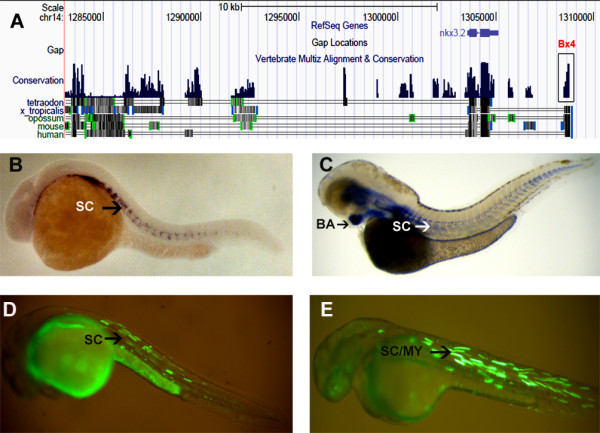
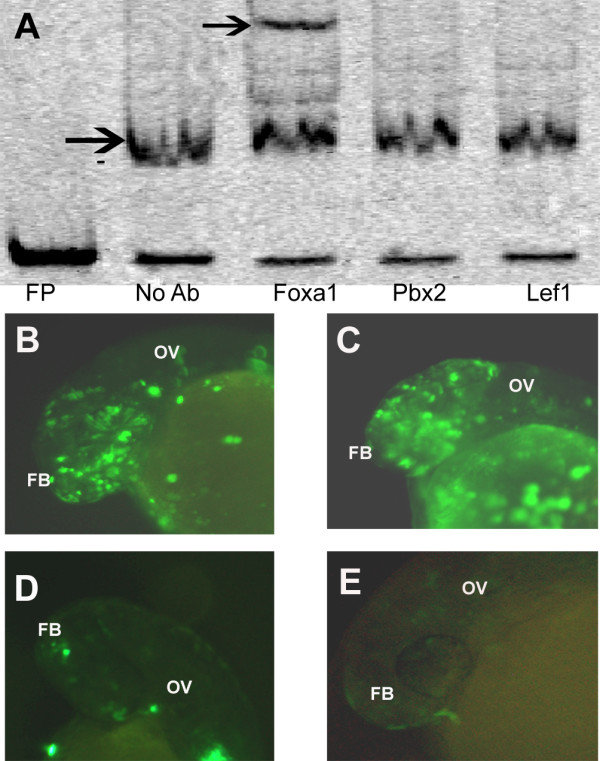
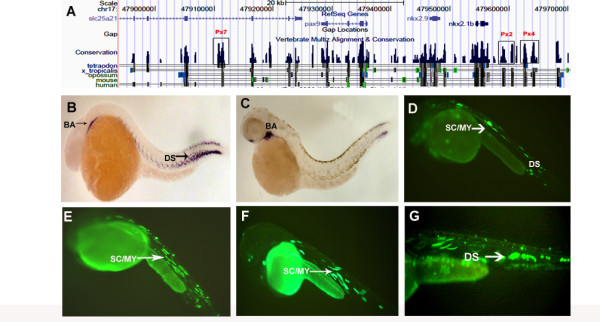
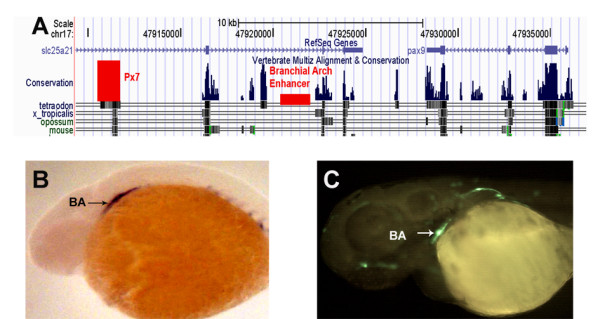
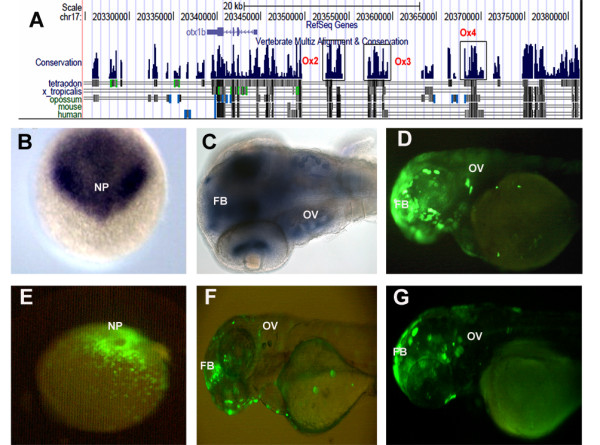
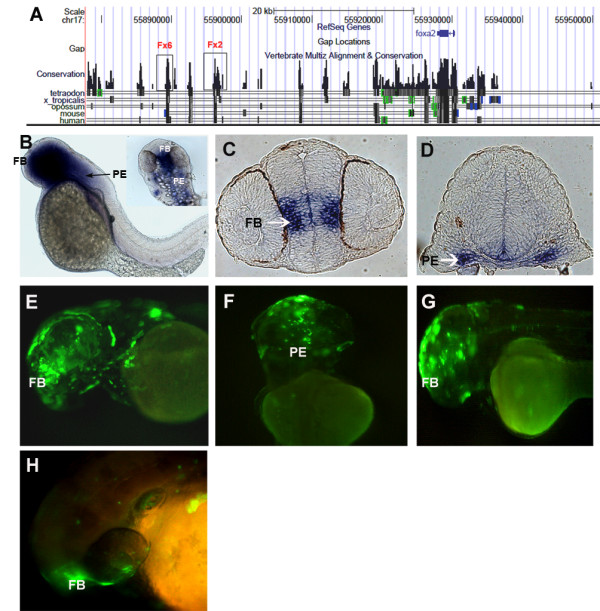
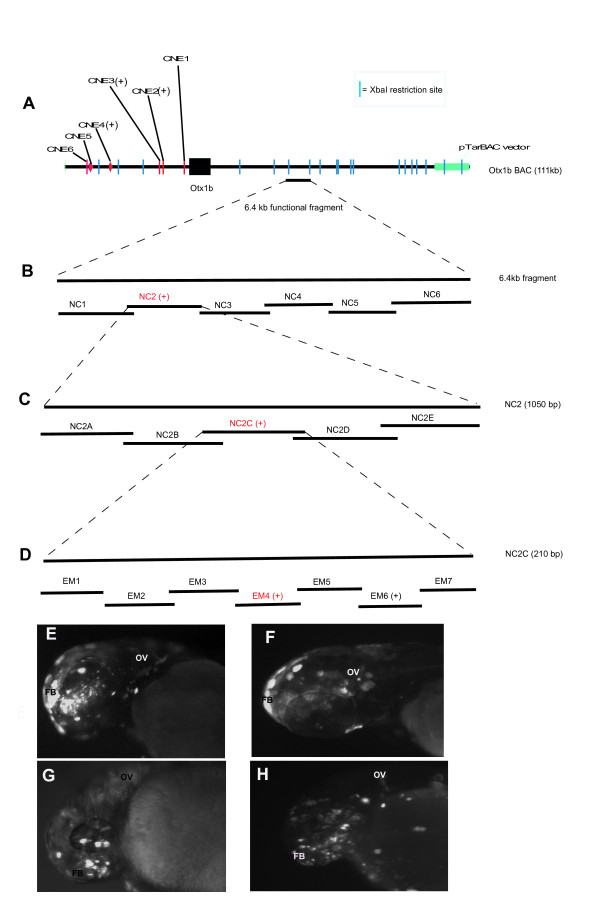
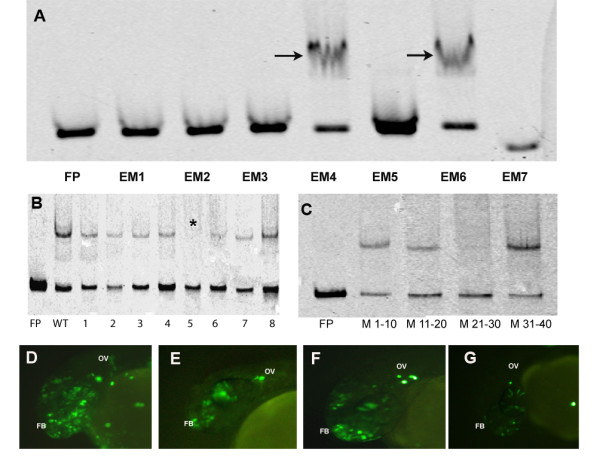
Our results show that near four different genes (nkx3.2, pax9, otx1b and foxa2) in zebrafish, only 20-30% of highly conserved DNA sequences can act as developmental enhancers irrespective of the tissue the gene expresses in. We find that some genes also have multiple conserved enhancers expressing in the same tissue at the same or different time points in development. We also located non-conserved enhancers for two of the genes (pax9 and otx1b). Our modified Bacterial artificial chromosome (BACs) studies for these 4 genes revealed that many of these enhancers work in a synergistic fashion, which cannot be captured by individual DNA constructs and are not conserved at the sequence level. Our detailed biochemical and transgenic analysis revealed Foxa1 binds to the otx1b non-conserved enhancer to direct its activity in forebrain and otic vesicle of zebrafish at 24 hpf.
Our results clearly indicate that high level of functional conservation of genes is not necessarily associated with sequence conservation of its regulatory elements. Moreover certain non conserved DNA elements might have role in gene regulation. The need is to bring together multiple approaches to bear upon individual genes to decipher all its regulatory elements.
识别指导发育控制基因精确时空表达的DNA序列(增强子)仍然是脊椎动物基因组注释中的一项重大挑战。定位这些在许多情况下距离转录起始位点很远的序列,一直是破译基因调控的主要障碍。将比较基因组学与功能验证相结合来定位此类调控元件,是定位许多此类调控元件的一种成功方法。但大多数此类研究要么只关注单个基因,要么关注整个基因组,而没有聚焦于任何特定过程。迫切需要将比较基因组学工具与发育生物学知识相结合,以更详细地验证发育转录因子的增强子。
我们的结果表明,在斑马鱼中靠近四个不同基因(nkx3.2、pax9、otx1b和foxa2)的区域,无论基因在何种组织中表达,只有20% - 30%的高度保守DNA序列能够作为发育增强子。我们发现一些基因在发育的相同或不同时间点,在同一组织中也有多个保守增强子表达。我们还定位了其中两个基因(pax9和otx1b)的非保守增强子。我们对这4个基因进行的改良细菌人工染色体(BACs)研究表明,许多这些增强子以协同方式发挥作用,这无法通过单个DNA构建体捕获,并且在序列水平上不保守。我们详细的生化和转基因分析表明,Foxa1与otx1b非保守增强子结合,以指导其在24 hpf斑马鱼的前脑和耳囊中发挥活性。
我们的结果清楚地表明,基因的高度功能保守性不一定与其调控元件的序列保守性相关。此外,某些非保守DNA元件可能在基因调控中起作用。需要综合多种方法来研究单个基因,以破译其所有调控元件。