Khan Fary, Amatya Bhasker, Turner-Stokes Lynne
Department of Medicine, Dentistry and Health Sciences at The University of Melbourne, Royal Melbourne Hospital and Western Health, Rehabilitation Service-Royal Melbourne Hospital, Poplar Road, Parkville, Melbourne, VIC 3052, Australia.
Neurol Res Int. 2011;2011:740505. doi: 10.1155/2011/740505. Epub 2011 Oct 17.
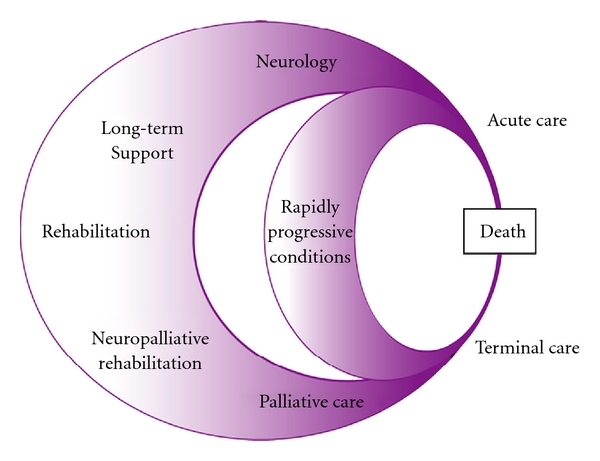
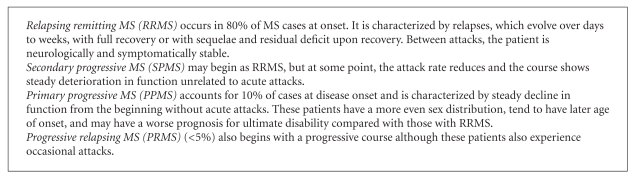
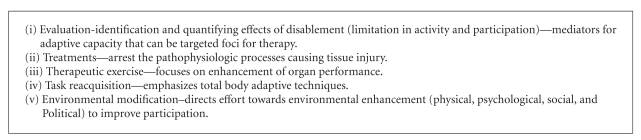
Multiple sclerosis (MS) is an autoimmune inflammatory demyelinating disease of the central nervous system and a major cause of chronic neurological disability in young adults. Primary progressive MS (PPMS) constitutes about 10% of cases, and is characterized by a steady decline in function with no acute attacks. The rate of deterioration from disease onset is more rapid than relapsing remitting and secondary progressive MS types. Multiple system involvement at onset and rapid early progression have a worse prognosis. PPMS can cause significant disability and impact on quality of life. Recent studies are biased in favour of relapsing remitting patients as treatment is now available for them and they are more likely to be seen at MS clinics. Since prognosis for PPMS is worse than other types of MS, the focus of rehabilitation is on managing disability and enhancing participation, and application of a "neuropalliative" approach as the disease progresses. This chapter presents the symptomatic treatment and rehabilitation for persons with MS, including PPMS. A multidisciplinary approach optimizes the intermediate and long-term medical, psychological and social outcomes in this population. Restoration and maintenance of functional independence and societal reintegration, and issues relating to quality of life are addressed in rehabilitation processes.
多发性硬化症(MS)是一种中枢神经系统的自身免疫性炎性脱髓鞘疾病,是年轻成年人慢性神经功能障碍的主要原因。原发性进展型多发性硬化症(PPMS)约占病例的10%,其特征是功能持续下降且无急性发作。从疾病发作开始的恶化速度比复发缓解型和继发进展型多发性硬化症更快。发病时多系统受累和早期快速进展预后较差。PPMS可导致严重残疾并影响生活质量。最近的研究偏向于复发缓解型患者,因为现在有针对他们的治疗方法,而且他们更有可能在多发性硬化症诊所就诊。由于PPMS的预后比其他类型的MS更差,康复的重点在于管理残疾和提高参与度,并在疾病进展过程中应用“神经姑息”方法。本章介绍了包括PPMS在内的多发性硬化症患者的对症治疗和康复。多学科方法可优化该人群的中期和长期医疗、心理和社会结局。康复过程中涉及功能独立性的恢复和维持、重新融入社会以及与生活质量相关的问题。