Department of Thoracic and Cardiovascular Surgery, The University of Texas M, D, Anderson Cancer Center, Houston, Texas 77030, USA.
Cancer Cell Int. 2011 Oct 28;11(1):35. doi: 10.1186/1475-2867-11-35.
The objective of this study was to evaluate the anti-tumor effects of Ad/gTRAIL (an adenoviral vector in which expression of GFP and TRAIL is driven by a human telomerase reverse transcriptase promoter, hTERT) on malignant meningiomas and gliomas.
Gliomas and meningiomas are the two most common types of human brain tumors. Currently there is no effective cure for recurrent malignant meningiomas or for gliomas. Ad/gTRAIL has been shown to be effective in killing selected lung, colon and breast cancer cells, but there have been no studies reporting its antitumor effects on malignant meningiomas. Therefore, we tested the antitumor effect of Ad/gTRAIL for the first time in human malignant meningioma and glioma cell lines, and in intracranial M6 and U87 xenografts.
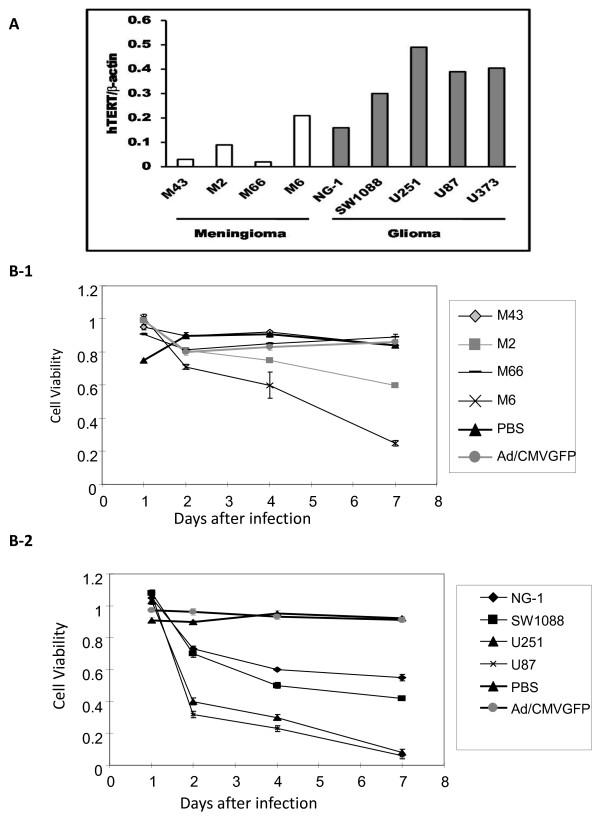
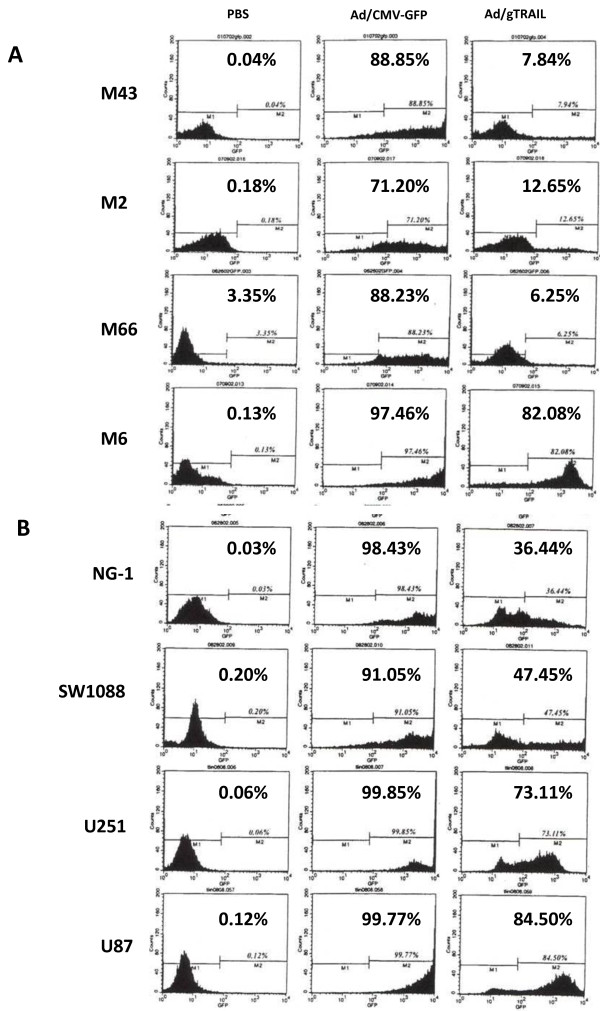
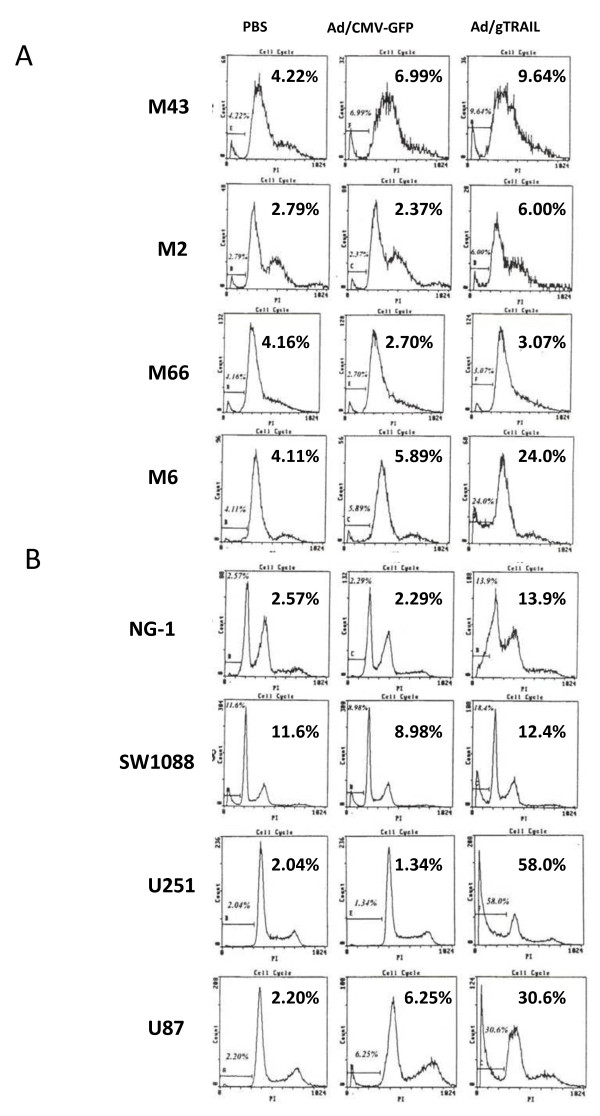
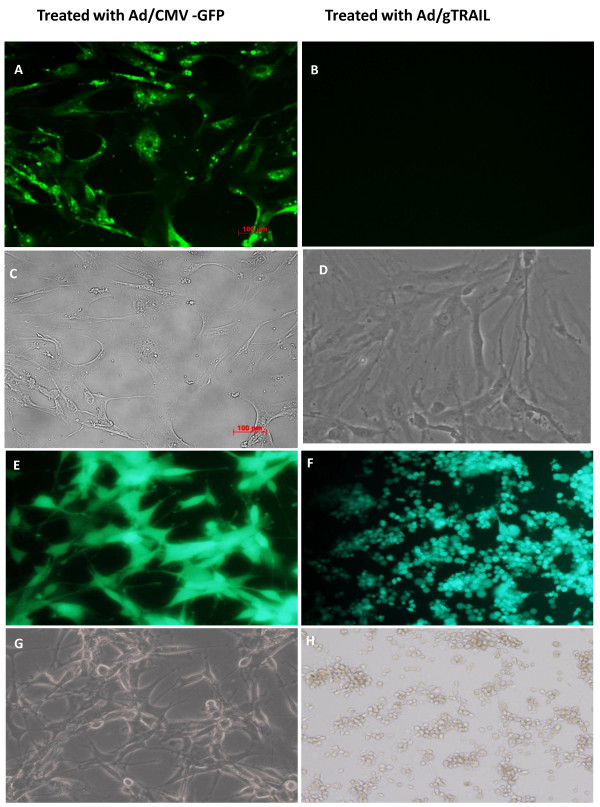
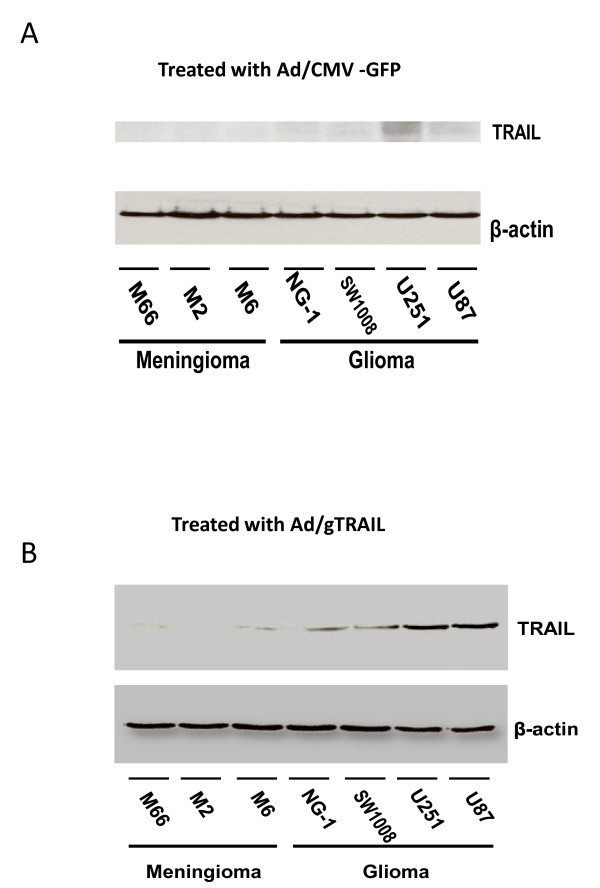
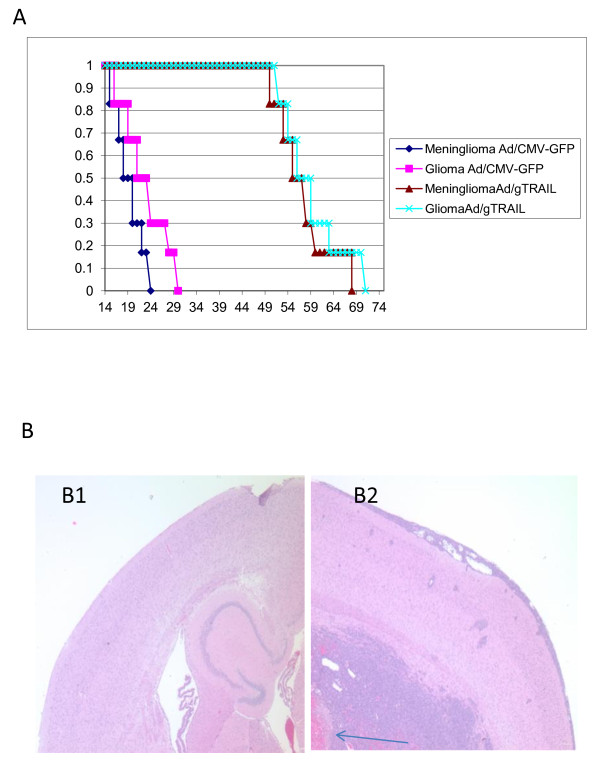
Human malignant meningioma and glioma cells were infected with adenoviruses, Ad/gTRAIL and Ad/CMV-GFP. Cell viability was determined by proliferation assay. FACS analysis and quantification of TRAIL were used to measure apoptosis in these cells. We injected Ad/gTRAIL viruses in intracranial M6 and U87 xenografts, and measured the brain tumor volume, quantified apoptosis by TUNEL assay in the brain tumor tissue.
Our studies demonstrate that in vitro/in vivo treatment with Ad/gTRAIL virus resulted in significant increase of TRAIL activity, and elicited a greater tumor cell apoptosis in malignant brain tumor cells as compared to treatment with the control, Ad/CMV-GFP virus without TRAIL activity.
We showed for the first time that adenovirus Ad/gTRAIL had significant antitumor effects against high grade malignant meningiomas as well as gliomas. Although more work needs to be done, our data suggests that Ad/gTRAIL has the potential to be useful as a tool against malignant brain tumors.
本研究旨在评估 Ad/gTRAIL(一种腺病毒载体,其中 GFP 和 TRAIL 的表达受人端粒酶逆转录酶启动子 hTERT 驱动)对恶性脑膜瘤和神经胶质瘤的抗肿瘤作用。
神经胶质瘤和脑膜瘤是两种最常见的人类脑肿瘤。目前,对于复发性恶性脑膜瘤或神经胶质瘤,尚无有效的治疗方法。Ad/gTRAIL 已被证明对选定的肺癌、结肠癌和乳腺癌细胞有效,但尚无研究报道其对恶性脑膜瘤的抗肿瘤作用。因此,我们首次在人恶性脑膜瘤和神经胶质瘤细胞系以及颅内 M6 和 U87 异种移植物中测试了 Ad/gTRAIL 的抗肿瘤作用。
用人恶性脑膜瘤和神经胶质瘤细胞感染腺病毒、Ad/gTRAIL 和 Ad/CMV-GFP。通过增殖测定法测定细胞活力。FACS 分析和 TRAIL 定量用于测量这些细胞中的细胞凋亡。我们在颅内 M6 和 U87 异种移植物中注射 Ad/gTRAIL 病毒,并测量脑肿瘤体积,通过 TUNEL 测定法在脑肿瘤组织中定量细胞凋亡。
我们的研究表明,与没有 TRAIL 活性的对照病毒 Ad/CMV-GFP 相比,Ad/gTRAIL 病毒的体内/体外治疗导致 TRAIL 活性显著增加,并在恶性脑肿瘤细胞中引起更大的肿瘤细胞凋亡。
我们首次表明,腺病毒 Ad/gTRAIL 对高级别恶性脑膜瘤和神经胶质瘤具有显著的抗肿瘤作用。尽管还需要做更多的工作,但我们的数据表明,Ad/gTRAIL 有可能成为对抗恶性脑肿瘤的有用工具。