• 文献检索
  • 文档翻译
  • 深度研究
  • 学术资讯
  • Suppr Zotero 插件Zotero 插件
  • 邀请有礼
  • 套餐&价格
  • 历史记录
应用&插件
Suppr Zotero 插件Zotero 插件浏览器插件Mac 客户端Windows 客户端微信小程序
定价
高级版会员购买积分包购买API积分包
服务
文献检索文档翻译深度研究API 文档MCP 服务
关于我们
关于 Suppr公司介绍联系我们用户协议隐私条款
关注我们

Suppr 超能文献

核心技术专利:CN118964589B侵权必究
粤ICP备2023148730 号-1Suppr @ 2026

文献检索

告别复杂PubMed语法,用中文像聊天一样搜索,搜遍4000万医学文献。AI智能推荐,让科研检索更轻松。

立即免费搜索

文件翻译

保留排版,准确专业,支持PDF/Word/PPT等文件格式,支持 12+语言互译。

免费翻译文档

深度研究

AI帮你快速写综述,25分钟生成高质量综述,智能提取关键信息,辅助科研写作。

立即免费体验

加州细辛中类黄酮对苦味受体 hTAS2R31 拮抗活性的体外评价。

In vitro evaluation of flavonoids from Eriodictyon californicum for antagonist activity against the bitterness receptor hTAS2R31.

机构信息

Division of Medicinal Chemistry and Pharmacognosy, College of Pharmacy, The Ohio State University, 500 West 12th Avenue, Columbus, Ohio 43210, United States.

出版信息

J Agric Food Chem. 2011 Dec 28;59(24):13117-21. doi: 10.1021/jf204359q. Epub 2011 Nov 17.

DOI:10.1021/jf204359q
PMID:22059530
原文链接:https://pmc.ncbi.nlm.nih.gov/articles/PMC4391372/
Abstract

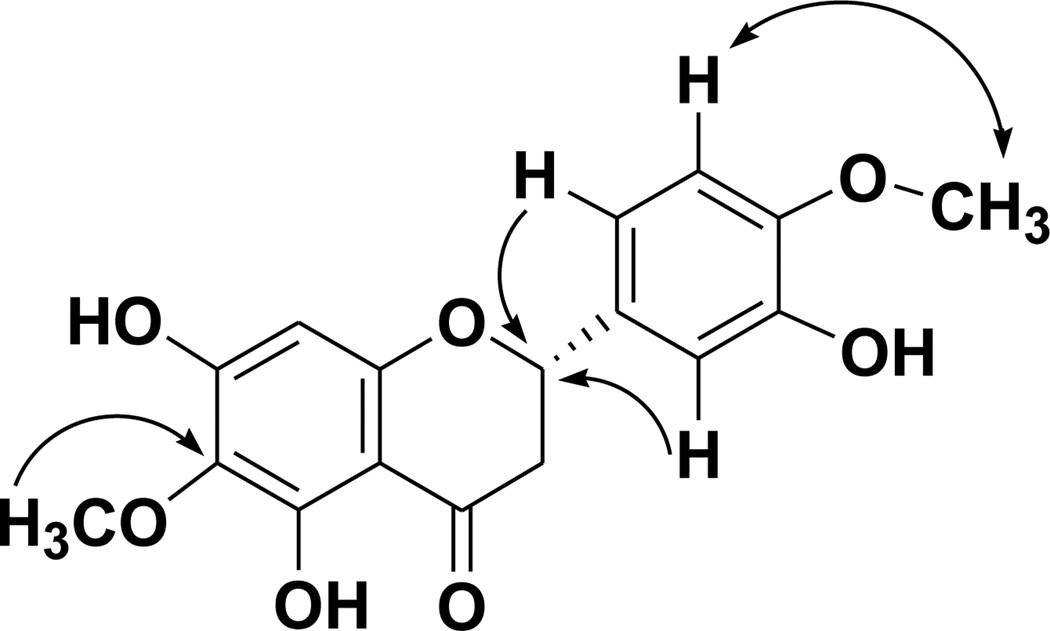
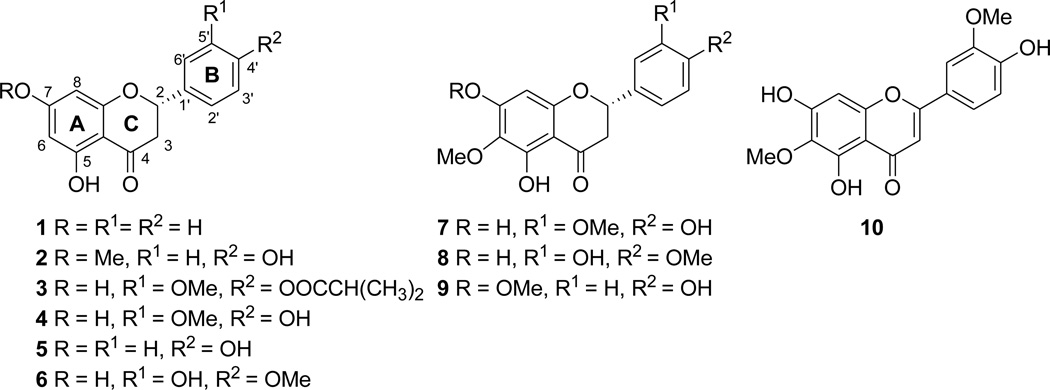
The leaves of the native North American plant, Eriodictyon californicum, were once used to mask the bitter taste of pharmaceuticals, an application currently of importance. Ten flavonoids (1-10) were isolated from the leaves of E. californicum, of which the structure and absolute configuration of 6-methoxyhesperetin (8) were assigned for the first time. In addition, the absolute configurations at C-2 were established for 4'-isobutyrylhomoeriodictyol (3) and 6-methoxyhomoeriodictyol (7). Using a cell-based assay, it was determined that the 7-methoxylated flavanones, sakuranetin (2) and 6-methoxysakuranetin (9), and the flavone, jaceosidin (10), are antagonists of hTAS2R31.

摘要

原产于北美的 Eriodictyon californicum 植物的叶子曾被用于掩盖药物的苦味,这一用途目前非常重要。从 E. californicum 的叶子中分离出了 10 种类黄酮(1-10),其中 6-甲氧基橙皮素(8)的结构和绝对构型首次被确定。此外,还确定了 4'-异丁酰基 homoeriodictyol(3)和 6-甲氧基 homoeriodictyol(7)中 C-2 的绝对构型。通过基于细胞的测定,确定了 7-甲氧基黄烷酮,樱黄素(2)和 6-甲氧基樱黄素(9)以及黄酮,乔松苷(10)是 hTAS2R31 的拮抗剂。
https://cdn.ncbi.nlm.nih.gov/pmc/blobs/8050/4391372/e000682b8740/nihms676434f2.jpg
https://cdn.ncbi.nlm.nih.gov/pmc/blobs/8050/4391372/9b21944941c8/nihms676434f1.jpg
https://cdn.ncbi.nlm.nih.gov/pmc/blobs/8050/4391372/e000682b8740/nihms676434f2.jpg
https://cdn.ncbi.nlm.nih.gov/pmc/blobs/8050/4391372/9b21944941c8/nihms676434f1.jpg
https://cdn.ncbi.nlm.nih.gov/pmc/blobs/8050/4391372/e000682b8740/nihms676434f2.jpg

相似文献

1
In vitro evaluation of flavonoids from Eriodictyon californicum for antagonist activity against the bitterness receptor hTAS2R31.加州细辛中类黄酮对苦味受体 hTAS2R31 拮抗活性的体外评价。
J Agric Food Chem. 2011 Dec 28;59(24):13117-21. doi: 10.1021/jf204359q. Epub 2011 Nov 17.
2
Evaluation of bitter masking flavanones from Herba Santa (Eriodictyon californicum (H. and A.) Torr., Hydrophyllaceae).来自圣草(加州石南,紫草科)的苦味掩蔽黄烷酮的评估。
J Agric Food Chem. 2005 Jul 27;53(15):6061-6. doi: 10.1021/jf0505170.
3
Identification of bisprenylated benzoic acid derivatives from yerba santa (Eriodictyon ssp.) using sensory-guided fractionation.利用感官导向分离法从圣草(Eriodictyon ssp.)中鉴定出双烯丙基苯甲酸衍生物。
J Agric Food Chem. 2010 Feb 10;58(3):1850-9. doi: 10.1021/jf903286s.
4
Sterubin: Enantioresolution and Configurational Stability, Enantiomeric Purity in Nature, and Neuroprotective Activity in Vitro and in Vivo.司他汀:对映体拆分与构型稳定性、自然界中的对映体纯度以及体外和体内的神经保护活性。
Chemistry. 2020 Jun 5;26(32):7299-7308. doi: 10.1002/chem.202001264. Epub 2020 May 15.
5
Eriodictyon angustifolium extract, but not Eriodictyon californicum extract, reduces human hair greying.狭叶圣草提取物而非加州圣草提取物可减少人类头发变白。
Int J Cosmet Sci. 2020 Aug;42(4):336-345. doi: 10.1111/ics.12620. Epub 2020 Jun 2.
6
Modulation of bitter taste perception by a small molecule hTAS2R antagonist.小分子 hTAS2R 拮抗剂对苦味感知的调制。
Curr Biol. 2010 Jun 22;20(12):1104-9. doi: 10.1016/j.cub.2010.04.043. Epub 2010 May 27.
7
Isolation of potential cancer chemopreventive agents from Eriodictyon californicum.从加州圣草中分离潜在的癌症化学预防剂。
J Nat Prod. 1992 Mar;55(3):357-63. doi: 10.1021/np50081a012.
8
Chemical characterization and quantitative determination of flavonoids and phenolic acids in yerba santa (Eriodictyon spp.) using UHPLC/DAD/Q-ToF.采用 UHPLC/DAD/Q-ToF 对圣草(Eriodictyon spp.)中的类黄酮和酚酸进行化学特征分析和定量测定。
J Pharm Biomed Anal. 2023 Sep 20;234:115570. doi: 10.1016/j.jpba.2023.115570. Epub 2023 Jul 10.
9
Reduction in human hair graying by sterubin, an active flavonoid of Eriodictyon angustifolium.窄叶毛地黄的活性黄酮类化合物sterubin可减少人类头发变白。
J Dermatol Sci. 2018 Dec;92(3):286-289. doi: 10.1016/j.jdermsci.2018.11.002. Epub 2018 Nov 8.
10
6-methoxyflavanones as bitter taste receptor blockers for hTAS2R39.6-甲氧基黄酮类化合物作为人味觉受体hTAS2R39的苦味受体阻滞剂
PLoS One. 2014 Apr 10;9(4):e94451. doi: 10.1371/journal.pone.0094451. eCollection 2014.

引用本文的文献

1
Anti-HIV drugs lopinavir/ritonavir activate bitter taste receptors.抗 HIV 药物洛匹那韦/利托那韦激活苦味受体。
Chem Senses. 2023 Jan 1;48. doi: 10.1093/chemse/bjad035.
2
Cellular mechanisms and molecular pathways linking bitter taste receptor signalling to cardiac inflammation, oxidative stress, arrhythmia and contractile dysfunction in heart diseases.将苦味受体信号与心脏疾病中心脏炎症、氧化应激、心律失常和收缩功能障碍相关的细胞机制和分子途径联系起来。
Inflammopharmacology. 2023 Feb;31(1):89-117. doi: 10.1007/s10787-022-01086-9. Epub 2022 Dec 6.
3
PlantMolecularTasteDB: A Database of Taste Active Phytochemicals.

本文引用的文献

1
Effect of tannins on screening of plant extracts for enzyme inhibitory activity and techniques for their removal.单宁对植物提取物酶抑制活性筛选的影响及去除技术。
Phytomedicine. 1996 Nov;3(3):281-5. doi: 10.1016/S0944-7113(96)80067-5.
2
Flavonoid aglycones from some canary islands species of sideritis.来自某些加那利群岛铁角蕨属物种的黄酮苷元
J Nat Prod. 1988 May;51(3):591-3. doi: 10.1021/np50057a027.
3
Modulation of bitter taste perception by a small molecule hTAS2R antagonist.小分子 hTAS2R 拮抗剂对苦味感知的调制。
植物分子味觉数据库:味觉活性植物化学物质数据库
Front Pharmacol. 2022 Jan 12;12:751712. doi: 10.3389/fphar.2021.751712. eCollection 2021.
4
G Protein-Coupled Receptors in Taste Physiology and Pharmacology.味觉生理学和药理学中的G蛋白偶联受体
Front Pharmacol. 2020 Nov 30;11:587664. doi: 10.3389/fphar.2020.587664. eCollection 2020.
5
A Review on Sources and Pharmacological Aspects of Sakuranetin.樱花黄素的来源及药理学研究进展综述。
Nutrients. 2020 Feb 18;12(2):513. doi: 10.3390/nu12020513.
6
Snooker structure-based pharmacophore model explains differences in agonist and blocker binding to bitter receptor hTAS2R39.基于斯诺克结构的药效团模型解释了激动剂和阻滞剂与苦味受体hTAS2R39结合的差异。
PLoS One. 2015 Mar 2;10(3):e0118200. doi: 10.1371/journal.pone.0118200. eCollection 2015.
7
Functionalised Mn(VI)-nanoparticles: an advanced high-valent magnetic catalyst.功能化的六价锰纳米颗粒:一种先进的高价磁性催化剂。
Sci Rep. 2015 Mar 2;5:8636. doi: 10.1038/srep08636.
8
6-methoxyflavanones as bitter taste receptor blockers for hTAS2R39.6-甲氧基黄酮类化合物作为人味觉受体hTAS2R39的苦味受体阻滞剂
PLoS One. 2014 Apr 10;9(4):e94451. doi: 10.1371/journal.pone.0094451. eCollection 2014.
Curr Biol. 2010 Jun 22;20(12):1104-9. doi: 10.1016/j.cub.2010.04.043. Epub 2010 May 27.
4
Identification of bisprenylated benzoic acid derivatives from yerba santa (Eriodictyon ssp.) using sensory-guided fractionation.利用感官导向分离法从圣草(Eriodictyon ssp.)中鉴定出双烯丙基苯甲酸衍生物。
J Agric Food Chem. 2010 Feb 10;58(3):1850-9. doi: 10.1021/jf903286s.
5
Inhibitory effect of eupatilin and jaceosidin isolated from Artemisia princeps on carrageenan-induced inflammation in mice.从朝鲜艾蒿中分离得到的灯盏乙素和雅可西定对卡拉胶诱导的小鼠炎症的抑制作用。
J Ethnopharmacol. 2009 Sep 25;125(3):497-500. doi: 10.1016/j.jep.2009.06.001. Epub 2009 Jun 6.
6
(±)-Diinsininone: made nature's way.(±)-二异辛酮:源自天然。
Tetrahedron. 2006 May 29;62(22):5298-5307. doi: 10.1016/j.tet.2006.01.109.
7
Cytotoxic constituents from the bark of Salix hulteni.胡尔特柳(Salix hulteni)树皮中的细胞毒性成分。
Arch Pharm Res. 2008 Aug;31(8):978-82. doi: 10.1007/s12272-001-1255-9. Epub 2008 Sep 12.
8
Structural analogues of homoeriodictyol as flavor modifiers. Part III: short chain gingerdione derivatives.作为风味改良剂的高圣草酚结构类似物。第三部分:短链姜二酮衍生物。
J Agric Food Chem. 2008 Aug 13;56(15):6656-64. doi: 10.1021/jf8006536. Epub 2008 Jul 4.
9
New bitter-masking compounds: hydroxylated benzoic acid amides of aromatic amines as structural analogues of homoeriodictyol.新型苦味掩蔽化合物:作为高圣草酚结构类似物的芳香胺羟基化苯甲酸酰胺
J Agric Food Chem. 2006 Nov 1;54(22):8574-9. doi: 10.1021/jf0617061.
10
Xylitol, sweeteners, and dental caries.木糖醇、甜味剂与龋齿
Pediatr Dent. 2006 Mar-Apr;28(2):154-63; discussion 192-8.