• 文献检索
  • 文档翻译
  • 深度研究
  • 学术资讯
  • Suppr Zotero 插件Zotero 插件
  • 邀请有礼
  • 套餐&价格
  • 历史记录
应用&插件
Suppr Zotero 插件Zotero 插件浏览器插件Mac 客户端Windows 客户端微信小程序
定价
高级版会员购买积分包购买API积分包
服务
文献检索文档翻译深度研究API 文档MCP 服务
关于我们
关于 Suppr公司介绍联系我们用户协议隐私条款
关注我们

Suppr 超能文献

核心技术专利:CN118964589B侵权必究
粤ICP备2023148730 号-1Suppr @ 2026

文献检索

告别复杂PubMed语法,用中文像聊天一样搜索,搜遍4000万医学文献。AI智能推荐,让科研检索更轻松。

立即免费搜索

文件翻译

保留排版,准确专业,支持PDF/Word/PPT等文件格式,支持 12+语言互译。

免费翻译文档

深度研究

AI帮你快速写综述,25分钟生成高质量综述,智能提取关键信息,辅助科研写作。

立即免费体验

味觉生理学和药理学中的G蛋白偶联受体

G Protein-Coupled Receptors in Taste Physiology and Pharmacology.

作者信息

Ahmad Raise, Dalziel Julie E

机构信息

Food Nutrition and Health Team, Food and Bio-based Products Group, AgResearch, Palmerston North, New Zealand.

出版信息

Front Pharmacol. 2020 Nov 30;11:587664. doi: 10.3389/fphar.2020.587664. eCollection 2020.

DOI:10.3389/fphar.2020.587664
PMID:33390961
原文链接:https://pmc.ncbi.nlm.nih.gov/articles/PMC7774309/
Abstract

Heterotrimeric G protein-coupled receptors (GPCRs) comprise the largest receptor family in mammals and are responsible for the regulation of most physiological functions. Besides mediating the sensory modalities of olfaction and vision, GPCRs also transduce signals for three basic taste qualities of sweet, umami (savory taste), and bitter, as well as the flavor sensation kokumi. Taste GPCRs reside in specialised taste receptor cells (TRCs) within taste buds. Type I taste GPCRs (TAS1R) form heterodimeric complexes that function as sweet (TAS1R2/TAS1R3) or umami (TAS1R1/TAS1R3) taste receptors, whereas Type II are monomeric bitter taste receptors or kokumi/calcium-sensing receptors. Sweet, umami and kokumi receptors share structural similarities in containing multiple agonist binding sites with pronounced selectivity while most bitter receptors contain a single binding site that is broadly tuned to a diverse array of bitter ligands in a non-selective manner. Tastant binding to the receptor activates downstream secondary messenger pathways leading to depolarization and increased intracellular calcium in TRCs, that in turn innervate the gustatory cortex in the brain. Despite recent advances in our understanding of the relationship between agonist binding and the conformational changes required for receptor activation, several major challenges and questions remain in taste GPCR biology that are discussed in the present review. In recent years, intensive integrative approaches combining heterologous expression, mutagenesis and homology modeling have together provided insight regarding agonist binding site locations and molecular mechanisms of orthosteric and allosteric modulation. In addition, studies based on transgenic mice, utilizing either global or conditional knock out strategies have provided insights to taste receptor signal transduction mechanisms and their roles in physiology. However, the need for more functional studies in a physiological context is apparent and would be enhanced by a crystallized structure of taste receptors for a more complete picture of their pharmacological mechanisms.

摘要

异源三聚体G蛋白偶联受体(GPCRs)是哺乳动物中最大的受体家族,负责调节大多数生理功能。除了介导嗅觉和视觉的感觉方式外,GPCRs还能转导甜味、鲜味(美味)、苦味这三种基本味觉以及kokumi风味的信号。味觉GPCRs存在于味蕾内的特殊味觉受体细胞(TRCs)中。I型味觉GPCRs(TAS1R)形成异二聚体复合物,作为甜味(TAS1R2/TAS1R3)或鲜味(TAS1R1/TAS1R3)味觉受体发挥作用,而II型是单体苦味受体或kokumi/钙传感受体。甜味、鲜味和kokumi受体在结构上有相似之处,都含有多个具有明显选择性的激动剂结合位点,而大多数苦味受体含有一个单一的结合位点,以非选择性的方式广泛地适应各种苦味配体。味觉剂与受体结合会激活下游的第二信使途径,导致TRCs去极化并增加细胞内钙,进而支配大脑中的味觉皮层。尽管我们最近在理解激动剂结合与受体激活所需的构象变化之间的关系方面取得了进展,但味觉GPCR生物学中仍存在几个主要挑战和问题,本综述将对此进行讨论。近年来,结合异源表达、诱变和同源建模的深入综合方法共同提供了关于激动剂结合位点位置以及正构和变构调节的分子机制的见解。此外,基于转基因小鼠的研究,利用整体或条件性敲除策略,为味觉受体信号转导机制及其在生理学中的作用提供了见解。然而,显然需要在生理背景下进行更多的功能研究,并且通过味觉受体的晶体结构可以更全面地了解其药理机制,从而加强这方面的研究。
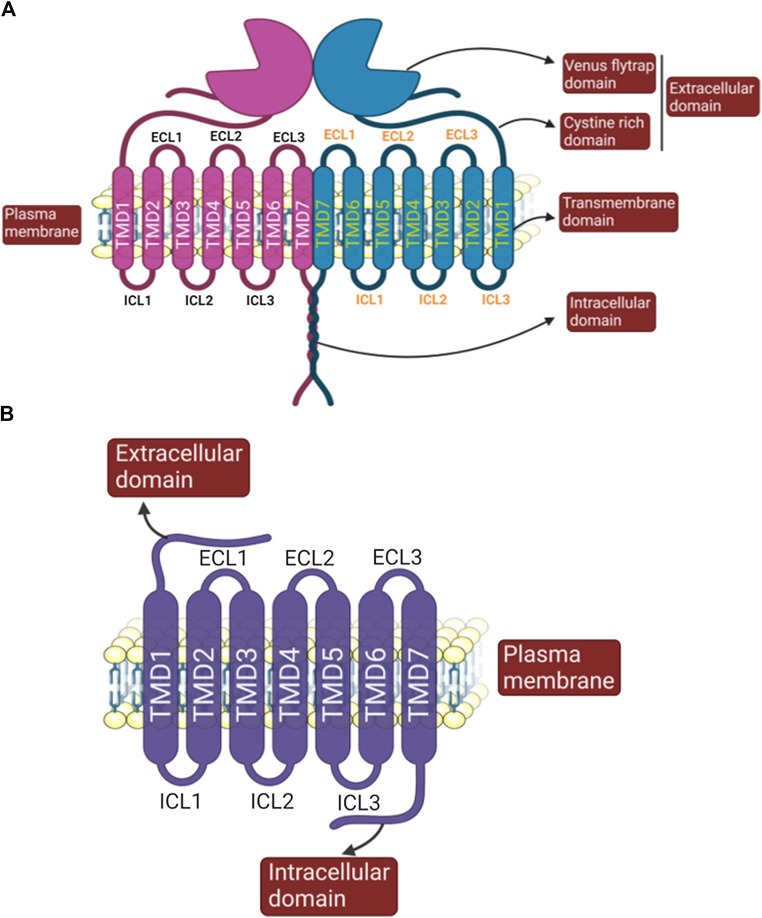
https://cdn.ncbi.nlm.nih.gov/pmc/blobs/b6c1/7774309/568a12fecfe6/fphar-11-587664-g004.jpg
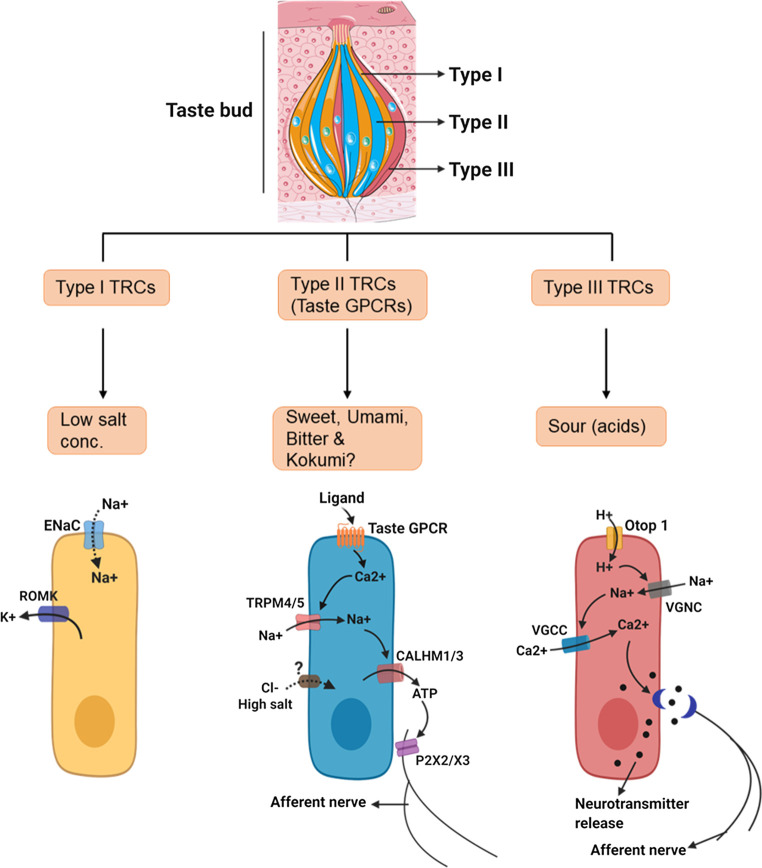
https://cdn.ncbi.nlm.nih.gov/pmc/blobs/b6c1/7774309/2f6f8a54162e/fphar-11-587664-g001.jpg
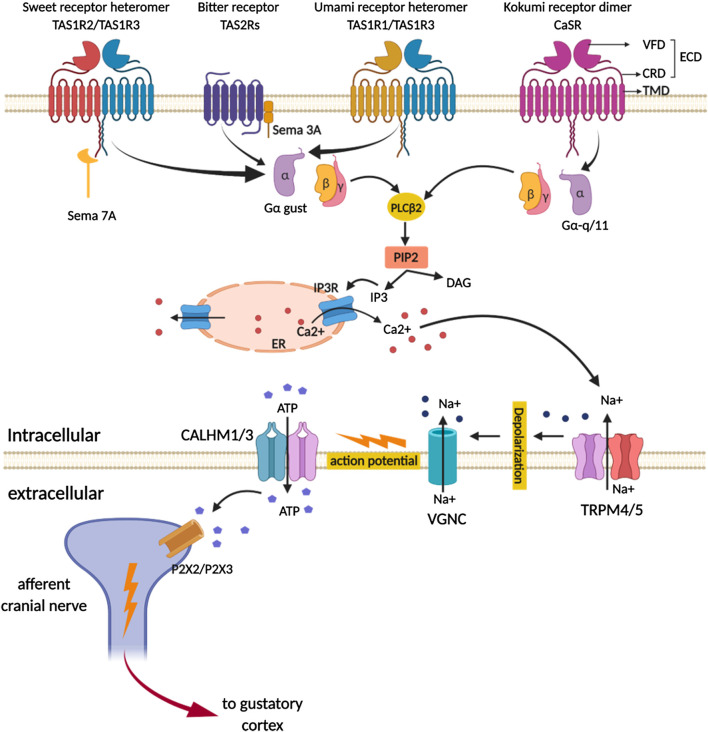
https://cdn.ncbi.nlm.nih.gov/pmc/blobs/b6c1/7774309/224afddfc708/fphar-11-587664-g002.jpg
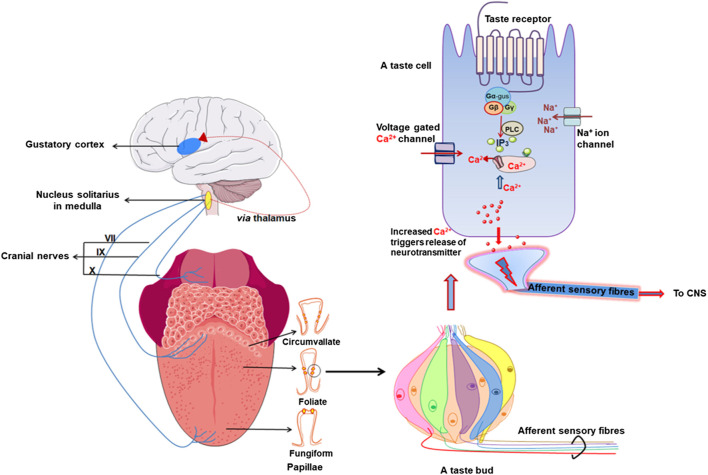
https://cdn.ncbi.nlm.nih.gov/pmc/blobs/b6c1/7774309/47fa60623224/fphar-11-587664-g003.jpg
https://cdn.ncbi.nlm.nih.gov/pmc/blobs/b6c1/7774309/568a12fecfe6/fphar-11-587664-g004.jpg
https://cdn.ncbi.nlm.nih.gov/pmc/blobs/b6c1/7774309/2f6f8a54162e/fphar-11-587664-g001.jpg
https://cdn.ncbi.nlm.nih.gov/pmc/blobs/b6c1/7774309/224afddfc708/fphar-11-587664-g002.jpg
https://cdn.ncbi.nlm.nih.gov/pmc/blobs/b6c1/7774309/47fa60623224/fphar-11-587664-g003.jpg
https://cdn.ncbi.nlm.nih.gov/pmc/blobs/b6c1/7774309/568a12fecfe6/fphar-11-587664-g004.jpg

相似文献

1
G Protein-Coupled Receptors in Taste Physiology and Pharmacology.味觉生理学和药理学中的G蛋白偶联受体
Front Pharmacol. 2020 Nov 30;11:587664. doi: 10.3389/fphar.2020.587664. eCollection 2020.
2
Structure, function, and signaling of taste G-protein-coupled receptors.味觉G蛋白偶联受体的结构、功能及信号传导
Curr Pharm Biotechnol. 2014;15(10):951-61. doi: 10.2174/1389201015666140922105911.
3
Transsynaptic Tracing from Taste Receptor Cells Reveals Local Taste Receptor Gene Expression in Gustatory Ganglia and Brain.来自味觉感受器细胞的跨突触追踪揭示了味觉神经节和大脑中局部味觉感受器基因的表达。
J Neurosci. 2015 Jul 1;35(26):9717-29. doi: 10.1523/JNEUROSCI.0381-15.2015.
4
Oligomerization of sweet and bitter taste receptors.甜味和苦味味觉受体的寡聚化。
Methods Cell Biol. 2013;117:229-42. doi: 10.1016/B978-0-12-408143-7.00013-X.
5
Comparing Class A GPCRs to bitter taste receptors: Structural motifs, ligand interactions and agonist-to-antagonist ratios.将A类G蛋白偶联受体与苦味受体进行比较:结构基序、配体相互作用及激动剂与拮抗剂比例
Methods Cell Biol. 2016;132:401-27. doi: 10.1016/bs.mcb.2015.10.005. Epub 2015 Dec 24.
6
Sarco/Endoplasmic reticulum Ca2+-ATPases (SERCA) contribute to GPCR-mediated taste perception.肌浆/内质网 Ca2+-ATP 酶(SERCA)有助于 G 蛋白偶联受体介导的味觉感知。
PLoS One. 2011;6(8):e23165. doi: 10.1371/journal.pone.0023165. Epub 2011 Aug 2.
7
Umami taste responses are mediated by alpha-transducin and alpha-gustducin.鲜味味觉反应由α-转导蛋白和α-味导蛋白介导。
J Neurosci. 2004 Sep 1;24(35):7674-80. doi: 10.1523/JNEUROSCI.2441-04.2004.
8
Molecular insights into human taste perception and umami tastants: A review.人类味觉感知和鲜味剂的分子洞察:综述。
J Food Sci. 2022 Apr;87(4):1449-1465. doi: 10.1111/1750-3841.16101. Epub 2022 Mar 17.
9
Evolutionary insights into umami, sweet, and bitter taste receptors in amphibians.对两栖动物鲜味、甜味和苦味味觉受体的进化见解。
Ecol Evol. 2021 Dec 3;11(24):18011-18025. doi: 10.1002/ece3.8398. eCollection 2021 Dec.
10
Functional Characterization of the Venus Flytrap Domain of the Human TAS1R2 Sweet Taste Receptor.人类 TAS1R2 甜味受体 Venus 捕蝇草结构域的功能特征。
Int J Mol Sci. 2022 Aug 16;23(16):9216. doi: 10.3390/ijms23169216.

引用本文的文献

1
Dynamic interaction of sweet and sour taste perceptions based on sucrose and citric acid.基于蔗糖和柠檬酸的酸甜味觉感知的动态相互作用。
NPJ Sci Food. 2025 Jul 24;9(1):152. doi: 10.1038/s41538-025-00507-7.
2
Bitter taste receptor agonists induce vasorelaxation in porcine coronary arteries.苦味受体激动剂可诱导猪冠状动脉血管舒张。
Front Pharmacol. 2025 Jul 7;16:1578913. doi: 10.3389/fphar.2025.1578913. eCollection 2025.
3
Unravelling the human taste receptor interactome: machine learning and molecular modelling insights into protein-protein interactions.

本文引用的文献

1
International Union of Basic and Clinical Pharmacology. CVIII. Calcium-Sensing Receptor Nomenclature, Pharmacology, and Function.国际基础和临床药理学联合会。CVIII. 钙敏感受体命名、药理学和功能。
Pharmacol Rev. 2020 Jul;72(3):558-604. doi: 10.1124/pr.119.018531.
2
Dual Action Calcium-Sensing Receptor Modulator Unmasks Novel Mode-Switching Mechanism.双作用钙敏感受体调节剂揭示新型模式转换机制。
ACS Pharmacol Transl Sci. 2018 Sep 12;1(2):96-109. doi: 10.1021/acsptsci.8b00021. eCollection 2018 Nov 9.
3
Investigation of Bitter Hop-Derived Compounds and Their Cognate Bitter Taste Receptors.
解析人类味觉受体相互作用组:机器学习与蛋白质-蛋白质相互作用的分子建模见解
NPJ Sci Food. 2025 Jul 1;9(1):113. doi: 10.1038/s41538-025-00478-9.
4
Activation of the calcium-sensing receptor by glutathione maillard products: Implications for kokumi sensation.谷胱甘肽美拉德产物对钙敏感受体的激活:对鲜味感觉的影响。
Food Chem X. 2025 Jun 3;29:102616. doi: 10.1016/j.fochx.2025.102616. eCollection 2025 Jul.
5
A Genome-Wide Association Study of Taste Liking in the Danish Population.丹麦人群味觉偏好的全基因组关联研究。
J Nutr. 2025 Aug;155(8):2591-2601. doi: 10.1016/j.tjnut.2025.06.001. Epub 2025 Jun 7.
6
In silico analysis of soybean-derived umami peptides: Discovery and interaction mechanisms with T1R1/T1R3 receptor.大豆源鲜味肽的计算机模拟分析:发现及其与T1R1/T1R3受体的相互作用机制
Food Chem X. 2025 May 10;28:102544. doi: 10.1016/j.fochx.2025.102544. eCollection 2025 May.
7
GPRC6A as a novel kokumi receptor responsible for enhanced taste preferences by ornithine.GPRC6A作为一种新型的鲜味受体,负责通过鸟氨酸增强味觉偏好。
Elife. 2025 May 1;13:RP101629. doi: 10.7554/eLife.101629.
8
Pyruvate kinase modulates the link between β-cell fructose metabolism and insulin secretion.丙酮酸激酶调节β细胞果糖代谢与胰岛素分泌之间的联系。
FASEB J. 2025 Apr 15;39(7):e70500. doi: 10.1096/fj.202401912RR.
9
Sweet-enhancing effect of coolant agent menthol evaluated via sensory analysis and molecular modeling.通过感官分析和分子模拟评估冷却剂薄荷醇的甜味增强效果。
Food Chem X. 2025 Feb 28;26:102337. doi: 10.1016/j.fochx.2025.102337. eCollection 2025 Feb.
10
Advances in cell-based biosensors: Transforming food flavor evaluation with novel approaches.基于细胞的生物传感器的进展:用新方法变革食品风味评估
Food Chem X. 2025 Mar 1;26:102336. doi: 10.1016/j.fochx.2025.102336. eCollection 2025 Feb.
苦艾衍生化合物及其同源苦味受体的研究。
J Agric Food Chem. 2020 Sep 23;68(38):10414-10423. doi: 10.1021/acs.jafc.9b07863. Epub 2020 Feb 13.
4
Sensing Extracellular Calcium - An Insight into the Structure and Function of the Calcium-Sensing Receptor (CaSR).感知细胞外钙——钙敏感受体(CaSR)的结构与功能的新视角。
Adv Exp Med Biol. 2020;1131:1031-1063. doi: 10.1007/978-3-030-12457-1_41.
5
Sweet proteins lysozyme and thaumatin are protein-type agonists for the calcium-sensing receptor.甜味蛋白溶菌酶和娄蛋白是钙敏感受体的蛋白型激动剂。
Biochem Biophys Res Commun. 2020 Jan 1;521(1):227-231. doi: 10.1016/j.bbrc.2019.10.111. Epub 2019 Oct 19.
6
Phosphate acts directly on the calcium-sensing receptor to stimulate parathyroid hormone secretion.磷酸盐直接作用于钙敏感受体,刺激甲状旁腺激素分泌。
Nat Commun. 2019 Oct 16;10(1):4693. doi: 10.1038/s41467-019-12399-9.
7
Modeling and Structural Characterization of the Sweet Taste Receptor Heterodimer.甜味受体异源二聚体的建模与结构特征分析。
ACS Chem Neurosci. 2019 Nov 20;10(11):4579-4592. doi: 10.1021/acschemneuro.9b00438. Epub 2019 Oct 3.
8
Sour Sensing from the Tongue to the Brain.从舌感到大脑的酸味感知。
Cell. 2019 Oct 3;179(2):392-402.e15. doi: 10.1016/j.cell.2019.08.031. Epub 2019 Sep 19.
9
Highly conserved intracellular H208 residue influences agonist selectivity in bitter taste receptor T2R14.高度保守的细胞内 H208 残基影响苦味受体 T2R14 的激动剂选择性。
Biochim Biophys Acta Biomembr. 2019 Dec 1;1861(12):183057. doi: 10.1016/j.bbamem.2019.183057. Epub 2019 Sep 5.
10
Corrigendum: Conserved Residues Control the T1R3-Specific Allosteric Signaling Pathway of the Mammalian Sweet-Taste Receptor.勘误:保守残基控制哺乳动物甜味受体的T1R3特异性变构信号通路。
Chem Senses. 2019 Oct 17;44(8):649-650. doi: 10.1093/chemse/bjz038.