Schwager Konrad
Department of Otorhinolaryngology, Head and Neck Surgery, Klinikum Fulda gAG, Academic Teaching Hospital Philipps University Marburg, Fulda, Germany.
GMS Curr Top Otorhinolaryngol Head Neck Surg. 2007;6:Doc01. Epub 2008 Mar 14.
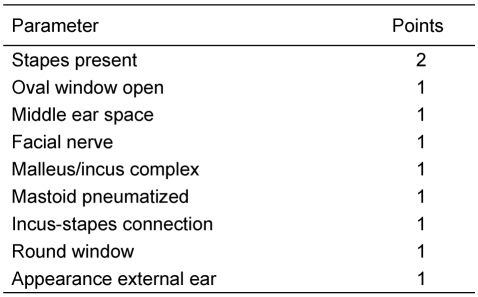
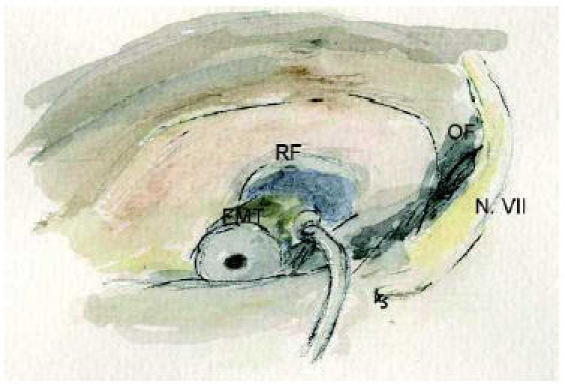
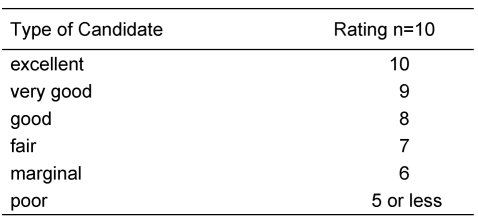
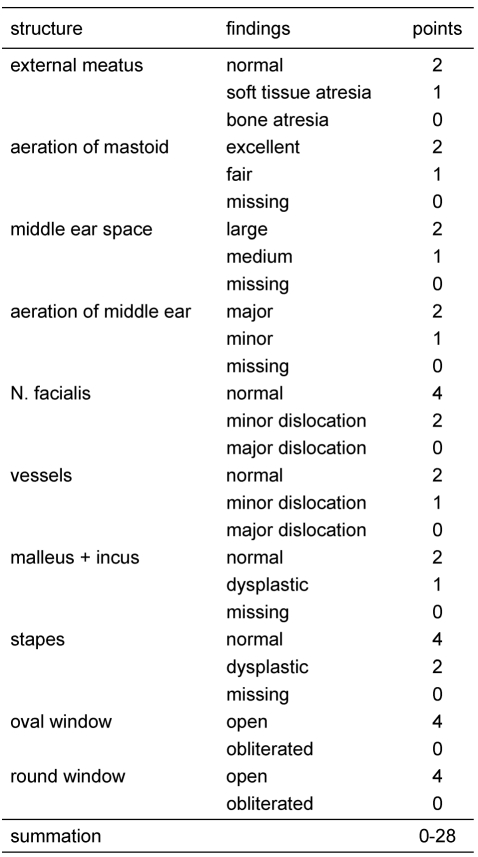
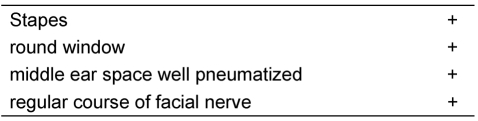
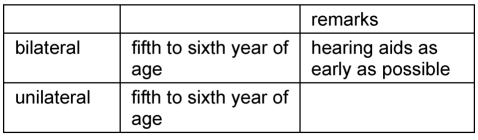
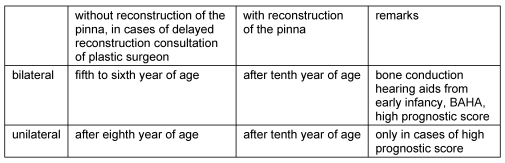
Malformations of the middle ear are classified as minor and major malformations. Minor malformations appear with regular external auditory canal, tympanic membrane and aerated middle ear space. The conducting hearing loss is due to fixation or interruption of the ossicular chain. The treatment is surgical, following the rules of ossiculoplasty and stapes surgery. In major malformations (congenital aural atresia) there is no external auditory canal and a deformed or missing pinna. The mastoid and the middle ear space may be underdevelopped, the ossicular chain is dysplastic. Surgical therapy is possible in patients with good aeration of the temporal bone, existing windows, a near normal positioned facial nerve and a mobile ossicular chain. Plastic and reconstructive surgery of the pinna should proceed the reconstruction of the external auditory canal and middle ear. In cases of good prognosis unilateral aural atresia can be approached already in childhood. In patients with high risk of surgical failure, bone anchored hearing aids are the treatment of choice. Recent reports of implantable hearing devices may be discussed as an alternative treatment for selected patients.
中耳畸形分为轻度和重度畸形。轻度畸形表现为外耳道、鼓膜正常,中耳腔有气。传导性听力损失是由于听骨链固定或中断所致。治疗方法为手术治疗,遵循听骨成形术和镫骨手术的原则。在重度畸形(先天性外耳道闭锁)中,没有外耳道,耳廓变形或缺失。乳突和中耳腔可能发育不全,听骨链发育异常。对于颞骨气房良好、存在鼓室、面神经位置接近正常且听骨链活动的患者,可以进行手术治疗。耳廓的整形和重建手术应先于外耳道和中耳的重建。对于预后良好的单侧外耳道闭锁病例,儿童期即可进行治疗。对于手术失败风险高的患者,骨锚式助听器是首选治疗方法。可植入式听力设备的最新报告可作为特定患者的替代治疗方法进行讨论。